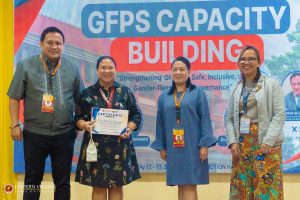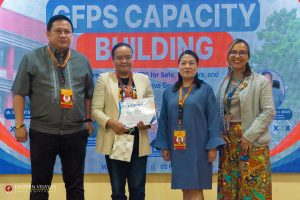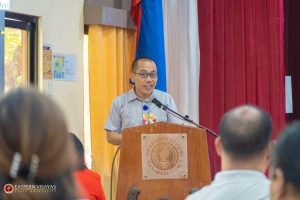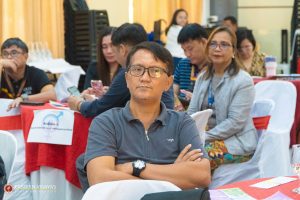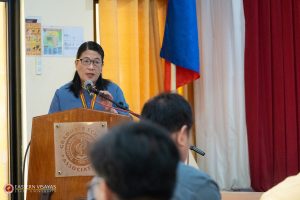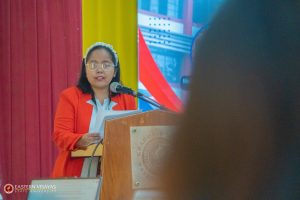

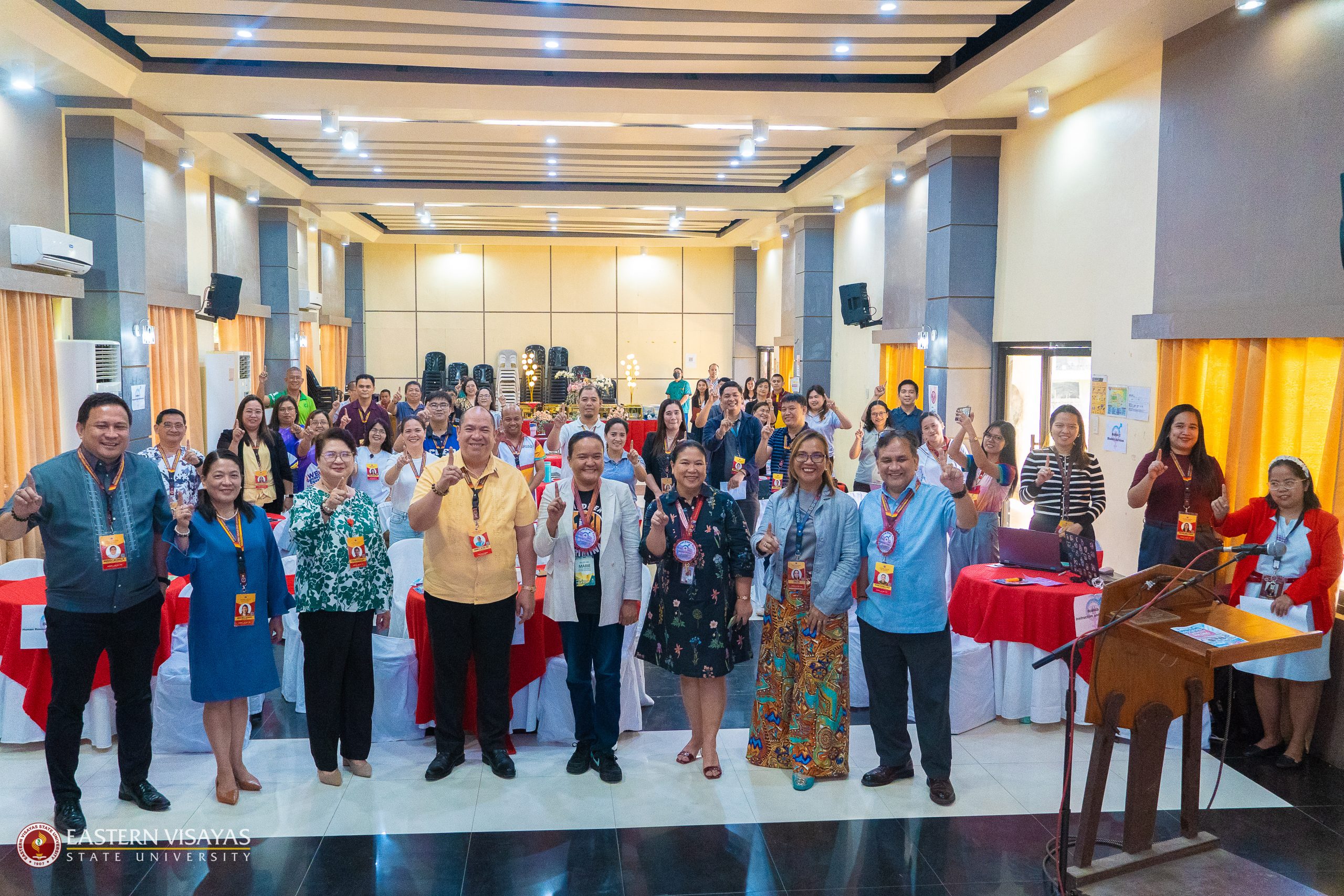
The two-day Gender and Development (GAD) Gender Focal Point System (GFPS) Capacity Building activity gathers administrators, faculty members, staff, and GAD advocates to deepen their understanding of gender-responsive governance, strategic budgeting, and inclusive institutional practices in State Universities and Colleges (SUCs).
The activity serves as a venue for participants to strengthen their commitment to advancing gender equality and women empowerment through policy implementation, responsible utilization of resources, and transformative governance anchored on inclusivity and accountability.
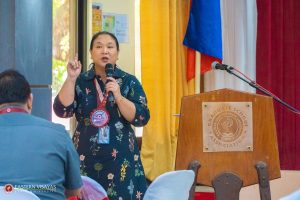
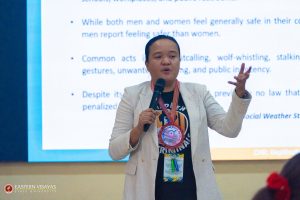
One of the highlights of the training is the discussion on “Establishing Safe Zones: Fostering Gender-Responsive Governance through CHR-Led Protection Mechanisms” delivered by Marie A. Nacino, Training Specialist II of the Commission on Human Rights.
In her presentation, Ms. Nacino emphasized the importance of creating safe and inclusive environments within educational institutions and workplaces.
Another significant session focused on “Utilizing and Auditing the GAD Budget in SUCs” presented by Ma. Eloisa K. Cojuangco, Senior Auditor IV of the Commission on Audit.
The training also featured insightful discussions on gender equity through strategic procurement practices, emphasizing how procurement systems can become tools for inclusivity and equitable access. Participants learned how procurement policies may be designed to support gender-responsive programs and encourage fairness in institutional transactions and resource distribution.
Moreover, discussions on maximizing the 5% GAD budget encouraged participants to strategically plan programs and activities that generate meaningful impact for stakeholders. Emphasis was placed on ensuring that GAD funds are not merely utilized for compliance purposes, but are invested in sustainable initiatives that promote gender equality, empowerment, protection, and institutional transformation.
The two-day capacity building activity reaffirms the institution’s commitment to building a gender-responsive, inclusive, and empowered academic environment for all.
via JRuedas
This article is aligned with Sustainable Development Goal 04: Quality Education; SGD 05: Gender Equality; SGD 10: Reduced Inequalities and SGD 17: Partnership for the Goals.