SDG 8 | Decent Work and Economic Growth

Recognition of Labour Rights, Freedom of Association, and Collective Negotiation

Eastern Visayas State University (EVSU) recognizes the protection of labour rights as an essential component of decent work, inclusive employment, participatory governance, and institutional accountability. The University upholds the principles of freedom of association, the right to self-organization, employee representation, and collective negotiation as important mechanisms through which personnel can protect their legitimate interests, express workplace concerns, and participate in decisions affecting their professional welfare and working conditions. These principles are reflected in EVSU’s institutional policies and practices and are aligned with the University’s commitment to Sustainable Development Goal 8 (Decent Work and Economic Growth).

Institutional and Legal Recognition of the Right to Self-Organization

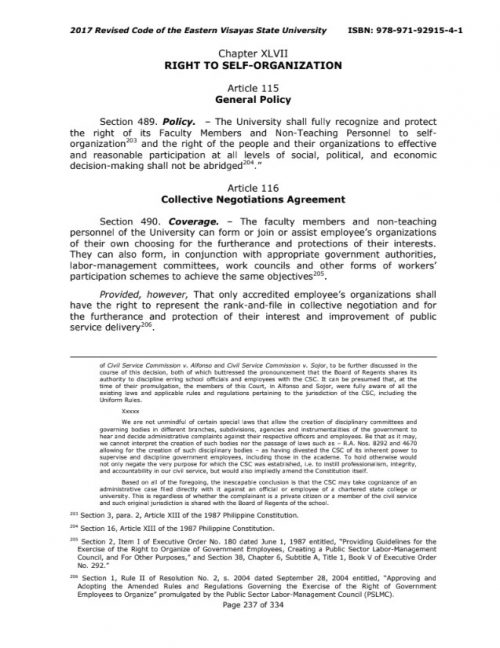
EVSU’s recognition of labour rights is expressly established in the 2017 Revised Code of the Eastern Visayas State University, particularly Chapter XLVII, Article 115, Section 489, which provides that the University shall fully recognize and protect the right of faculty members and non-teaching personnel to self-organization. Section 490 further provides that faculty members and non-teaching personnel may form, join, or assist employee organizations of their choosing for the protection and advancement of their interests. It also recognizes the use of labour-management committees, work councils, and other employee participation mechanisms, subject to applicable government regulations.

The Revised University Code further recognizes the role of accredited employee organizations in representing rank-and-file personnel in collective negotiations. This institutional framework provides a formal basis for constructive engagement between university management and employee representatives on matters relating to personnel welfare, employment conditions, benefits, and the improvement of public service delivery.

These provisions are consistent with the 1987 Philippine Constitution, which recognizes the right of government employees to self-organization, and Executive Order No. 180, series of 1987, which establishes guidelines for the exercise of this right in the public sector. As a state university, EVSU observes the applicable Civil Service Commission rules and public-sector labour relations framework governing employee associations and collective negotiation agreements.

Recognition and Participation of Employee Association

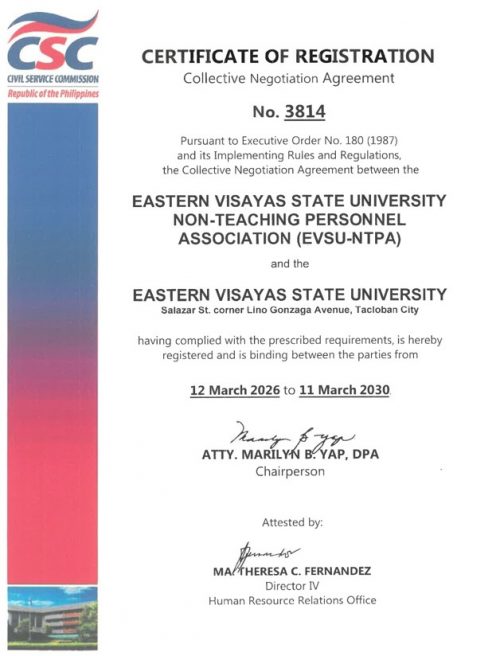
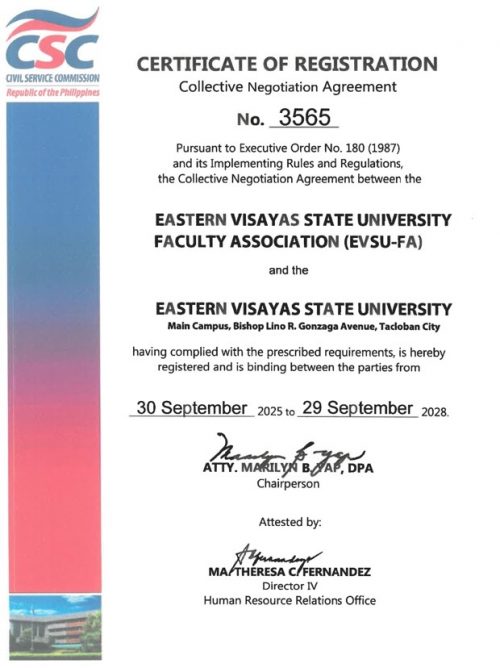
EVSU supports employee representation through the Eastern Visayas State University Faculty Association (EVSUFA) and the Eastern Visayas State University Non-Teaching Personnel Association (EVSU-NTPA). These organizations provide institutional channels through which teaching, administrative, and support personnel can collectively express their concerns, advance their legitimate interests, and participate in discussions concerning employment-related matters.

The University’s published labour-rights and employment-unions statements identify these associations as important partners in promoting employee welfare, fair employment practices, and constructive dialogue between personnel and management. EVSU’s institutional approach recognizes that employee associations contribute not only to the protection of workers’ interests but also to a more participatory and responsive workplace environment.

Through these organizations, employees have avenues for representation and engagement concerning working conditions, benefits, professional development, workplace concerns, and other matters affecting their employment. Where provided under applicable rules and agreements, collective negotiation and related consultation mechanisms further support the development of mutually understood arrangements between management and employee representatives.

2025 Initiatives Demonstrating Recognition of Employee Associations

During 2025, EVSU undertook activities that demonstrate the continued presence and participation of employee associations within the University community.

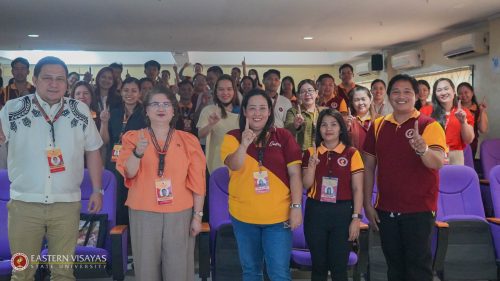
On February 28, 2025, EVSU held its annual Non-Teaching Personnel Association Day (NTPA Day 2025) at Mimi’s Place in Sta. Rita, Samar. The activity brought together non-teaching personnel from the University’s various campuses, including the Main Campus, Carigara, Dulag, Burauen, Tanauan, and Ormoc. The gathering featured team-building activities, employee participation, and fellowship among personnel from different campus units. Beyond its social and community-building dimensions, the activity provided an opportunity to strengthen relationships among non-teaching employees and reinforce their shared organizational identity through their association. The participation of personnel from multiple campuses illustrates the continuing role of the NTPA in fostering employee engagement, solidarity, and a sense of belonging within the University.


A second significant initiative was EVSU’s three-day orientation for newly hired teaching and non-teaching employees conducted from September 23 to 25, 2025. The orientation introduced new personnel to the University’s systems, policies, programs, and institutional responsibilities. Its first day covered ISO awareness, human resource systems, policies, procedures, and personnel privileges, while the second day addressed Gender and Development, research, extension services, and internationalization. The scheduled program for the third day included discussions on Republic Act No. 6713, the Code of Conduct and Ethical Standards for Public Officials and Employees; the Safe Spaces Act and anti-sexual harassment; and membership in EVSUFA, NTPA, and the EVSU Multipurpose Cooperative.

The inclusion of employee association membership in the orientation program is particularly relevant to the University’s recognition of freedom of association. By introducing newly hired personnel to existing employee organizations as part of their institutional orientation, EVSU helps familiarize employees with available organizational and representation structures. This activity also places employee associations within the broader context of university policies, personnel privileges, ethical conduct, workplace respect, and institutional participation.

These policies and initiatives contribute to EVSU’s commitment to decent work, equitable employment practices, and accountable university governance. By maintaining appropriate mechanisms for employee representation, consultation, and grievance resolution, the University supports an institutional culture in which personnel can advance their legitimate interests and contribute to the continuous improvement of working conditions and public service delivery.

Taken together, these measures provide evidence of EVSU’s recognition of labour rights as an important component of its institutional responsibility to promote fair, inclusive, and participatory employment relations.


EXPLORE OUR SDG 8 INITIATIVES & ACTIVITIES

2026202520242023
SDG 8: Initiatives for 2026
SDG 8: Initiatives for 2025
SDG 8: Initiatives for 2024
SDG 8: Initiatives for 2023

EXPLORE OUR SDG 8 RESEARCH & PUBLICATIONS

202520242023
SDG 8: Publications for 2025
SDG 8: Publications for 2024
SDG 8: Publications for 2023

SUSTAINABLE DEVELOPMENT GOALS

20252024
2025: Sustainable Development Goals
2024: Sustainable Development Goals