

SDG 13 | CLIMATE ACTION
Low-Carbon Energy Use
The Eastern Visayas State University (EVSU) recognizes the importance of measuring and monitoring its energy consumption as a fundamental component of its commitment to environmental sustainability, energy efficiency, and the transition toward low-carbon campus operations. As part of its institutional efforts to promote responsible energy management, the University recognizes the need to account for energy derived from renewable and other low-carbon sources utilized across its campuses. This includes monitoring electricity consumption from the power grid, identifying the contribution of renewable energy systems installed within university facilities, and documenting the amount of clean energy generated and utilized in its operations. Through the consolidation and assessment of relevant energy consumption records, utility statements, meter readings, and renewable energy generation data, EVSU seeks to establish a more systematic understanding of its energy profile, determine the contribution of low-carbon energy to its overall consumption, and identify opportunities to further reduce its dependence on conventional energy sources. These monitoring efforts support evidence-based energy management decisions, strengthen institutional sustainability reporting, and advance the University’s vision of becoming a National University for Resiliency and Climate Action by 2040.
Institutional Monitoring and Measurement of Low-Carbon Energy Consumption
Eastern Visayas State University (EVSU) recognizes that transitioning toward a low-carbon and climate-resilient institution requires not only the adoption of renewable energy technologies but also the systematic monitoring, measurement, and management of energy consumption across its campuses. In support of this commitment, the University continues to strengthen its institutional energy management mechanisms, promote energy-efficient infrastructure development, and integrate renewable energy considerations into its operations, research, and development initiatives.
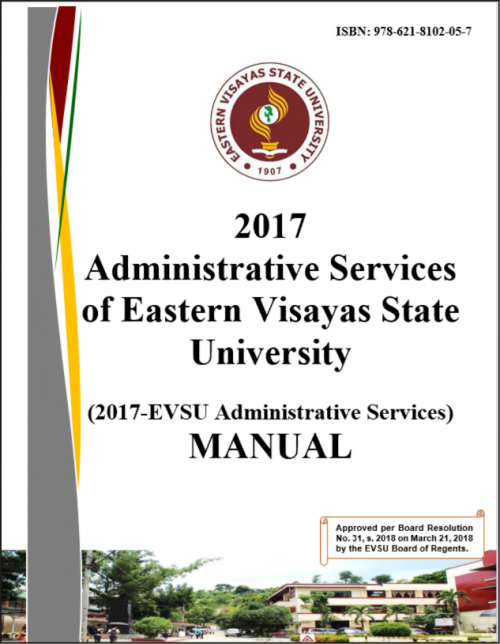
The EVSU Administrative Services Manual,Article 79, page 285, approved through BOR Resolution No. 31, s. 2018, provides an important institutional basis for demonstrating EVSU’s commitment to monitoring and managing low-carbon energy use. Article 79, entitled “Adoption of Renewable Energy Technologies, and Formulation of the Water and Energy Management Program Manual of the University,” establishes specific institutional directions for energy management and renewable-energy integration.
Under this provision, EVSU is directed to (1) adopt renewable-energy technologies, such as rooftop solar and wind technologies, in appropriate infrastructure projects; (2) integrate renewable-energy technologies into the University’s development plans; and (3) formulate and implement an Energy Management Program and related policies or mechanisms consistent with national energy policies. These provisions establish the institutional framework for systematically managing energy consumption and identifying the contribution of renewable and other low-carbon energy sources to the University’s overall energy profile.
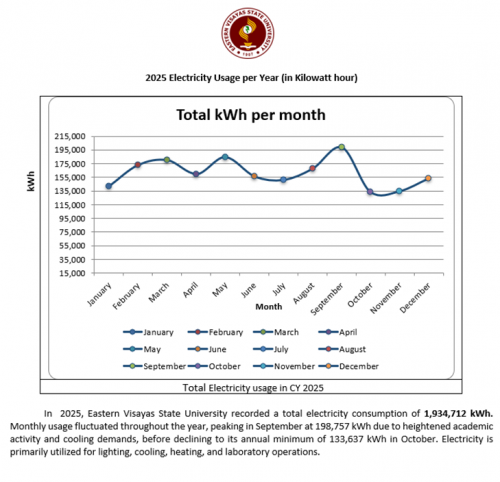
Consistent with this policy mandate, EVSU consolidates energy-related information to quantify total energy consumption, identify energy obtained from renewable or other low-carbon sources, and determine the proportion of the University’s energy use attributable to low-carbon sources.
For Calendar Year 2025, EVSU documented the electricity consumption of its Main Campus and five external campuses—Burauen, Carigara, Dulag, Ormoc, and Tanauan. The records capture monthly electricity consumption in kilowatt-hours (kWh), enabling the University to monitor variations in energy demand throughout the year and determine the overall electricity requirements of its campus operations. These records cover electricity primarily utilized for lighting, cooling, heating, laboratory operations, and other institutional activities. By consolidating these data, EVSU establishes an institution-wide reference for evaluating energy consumption, identifying periods of increased demand, and determining opportunities for improved energy efficiency.
The campus-level monitoring process also allows the University to recognize differences in electricity consumption across its campuses, taking into account their respective operational requirements and institutional activities. For instance, the Main Campus recorded the largest annual electricity consumption, reflecting its comparatively extensive institutional operations and facilities, while the external campuses maintained their respective consumption records to provide a more comprehensive picture of the University’s overall energy requirements. The monthly consumption profiles further provide a basis for identifying fluctuations in electricity demand and examining potential opportunities for energy conservation and operational improvements.
Beyond measuring the volume of electricity consumed, EVSU also evaluates the environmental impact of its electricity use through carbon footprint assessment. As its campuses are supplied through the Eastern Visayas distribution network connected to the Luzon-Visayas Interconnected Grid, the University applies the Grid Emission Factor (GEF) to estimate the carbon emissions associated with electricity consumption. Based on the Department of Energy (DOE) grid emission factor cited in EVSU’s 2025 carbon footprint documentation, equivalent to 0.7122 kg of CO₂ per kWh, the University calculated its electricity-related carbon emissions at approximately 1,377.90 metric tons of CO₂. This assessment translates the University’s electricity consumption data into an emissions estimate, allowing EVSU to evaluate not only how much electricity it consumes but also the corresponding greenhouse gas impact of its energy requirements.
The application of the grid emission factor provides an additional dimension to the University’s energy monitoring framework by linking electricity consumption with its environmental implications. Through this approach, EVSU establishes a measurable baseline for assessing the carbon intensity of its electricity use, monitoring the environmental implications of its energy demand, and identifying opportunities to reduce emissions through energy conservation, efficiency improvements, and the gradual integration of renewable and other low-carbon energy sources.
In determining the proportion of its energy use attributable to low-carbon sources, EVSU uses its consolidated annual electricity consumption as the institutional baseline and its carbon footprint assessment as a complementary measure of the emissions associated with grid-supplied electricity. The assessment of the low-carbon component requires the identification of electricity generated from qualifying renewable or other low-carbon sources, including documented on-site renewable energy generation, eligible renewable electricity procurement, and the applicable low-carbon share of grid-supplied electricity. These components can then be evaluated against the University’s total electricity consumption to determine the corresponding proportion of low-carbon energy in its institutional energy mix.
The University’s electricity consumption and carbon footprint records therefore serve complementary purposes in its sustainability monitoring process. The electricity consumption report establishes the quantity and distribution of electricity use across campuses, while the carbon footprint report provides an assessment of the associated carbon emissions using the applicable grid emission factor. Together, these records provide an evidence-based foundation for understanding EVSU’s institutional energy profile, evaluating its environmental impact, and strengthening the University’s capacity to monitor progress toward lower-carbon energy use.
Through the continued consolidation of campus-level electricity data, assessment of electricity-related emissions, and identification of opportunities for renewable energy integration, EVSU reinforces its commitment to improving institutional energy performance and supporting climate-responsive university operations. These efforts are aligned with the University’s broader vision of becoming a National University for Resiliency and Climate Action by 2040, positioning energy monitoring and carbon emissions assessment as important components of its long-term sustainability and decarbonization agenda.
Integration of Renewable Energy and Energy-Efficient Infrastructure
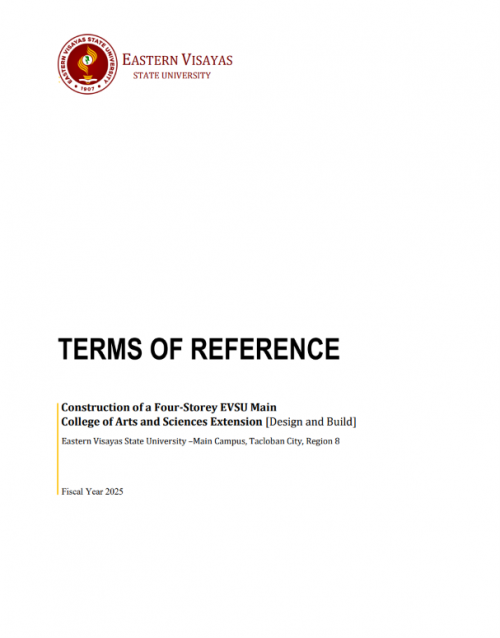
In 2025, EVSU continued to advance its commitment to sustainable infrastructure through the incorporation of green building and energy-efficiency requirements into its infrastructure development projects. A notable example is the proposed Four-Storey College of Arts and Sciences Extension Building at the Main Campus, whose FY 2025 Terms of Reference (TOR), pages 44-45, incorporates provisions for energy efficiency and renewable energy systems.
The building specifications include an Energy Efficiency Plan, renewable energy system provisions, energy-efficient electrical installations, LED lighting fixtures, occupancy and daylight sensors, and remote shutdown capabilities for electrical devices and room circuits. The project also requires comprehensive electrical engineering documentation, including electrical load schedules, panel board schedules, feeder layouts, testing, and commissioning requirements.
These provisions demonstrate the University’s efforts to ensure that energy considerations are incorporated during the planning and design stages of its infrastructure projects. By integrating energy-efficient technologies and renewable energy provisions into new facilities, EVSU seeks to minimize unnecessary electricity consumption, improve operational efficiency, and establish infrastructure that can accommodate cleaner energy technologies.
Renewable Energy Research, Innovation, and Application
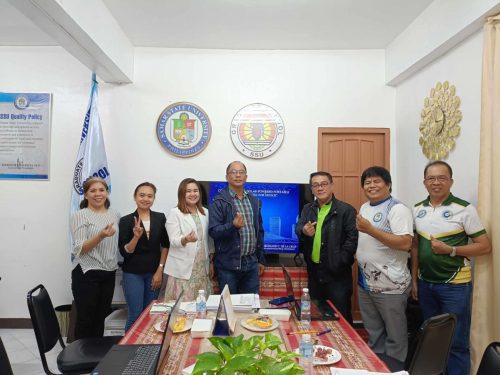


Beyond its administrative and infrastructure initiatives, EVSU contributes to the advancement of low-carbon energy through research, innovation, and technology development.
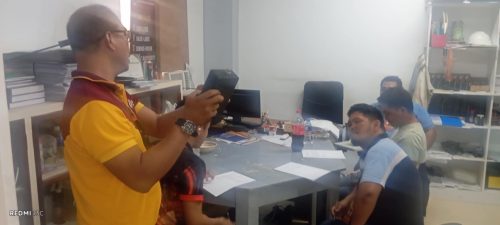
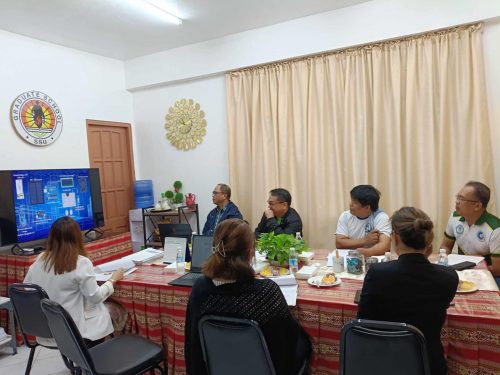
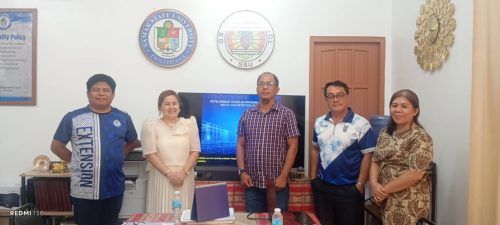
In October 2025, EVSU faculty-researcher Prof. Ferdinand C. de la Cruz received international recognition for his research on the Evaluation of Performance of the Developed Solar-Powered Portable Multi-Gas Detector Device. The technology demonstrates the practical application of solar energy in powering a portable environmental and occupational safety monitoring device. This innovation reflects the University’s capacity to develop and evaluate solar-powered technologies that can support resource-efficient operations and environmental protection.
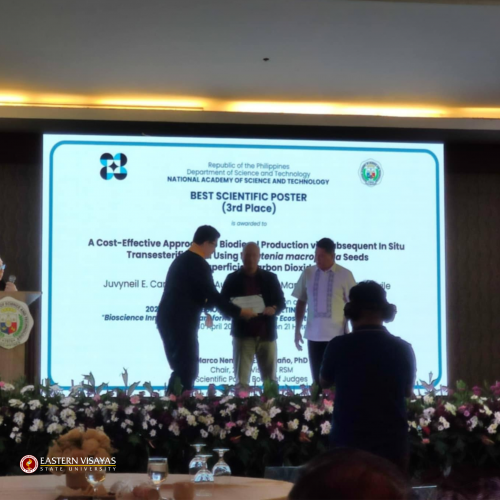
Similarly, EVSU researchers contributed to alternative energy development through the study entitled A Cost-Effective Approach to Biodiesel Production via Subsequent in Situ Transesterification Using Swietenia macrophylla Seeds and Superficial Carbon Dioxide. Led by Engr. Juvyneil E. Cartel, the research team received third place recognition during the 2025 Visayas Regional Scientific Meeting. The study explores the potential of mahogany seeds as a feedstock for biodiesel production, contributing to research on alternative and potentially lower-carbon fuel sources.
These initiatives reinforce EVSU’s role in advancing renewable energy knowledge and developing technologies that may contribute to the broader transition toward sustainable energy systems.
Institutional Energy Monitoring and Continuous Improvement
The University also recognizes the importance of extending energy monitoring beyond individual buildings and installations toward a consolidated, university-wide assessment. Such an approach supports institutional accountability, enables comparisons of energy utilization across campuses, and provides measurable information for evaluating progress toward energy efficiency and decarbonization objectives.
Advancing EVSU’s Low-Carbon and Climate-Resilient Development Agenda
Ultimately, EVSU seeks to institutionalize a data-driven approach to energy management in which the measurement of total energy consumption and the contribution of low-carbon energy sources inform planning, investment, performance evaluation, and continuous improvement across its campuses.
EXPLORE OUR SDG 13 INITIATIVES & ACTIVITIES
EXPLORE OUR SDG 13 RESEARCH & PUBLICATIONS
SUSTAINABLE DEVELOPMENT GOALS