
SDG 13 | CLIMATE ACTION
Climate Change Education and Resilience Initiatives
The Eastern Visayas State University (EVSU) recognizes climate change education, disaster risk reduction, and climate resilience as essential components of its institutional mandate and commitment to sustainable development. Situated in a region highly exposed to climate-related hazards, including typhoons, flooding, storm surges, and other climate-induced risks, the University actively integrates climate change awareness, environmental stewardship, and resilience-building into its academic programs, research and extension initiatives, institutional policies, and community engagement activities. Through collaborations with government agencies, local government units, academic institutions, and community stakeholders, EVSU implements initiatives that strengthen climate literacy, promote science-based adaptation and mitigation strategies, enhance disaster preparedness, and develop community capacities to anticipate, respond to, and recover from climate-related hazards. These efforts include climate education and advocacy programs, disaster preparedness and early warning initiatives, climate-responsive research and technology development, environmental conservation activities, and community-based resilience projects. By combining education, research, institutional action, and community partnerships, EVSU seeks to cultivate a climate-conscious university community, contribute to the resilience of vulnerable communities, and advance its vision of becoming a National University for Resiliency and Climate Action by 2040.
Local Education Programmes and Campaigns on Climate Change Risks, Impacts, Mitigation, Adaptation, Impact Reduction, and Early Warning
Eastern Visayas State University (EVSU) recognizes that addressing climate change requires more than the implementation of environmental projects and disaster response interventions. It requires sustained education, public awareness, knowledge-sharing, and community engagement that enable individuals and institutions to understand climate-related risks, anticipate potential impacts, adopt appropriate mitigation measures, and strengthen their capacity to adapt to changing environmental conditions. Situated in Eastern Visayas, a region highly exposed to typhoons, flooding, storm surges, coastal hazards, and other climate-related threats, EVSU acknowledges its responsibility as a higher education institution to contribute to climate literacy, disaster preparedness, environmental stewardship, and community resilience.
Consistent with its aspiration to become the National University for Resiliency and Climate Action by 2040, EVSU integrates climate change education and environmental awareness into its academic, research, innovation, and extension functions. The University employs a community-oriented and partnership-driven approach, utilizing educational forums, seminars, webinars, youth engagement activities, technical demonstrations, capacity-building programmes, and environmental campaigns to make climate-related knowledge accessible to students, faculty members, university personnel, local government institutions, and communities. These initiatives address the interconnected dimensions of climate change, including understanding its causes and consequences, reducing environmental pressures, adapting to climate-related hazards, minimizing disaster impacts, and improving access to early warning information.
Advancing Climate Literacy Through Education, Awareness, and Youth Engagement
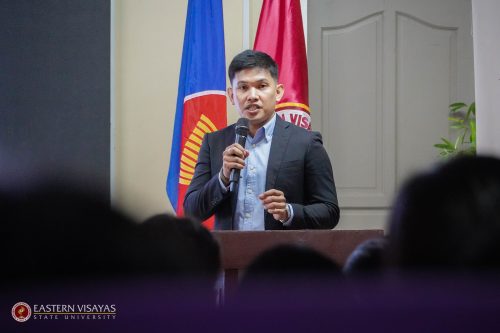
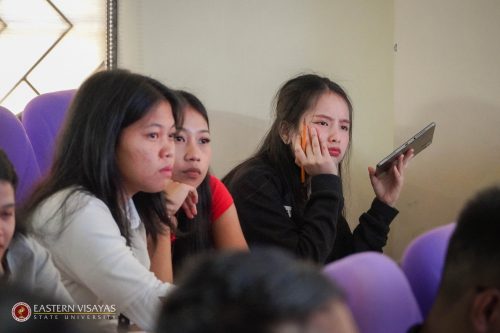
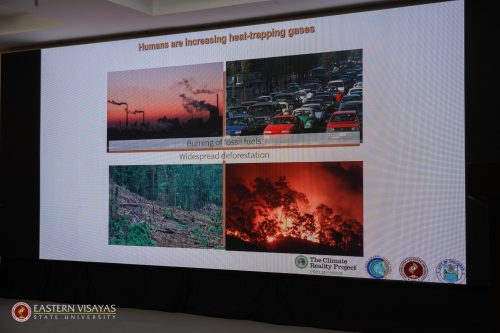
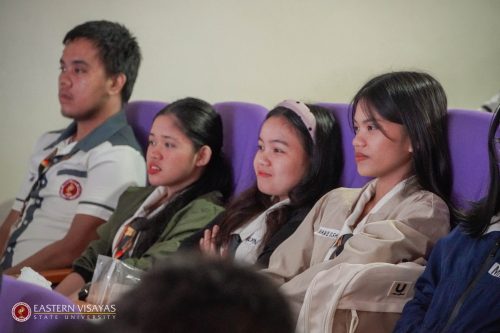
A significant component of EVSU’s climate education efforts is its commitment to developing climate-literate students and young people who can translate scientific knowledge into responsible environmental behavior and meaningful climate action.
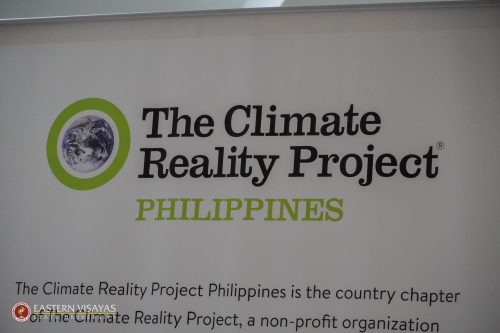
In 2025, EVSU strengthened this commitment through Klima-Eskwela: Climate Science, Arts and Action, a two-day climate education initiative conducted on November 27–28 at the University’s Main Campus in partnership with the Climate Reality Project Philippines, the Climate Change Commission, and the Tacloban City Government. The initiative provided an educational platform for young people to deepen their understanding of climate science, climate change impacts, environmental governance, and practical solutions to the climate crisis.
The programme approached climate education through interconnected learning themes. First, participants were introduced to the scientific foundations of climate change, its environmental and societal consequences, and the importance of adopting science-informed solutions. This component helped strengthen their understanding of how climate change affects ecosystems, communities, livelihoods, and human well-being, particularly in vulnerable localities.
Second, the programme explored the relationship between climate change and the plastic crisis, highlighting the importance of addressing unsustainable consumption, waste generation, and environmental pollution. Through this discussion, participants were encouraged to recognize how everyday consumption and waste disposal practices contribute to broader environmental challenges and how individual and collective behavioral changes can support mitigation and sustainability objectives.
Third, through Project Niche, a youth engagement and project incubation initiative, participants were encouraged to conceptualize plastic-free projects and policies that could be implemented in their respective campuses. This component moved climate education beyond information dissemination by encouraging learners to develop practical responses, exercise environmental leadership, and become advocates of sustainable practices within their institutions and communities.
By bringing together climate education advocates, government institutions, and local stakeholders, Klima-Eskwela demonstrated EVSU’s commitment to making climate change education participatory, action-oriented, and relevant to the realities of young people. It also reinforced the University’s role in helping cultivate a generation capable of understanding climate challenges and contributing to locally relevant mitigation and adaptation efforts.
Promoting Public Understanding of Climate Risks Through Community Forums and Multi-Stakeholder Dialogue
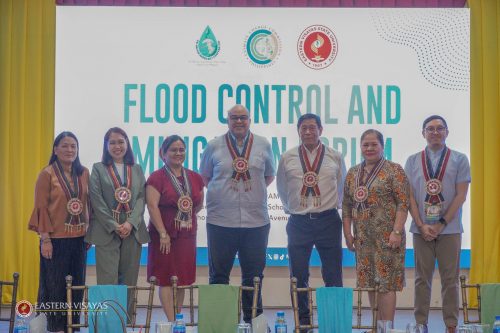
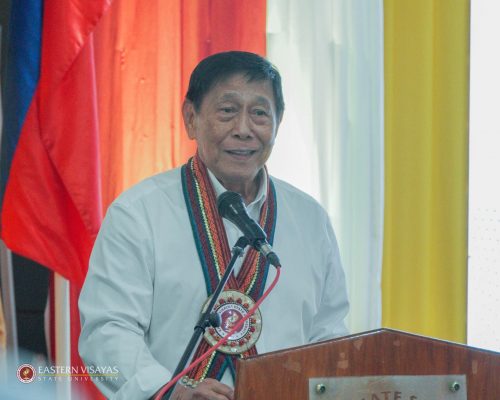
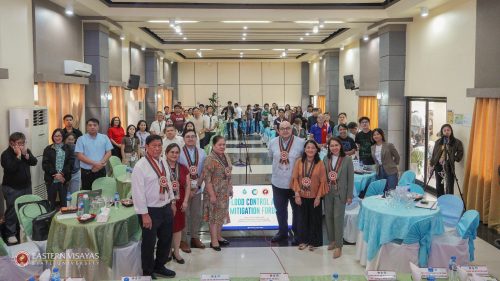
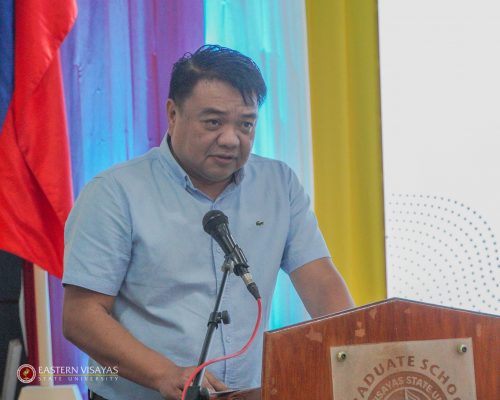
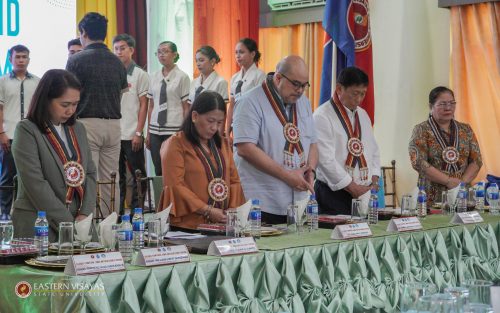
Recognizing that effective climate adaptation requires communities to understand the hazards affecting their localities, EVSU also provides opportunities for public education and knowledge-sharing on disaster risks, environmental vulnerabilities, and appropriate risk reduction measures.
On March 7, 2025, EVSU hosted the Building Resilience Together Through Flood Control and Mitigation Forum at the Graduate School Function Hall. The activity brought together representatives from the Tacloban City Government, the Department of Environment and Natural Resources (DENR) Region VIII, the Department of Public Works and Highways (DPWH) Region VIII, PH Haiyan, private organizations, civil society groups, and community stakeholders.
The forum served as a collaborative learning and discussion platform for examining flood-related vulnerabilities and identifying approaches to improve local flood management and community resilience. Discussions focused on the importance of understanding local flooding conditions, strengthening flood control and mitigation strategies, adopting environmentally responsible interventions, and promoting cooperation among institutions responsible for infrastructure, environmental protection, urban planning, and disaster risk reduction.
The activity was particularly relevant to Tacloban City and surrounding communities, where flooding and extreme weather events pose recurring challenges to public safety, infrastructure, livelihoods, and local development. By bringing technical experts and community stakeholders together, EVSU helped facilitate the exchange of knowledge on flood-related hazards and the importance of integrating environmental considerations into local development and risk reduction planning.
Beyond providing information, the forum highlighted the importance of collaborative approaches to addressing climate vulnerabilities. It encouraged stakeholders to recognize that reducing flood-related impacts requires coordinated interventions, informed decision-making, responsible land and water management, and meaningful community participation.
Through this initiative, EVSU demonstrated how a university can serve as a knowledge partner and convening institution, translating technical and scientific discussions into learning opportunities that can inform local policies, public awareness, and community-level adaptation strategies.
Strengthening Community Preparedness Through Disaster Early Warning Education and Technology
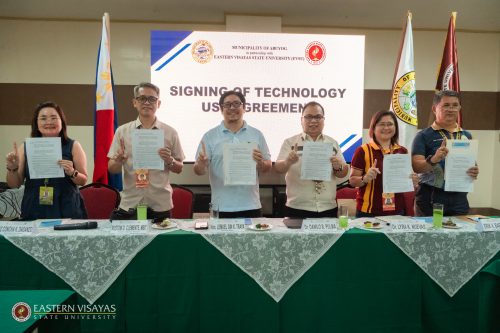
An important dimension of climate resilience is ensuring that communities have access to timely, understandable, and actionable information before, during, and after hazardous events. EVSU supports this objective by combining technological innovation with local government partnerships to strengthen disaster preparedness and early warning capabilities.
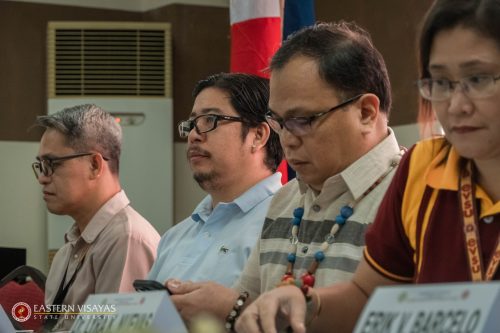
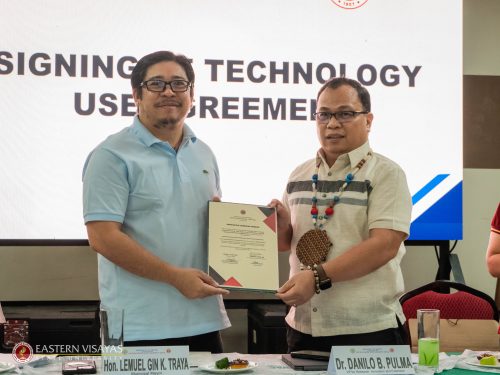
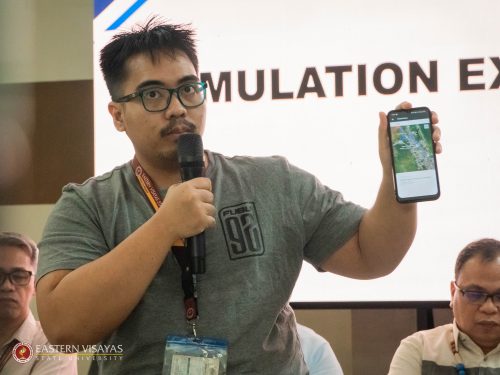
On September 24, 2025, EVSU partnered with the Local Government Unit of Abuyog, Leyte, through its Municipal Disaster Risk Reduction and Management Office, for the launch and turnover of the Beeware Application SMART Disaster Early Warning System (SMART DEWS).
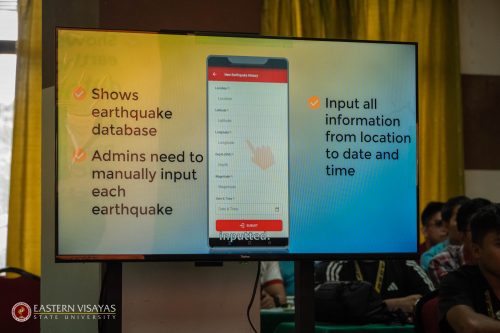
The initiative demonstrates the University’s application of research, innovation, and technical expertise in developing practical solutions to address the disaster-related vulnerabilities of local communities. The system is designed to improve access to disaster information and support timely decision-making through mobile applications, SMS notifications, and web-based information platforms. Its GPS-based evacuation routing functionality also assists residents in identifying appropriate evacuation routes and safer locations during emergencies.
The SMART DEWS initiative supports several important aspects of community preparedness. First, it strengthens public access to early warning information through multiple communication channels, helping address the need for timely dissemination of disaster-related advisories. Second, its evacuation routing functionality provides practical information that can help residents understand and act on recommended safety measures. Third, its collaboration with the local government and disaster management office supports the integration of technology into existing community disaster preparedness and response mechanisms.
More importantly, the initiative provides an opportunity to strengthen public understanding of the relationship between hazard warnings, preparedness, evacuation, and disaster impact reduction. By making warning information more accessible and actionable, EVSU contributes to developing a culture of preparedness in which communities are better equipped to respond to potential hazards rather than relying solely on emergency response after disasters occur.
The initiative also illustrates the University’s extension-oriented approach to innovation: research and technology are not developed solely for academic purposes but are translated into practical applications that respond to the needs of local communities.
Through partnerships with local government units, EVSU helps bridge the gap between technological innovation and community-level disaster preparedness, supporting more informed and resilient localities.
Facilitating National and International Knowledge Exchange on Disaster Risk Reduction and Management
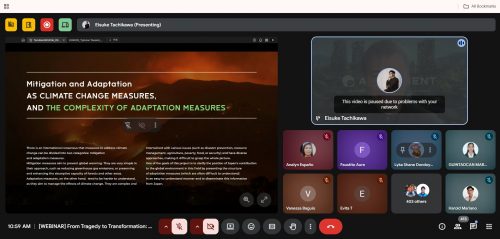
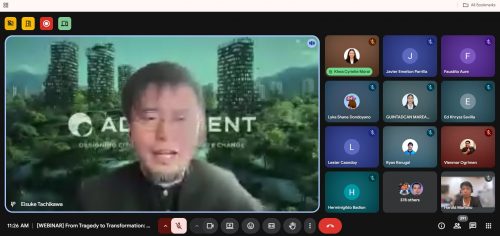
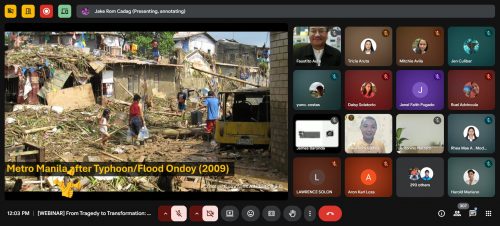

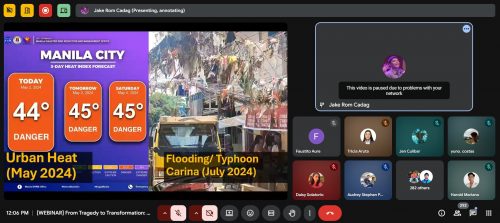
EVSU recognizes that climate-related disasters transcend geographical boundaries and that effective preparedness requires continuous learning from both local experiences and international practices. Accordingly, the University utilizes academic exchanges, webinars, and institutional partnerships to expose its academic community to diverse perspectives and approaches to disaster risk reduction and management.
On November 7, 2025, the EVSU Office of Internationalization for Higher Education, in partnership with the Embassy of the Czech Republic to the Philippines, conducted the Global Insights on Disaster Risk Reduction and Management Webinar in commemoration of the twelfth anniversary of Super Typhoon Yolanda.
The webinar, anchored on the theme From Tragedy to Transformation, provided an opportunity to reflect on the lessons arising from major disaster experiences and the importance of translating these lessons into more effective preparedness, resilience-building, and risk reduction measures.
The activity featured international and national resource persons, including Eisuke Tachikawa, Chief Executive Officer of Nosigner, Japan; Maria Jullie Anne Culibar, a Disaster Risk Reduction Specialist; and Dr. Jake Rom Cadag, Associate Professor at the University of the Philippines.
Through the exchange of knowledge and professional perspectives, participants were exposed to different approaches to understanding disaster vulnerabilities, improving preparedness, and strengthening the capacity of institutions and communities to respond to disasters. The webinar also reinforced the importance of interdisciplinary collaboration, innovation, and the integration of lessons from past disasters into future planning and development.
For EVSU, the commemoration of Super Typhoon Yolanda served as an important opportunity to connect historical disaster experiences with continuing efforts to build resilience in Eastern Visayas. It reinforced the value of education and institutional learning in ensuring that communities and future generations are better prepared for climate-related hazards.
By engaging international experts and national practitioners, EVSU expanded the scope of its disaster risk education beyond local discussions and provided opportunities for its academic community to learn from broader experiences in disaster management and resilience-building.
Developing Institutional and Technical Capacities for Disaster Preparedness and Impact Reduction

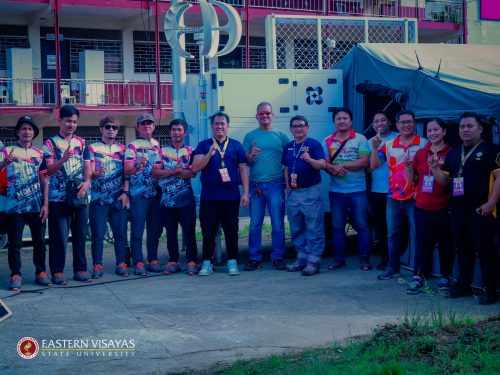
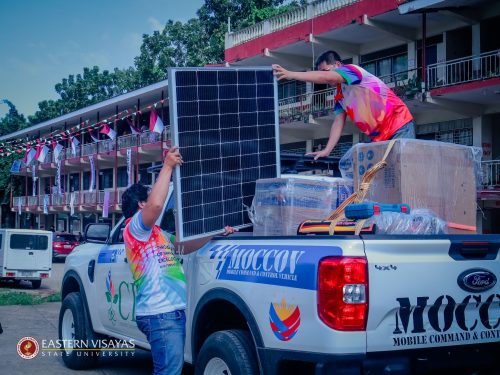
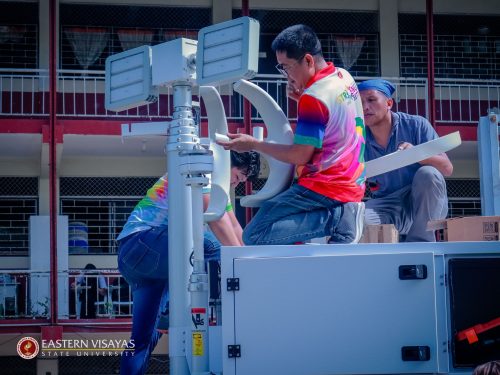
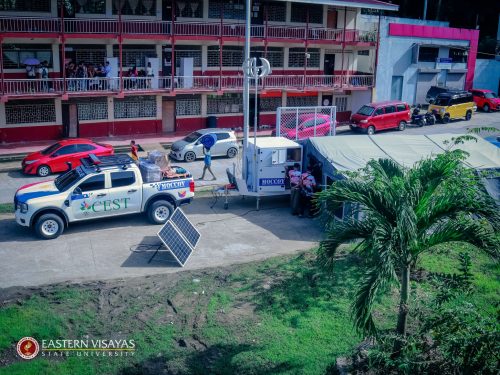
In addition to providing awareness and learning opportunities for students and communities, EVSU strengthens the competencies of its personnel and institutional units to contribute more effectively to disaster preparedness, coordination, and emergency response.
In February 2025, the University collaborated with the Department of Science and Technology (DOST) through the project Application of Science, Technology, and Innovation for the Enhancement of Disaster Risk Reduction and Management in Region 8. As part of this collaboration, selected EVSU faculty members and personnel participated in a two-day training on the Mobile Command and Control Vehicle with Triage Technology (MoCCoV) on February 24, 2025, in Palo, Leyte.
The training introduced participants to the operational and technological capabilities of the MoCCoV, including real-time data management, GPS-based tracking, secure communications, and emergency coordination systems. These technologies are intended to support more organized and informed disaster response operations, particularly during emergencies requiring coordination among multiple agencies and responders.
The activity also involved the organization of working committees composed of EVSU personnel who would serve as MoCCoV operators. This approach supports the development of internal competencies and institutional readiness to operate and maximize the use of disaster response technologies.
Although primarily a technical capacity-building initiative, the training contributes to the University’s broader disaster education and resilience agenda by strengthening the knowledge and preparedness of personnel who may be involved in emergency management and response. It also reinforces the importance of science, technology, and innovation in minimizing disaster impacts and protecting communities.
Through its partnership with DOST, EVSU demonstrates its commitment to developing institutional capacities that complement community education, early warning systems, and local disaster preparedness programmes.
Promoting Ecosystem-Based Adaptation Through Community Environmental Education and Extension

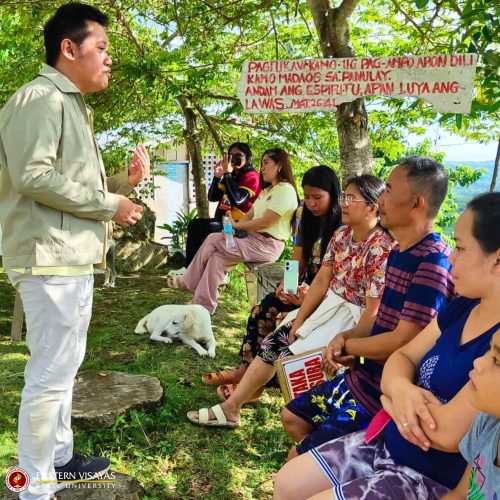
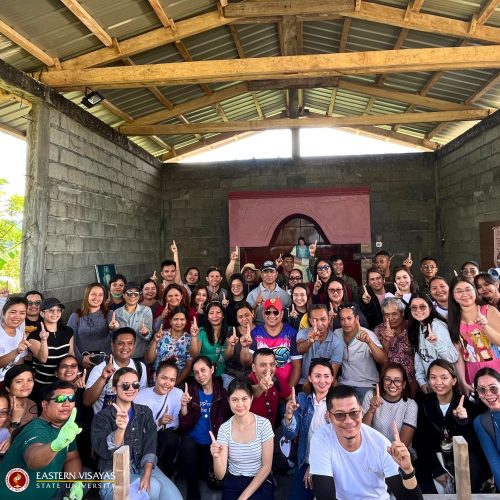
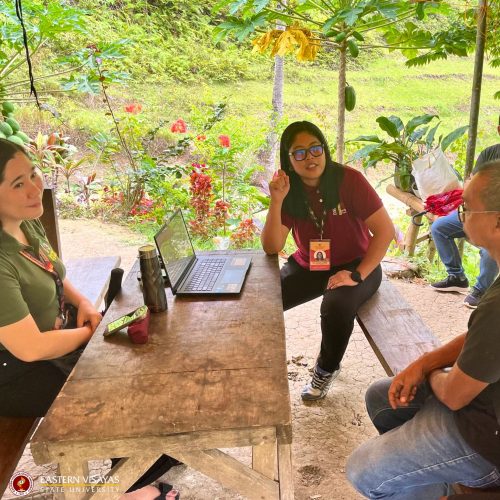
EVSU recognizes that climate resilience is closely connected to the protection, restoration, and sustainable management of natural ecosystems. Healthy terrestrial and aquatic ecosystems provide essential environmental services, contribute to biodiversity conservation, support local livelihoods, and help communities cope with environmental changes.
In this regard, the University advances community-based environmental education through its Biodiversity Enhancement and Sustainable Solutions for Local Development (BESOLD) Extension Program, implemented in Jubilee Cross Hill, Barangay San Juan, Matalom, Leyte, in partnership with the local government and community stakeholders.
The programme integrates biodiversity conservation, habitat restoration, environmental education, ecotourism development, and sustainable livelihood initiatives. Its approach emphasizes the importance of equipping communities with practical knowledge and competencies that enable them to participate actively in environmental protection and sustainable resource management.
Among its 2025 activities was a native tree-planting initiative in February, involving the planting of 100 Banaba trees. The activity was preceded by an educational briefing on appropriate planting techniques, helping participants understand the importance of proper establishment and maintenance of native vegetation.
On August 8, 2025, the programme also conducted a hands-on propagation activity involving 20 Mussaenda philippica shrubs, complemented by a lecture on marcotting. The activity provided participants with practical knowledge of plant propagation and vegetation management.
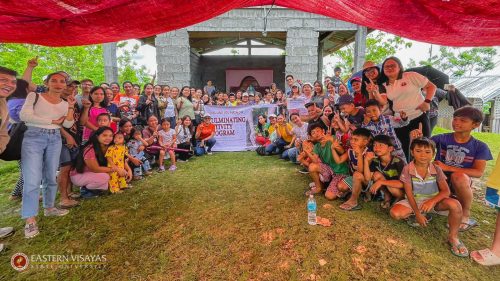
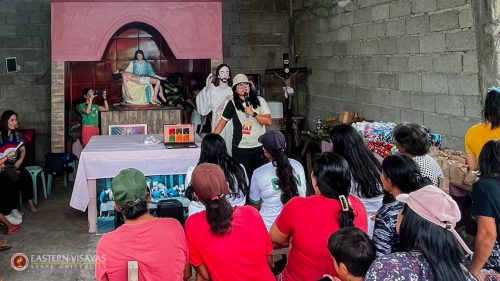
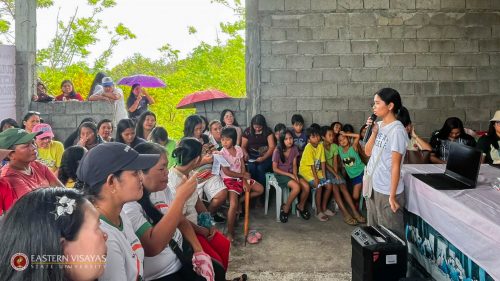
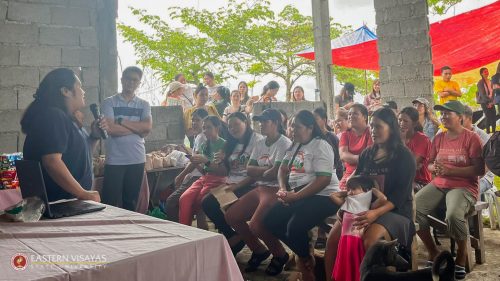
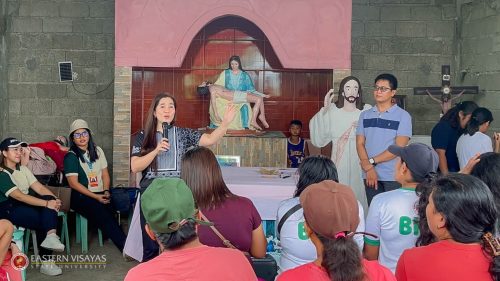
Further extending the programme’s educational component, community lectures conducted on December 12–13, 2025, covered geotagging for tree monitoring and environmental planning. These activities involved DENR Region VIII personnel and EVSU graduate students, demonstrating the value of technical knowledge-sharing and interinstitutional collaboration in community environmental management.
Through BESOLD, EVSU promotes an understanding of how biodiversity conservation, vegetation restoration, and sustainable environmental practices contribute to ecosystem health and community resilience. These initiatives support ecosystem-based adaptation by encouraging communities to protect and manage natural resources that help reduce environmental vulnerabilities.
The programme also demonstrates the University’s extension mandate in action: providing communities not only with environmental interventions but also with the knowledge and practical skills necessary to sustain these interventions over time.
Integrating Climate Change Mitigation and Environmental Responsibility Into Institutional and Community Practices
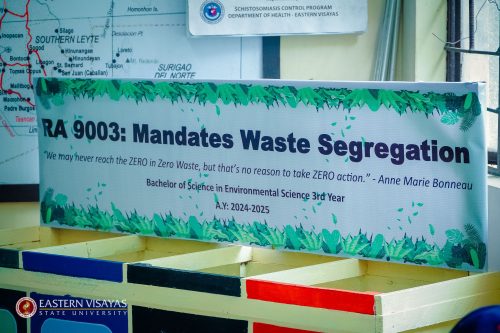
EVSU also promotes climate-conscious behavior through environmental education and awareness campaigns that encourage responsible resource utilization, waste reduction, and environmentally sustainable practices.
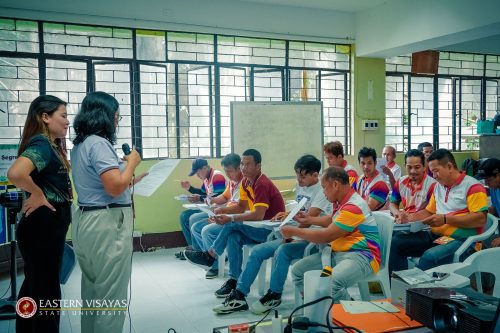
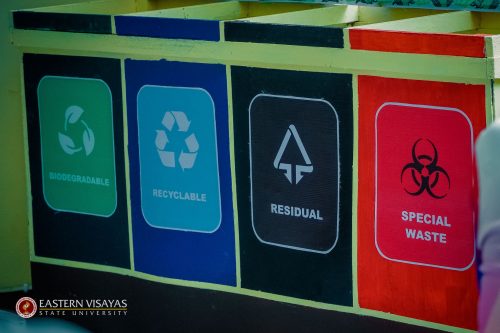
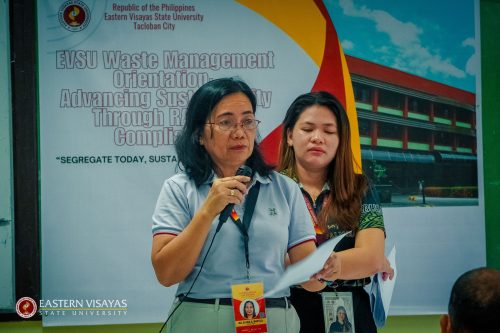
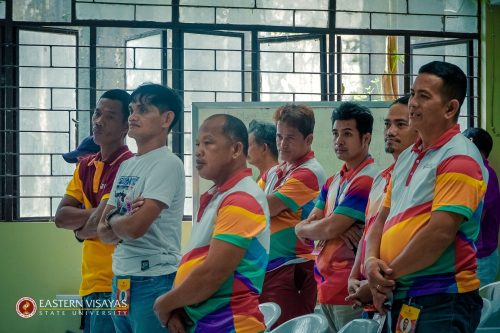
In March 2025, the University’s Department of Natural Sciences and Pollution Control Office conducted a Waste Management Orientation for maintenance and utility personnel. The activity focused on the implementation of Republic Act No. 9003, or the Ecological Solid Waste Management Act of 2000, and provided participants with guidance on proper waste handling, segregation, and disposal.
Through discussions and interactive learning activities, participants were encouraged to understand their respective responsibilities in maintaining a clean and environmentally responsible university environment. The orientation also emphasized the importance of integrating proper waste management practices into daily institutional operations.
In December 2025, EVSU further reinforced its environmental awareness efforts through a partnership with DENR, combining a tree-planting activity with a seminar on proper waste management for university personnel.
These initiatives contribute to climate change mitigation education by helping participants recognize the environmental consequences of improper waste disposal, excessive resource consumption, and unsustainable practices. They also encourage practical behavioral changes, such as waste segregation, responsible disposal, resource conservation, and participation in environmental protection activities.
Although these activities are primarily focused on environmental management, they complement the University’s broader climate education agenda by demonstrating how everyday institutional and individual practices can contribute to environmental sustainability and climate action.
By engaging personnel in practical environmental learning, EVSU promotes the integration of sustainability principles into the University’s organizational culture and operational practices.
Strengthening Local Partnerships and Community Engagement for Climate Resilience
A distinguishing feature of EVSU’s climate education initiatives is its emphasis on collaboration with institutions and organizations that possess complementary expertise, resources, and community networks.
In implementing its 2025 activities, EVSU worked with the Climate Reality Project Philippines, the Climate Change Commission, the Tacloban City Government, the LGU of Abuyog, DENR Region VIII, DPWH Region VIII, DOST, the Embassy of the Czech Republic to the Philippines, PH Haiyan, private organizations, civil society groups, and local community stakeholders.
These partnerships provide opportunities to connect academic knowledge with government programmes, technical expertise, local development priorities, and community experiences. They also enable EVSU to facilitate learning activities that are responsive to the environmental and disaster-related challenges confronting Eastern Visayas.
Through these collaborative arrangements, the University assumes several complementary roles:
- As an educational institution, EVSU provides opportunities for students, personnel, and community members to understand climate science, environmental issues, disaster risks, and resilience strategies.
- As a research and innovation institution, EVSU develops and applies scientific and technological solutions, including early warning and disaster management technologies, to address local vulnerabilities.
- As an extension service provider, EVSU brings environmental knowledge, technical skills, and practical learning opportunities directly to local communities.
- As a knowledge and convening partner, EVSU facilitates dialogue and collaboration among government agencies, academic institutions, civil society, private organizations, and other stakeholders.
- As a community development partner, EVSU supports the development of informed, prepared, and environmentally responsible communities through sustained educational and capacity-building interventions.
This partnership-driven approach is particularly important in Eastern Visayas, where the impacts of climate change and natural hazards require coordinated responses that go beyond the capacities of individual institutions.
Institutional Commitment to Sustained Climate Education and Community Resilience
EVSU’s 2025 initiatives demonstrate an institutional understanding that climate change education must be continuous, multidisciplinary, and grounded in the realities of the communities it serves. The University recognizes that awareness of climate risks must be complemented by the ability to interpret relevant information, understand available solutions, participate in preparedness activities, and adopt practices that reduce environmental and disaster-related vulnerabilities.By integrating climate science education, public awareness campaigns, disaster risk reduction forums, early warning innovations, personnel training, and community-based environmental extension, EVSU contributes to building a broader culture of climate awareness and resilience.
More importantly, EVSU’s approach recognizes that the effectiveness of climate education is measured not only by the number of seminars or activities conducted but also by the ability of these initiatives to improve knowledge, strengthen competencies, encourage behavioral change, and support community participation in climate action.
Moving forward, the University aims to further strengthen the integration of climate change education into its academic programmes, research and innovation agenda, extension services, campus sustainability initiatives, and institutional partnerships. It also seeks to expand community-based learning opportunities, promote science-based environmental decision-making, and strengthen collaboration with local government units and other stakeholders in addressing climate-related vulnerabilities.
Through these continuing efforts, EVSU reinforces its role as a regional center for climate knowledge, environmental stewardship, disaster preparedness, and resilience-building. These contributions support its long-term aspiration of becoming the National University for Resiliency and Climate Action by 2040, where education, research, innovation, and extension serve as transformative instruments for preparing communities, protecting ecosystems, reducing climate vulnerabilities, and advancing sustainable development.
Through education that informs, innovation that provides solutions, and partnerships that empower communities, EVSU strives to ensure that climate action becomes a shared responsibility and a sustained institutional and community commitment.
EXPLORE OUR SDG 13 INITIATIVES & ACTIVITIES
EXPLORE OUR SDG 13 RESEARCH & PUBLICATIONS
SUSTAINABLE DEVELOPMENT GOALS