

SDG 13 | CLIMATE ACTION
University Climate Action Plan and Community Partnerships
The Eastern Visayas State University (EVSU) recognizes that addressing climate change requires a coordinated, institution-wide approach supported by strong partnerships and collective action. Guided by its vision of becoming a National University for Resiliency and Climate Action by 2040, the University advances climate action through institutional planning, research and innovation, environmental management, disaster risk reduction, and community-based initiatives. EVSU promotes the integration of climate change mitigation and adaptation considerations into its university operations, academic activities, research priorities, and extension programs, while strengthening collaboration with local government units, national government agencies, academic institutions, civil society organizations, and other development partners. Through these partnerships, the University facilitates the development and implementation of initiatives addressing climate-related vulnerabilities, disaster preparedness, early warning systems, flood mitigation, environmental conservation, and community resilience. Programs such as collaborative climate education campaigns, community-based disaster risk reduction initiatives, and research-driven climate adaptation projects demonstrate EVSU’s role in mobilizing academic expertise and institutional resources to support local climate action. By fostering meaningful partnerships and translating research and education into practical interventions, EVSU seeks to strengthen institutional climate governance, empower vulnerable communities, and contribute to inclusive, science-based, and sustainable climate solutions across Eastern Visayas and beyond.
EVSU’s Climate Action and Resilience Plan
Eastern Visayas State University (EVSU) recognizes climate change as one of the most pressing development challenges confronting Eastern Visayas, a region particularly vulnerable to typhoons, storm surges, flooding, coastal hazards, drought, and other climate-related risks. Given its geographical location and its responsibility as a public higher education institution serving climate-vulnerable communities, EVSU acknowledges that its contribution to climate action must extend beyond environmental awareness and isolated conservation activities. It requires a coordinated, institution-wide approach that integrates climate change mitigation, adaptation, disaster risk reduction, environmental protection, scientific research, technological innovation, and community empowerment into the University’s governance, academic, research, extension, and operational functions.
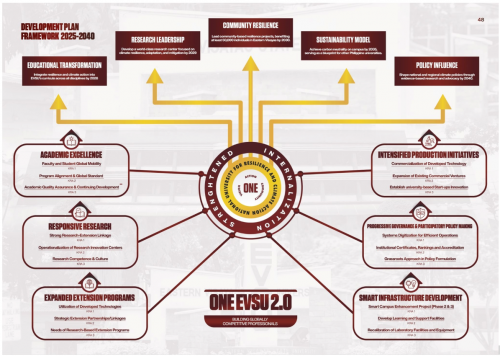
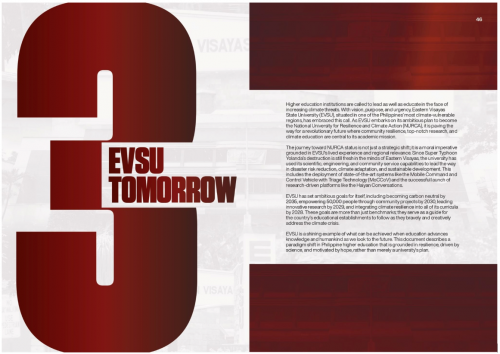
In pursuit of this commitment, EVSU has advanced its institutional vision of becoming a National University for Resiliency and Climate Action (NURCA) by 2040. This vision positions climate resilience and sustainability as defining elements of the University’s long-term institutional development and provides strategic direction for aligning its programs, resources, expertise, and partnerships toward addressing climate-related challenges. It also recognizes the University’s role not only as a center for higher education and research but also as an active development partner capable of generating practical solutions, providing technical assistance, and strengthening the adaptive capacities of local governments and vulnerable communities.
The University’s climate action agenda is supported by its institutional sustainability and SDG 13 policy commitments, which provide direction for mainstreaming climate change considerations into institutional policies, academic programs, research and development, extension initiatives, and campus management. These commitments are consistent with the principles and objectives of the Philippine Climate Change Act of 2009 (Republic Act No. 9729), the Philippine Disaster Risk Reduction and Management Act of 2010 (Republic Act No. 10121), the People’s Survival Fund Act (Republic Act No. 10174), the Paris Agreement, and the United Nations 2030 Agenda for Sustainable Development.
Institutional Leadership and Dissemination of the Climate Action Plan

The University’s commitment to climate action was further strengthened in 2025 through the institutional development direction introduced by University President Dr. Dennis C. de Paz under ONE EVSU 2.0: One Vision. One Action. One Community. Following his reappointment as University President, Dr. de Paz articulated the ambition of transforming EVSU into a National University for Resiliency and Climate Action. This strategic direction underscores the University’s responsibility to harness its institutional capabilities in addressing the environmental and climate-related challenges affecting Eastern Visayas and other vulnerable areas.
The NURCA vision provides an overarching institutional framework for aligning academic instruction, research and innovation, extension services, and university operations with climate resilience and sustainability objectives. It encourages academic units and campuses to contribute to a shared institutional agenda by developing relevant curricula, conducting applied research, introducing appropriate technologies, promoting environmental stewardship, and implementing community-based initiatives that respond to local climate vulnerabilities.
This commitment was further communicated during the University’s Fourth State University Address on September 1, 2025, entitled ONE EVSU 2.0: One Vision. One Action. One Community. Through this institutional gathering, the University President reiterated the importance of collective action and called on the EVSU community to work toward positioning the University as an anchor of resilience and climate action. The address served as a platform for communicating the University’s strategic direction to its academic and administrative personnel, students, and representatives of its campuses.
By articulating climate action as a shared institutional responsibility, EVSU seeks to ensure that resilience and sustainability are not treated as isolated concerns of environmental science or disaster management units but are incorporated into the decisions, programs, and activities of the entire University. This leadership-driven approach also provides a basis for strengthening external engagement, particularly with LGUs and community organizations that share responsibility for climate adaptation, disaster preparedness, environmental protection, and sustainable local development.
Institutionalizing Anticipatory Governance through Futures Thinking and Strategic Foresight

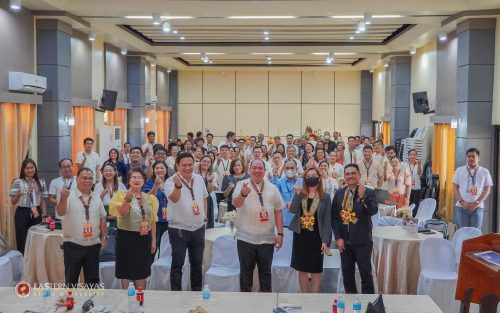
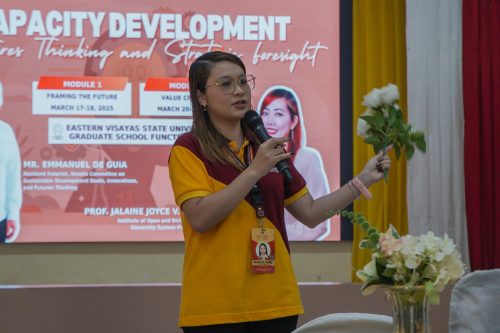
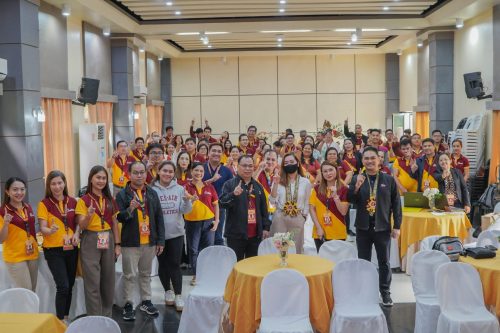
A significant component of EVSU’s institutional approach to climate action is its investment in Futures Thinking and Strategic Foresight as mechanisms for strengthening long-term institutional planning, policy development, and anticipatory governance. Recognizing that climate change presents complex, interconnected, and long-term challenges, the University acknowledges the importance of developing the capacity to anticipate emerging risks, explore alternative future scenarios, and formulate strategic interventions before these challenges fully materialize.
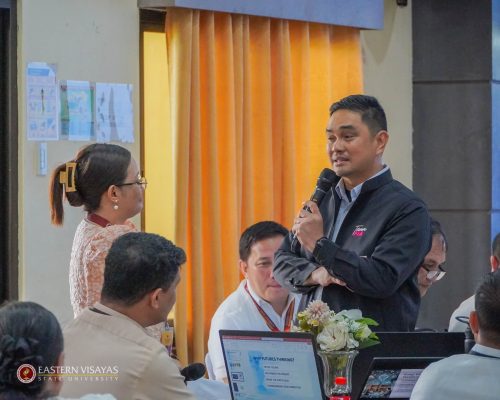
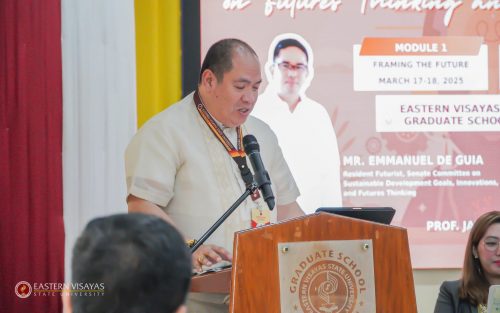
In 2025, EVSU strengthened this institutional capability through its Capacity Development on Futures Thinking and Strategic Foresight program, conducted for faculty members, researchers, extensionists, and non-teaching personnel. The program included Modules 1 and 2 on March 17–18, 2025, with 93 participants indicated in the University’s procurement documentation. This was followed by Module 3: Policy Foresight, a three-day capacity development activity held on July 16–18, 2025, at Sabin Resort, Ormoc City.
The capacity development initiative was aligned with the University’s ONE EVSU 2.0 institutional development agenda and its aspiration to become a National University for Resilience and Climate Action (NURCA). It sought to strengthen the ability of university personnel to apply foresight methodologies in institutional decision-making, policy formulation, strategic planning, and the development of future-oriented academic and research programs.
The training introduced participants to important foresight methodologies, including horizon scanning, scenario planning, systems mapping, and strategic backcasting. These approaches enable the University to examine emerging environmental, technological, socioeconomic, and governance trends that may influence its institutional development and the resilience of the communities it serves.
Of particular relevance to climate action was the use of scenario-based exercises and an immersive gaming simulation in which participants explored possible future scenarios involving calamities and examined potential institutional responses. This provided an opportunity to consider how EVSU could prepare for different disaster scenarios, anticipate future disruptions, and strengthen its capacity to respond to climate-related risks and other emerging challenges.
The training also emphasized the importance of policy foresight in institutional transformation. Discussions highlighted the need for academic institutions to develop evidence-based policies that are not merely responsive to present conditions but are also capable of anticipating future risks, opportunities, and development challenges. The relationship between SDG 9 and SDG 13 was likewise explored, particularly the role of technological innovation, resilient infrastructure, and green solutions in advancing sustainable development and environmental resilience.
An important outcome of this initiative was the emphasis on embedding strategic foresight into EVSU’s institutional planning processes, curriculum development, and research agenda. Through this approach, the University seeks to align its long-term development priorities with emerging environmental and societal challenges and ensure that climate resilience is considered in the formulation of institutional policies and programs.
The application of Futures Thinking also provides a strategic foundation for translating EVSU’s aspiration of becoming a National University for Resilience and Climate Action by 2040 into actionable institutional priorities. Through backcasting, the University can identify the policies, investments, research initiatives, infrastructure improvements, academic interventions, and external partnerships necessary to achieve its desired future state.
Furthermore, the University’s investment in strategic foresight strengthens its capacity to engage local governments and community stakeholders in forward-looking discussions on climate resilience and sustainable development. By developing the competencies needed to anticipate future challenges and formulate appropriate policy responses, EVSU can contribute more effectively to local development planning, disaster risk reduction, climate adaptation, and the development of resilient communities.
In this regard, Futures Thinking and Strategic Foresight serve as important enabling mechanisms within EVSU’s broader climate action agenda. They strengthen the University’s ability to connect long-term institutional vision with evidence-based policies, research-driven solutions, and collaborative interventions, ensuring that its commitment to climate resilience is guided not only by present environmental concerns but also by the anticipated needs and challenges of future generations.
Sharing and Operationalizing EVSU’s Climate Action Plan with Local Government and Communities

Recognizing that effective climate action requires coordination between academic institutions and the communities they serve, EVSU actively engages local governments, national government agencies, non-government organizations, and other stakeholders in developing and implementing initiatives that address climate-related risks and vulnerabilities.
The University’s 2025 initiatives demonstrate how its institutional climate action direction is translated into collaborative programs, technical interventions, knowledge-sharing activities, and community-based resilience efforts.
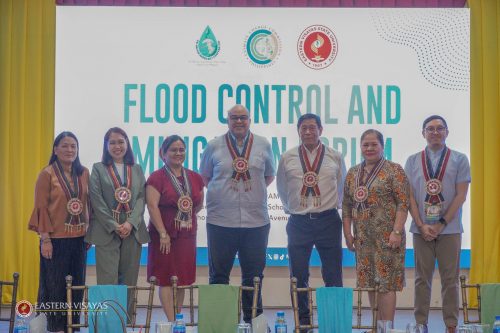
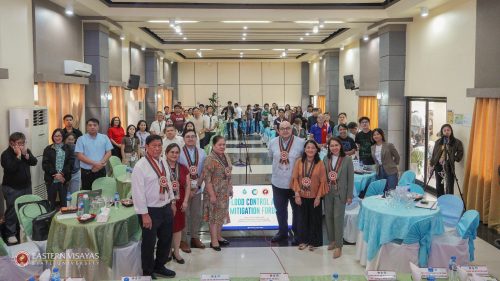
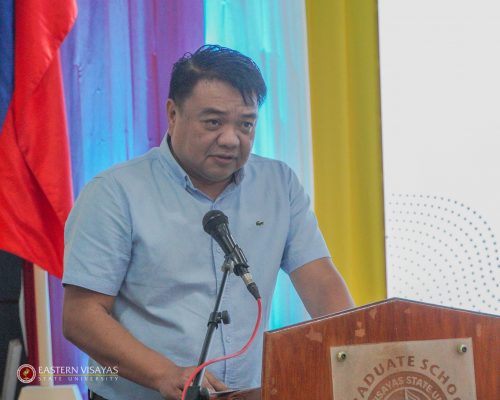
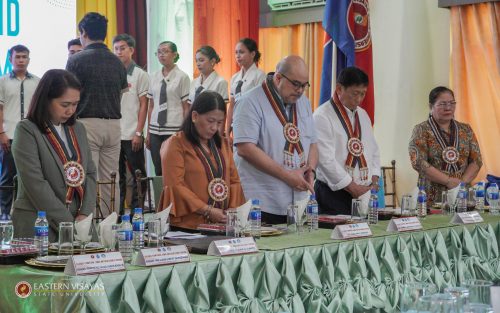
A significant example in 2025 was the Flood Control and Mitigation Forum, which brought together EVSU and key stakeholders to address the flood vulnerabilities of Tacloban City. The forum served as a collaborative platform for discussing the city’s exposure to flooding and identifying coordinated, evidence-based, and environmentally responsible approaches to flood mitigation and disaster resilience. Participants included representatives from the Tacloban City Government, EVSU, PH Haiyan, the Department of Environment and Natural Resources (DENR), the Department of Public Works and Highways (DPWH), private-sector stakeholders, and community organizations.
The engagement provided an avenue for EVSU to share its institutional climate and resilience priorities, technical expertise, and knowledge resources with local government and community stakeholders, while likewise gaining insights from local actors concerning the specific environmental and disaster-risk challenges confronting Tacloban City. The multi-sectoral nature of the forum strengthened coordination among the University, government agencies, local authorities, the private sector, and community groups, recognizing that climate resilience requires integrated action across institutions and sectors.
More importantly, the forum demonstrated how EVSU’s climate-action agenda is translated into place-based and community-responsive action. Rather than limiting climate action to campus-based environmental measures, the University actively contributes to discussions on flood mitigation, disaster risk reduction, environmental management, and resilient local development. Through such engagements, EVSU positions itself as a knowledge and innovation partner of local government and communities, helping connect academic and technical expertise with local planning and community resilience needs.
The Flood Control and Mitigation Forum therefore provides tangible evidence that EVSU’s university-wide climate action and resilience agenda is shared with and operationalized in collaboration with local government and community stakeholders. It demonstrates the University’s commitment to ensuring that its institutional climate priorities contribute to broader regional resilience and support collaborative efforts to protect communities from the increasing risks associated with climate change and extreme weather events
Strengthening Local Disaster Preparedness through the SMART Disaster Early Warning System (SMART DEWS)
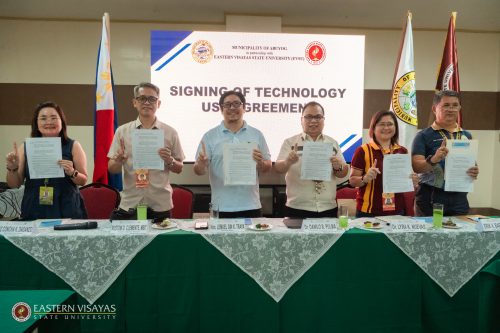
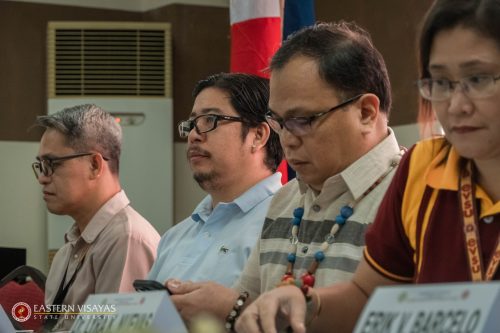
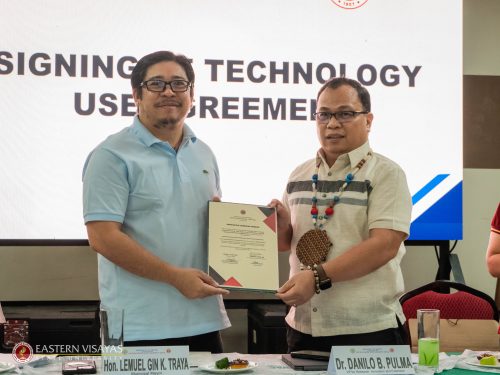
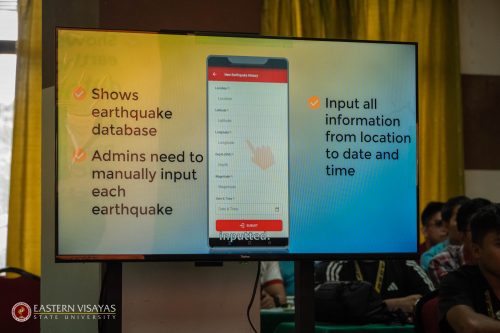
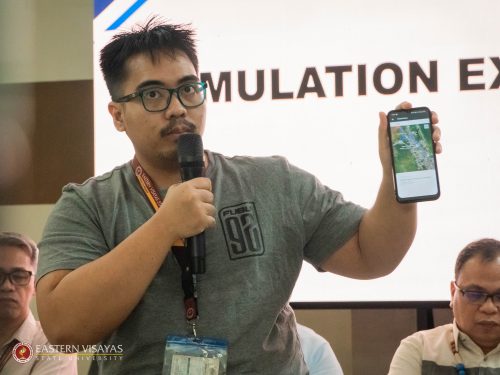
One of EVSU’s significant contributions to local climate resilience in 2025 was its partnership with the Local Government Unit of Abuyog, Leyte, through the deployment of the Beeware Application – SMART Disaster Early Warning System (SMART DEWS).
On September 24, 2025, EVSU and the Abuyog LGU formalized their collaboration through the signing of a Technology Use Agreement during the system’s launch and turnover. The agreement was signed by Abuyog Municipal Mayor Hon. Lemuel Gin K. Traya, representatives of the Municipal Disaster Risk Reduction and Management Office (MDRRMO), and EVSU officials led by Vice President for Research, Innovation and Extension Services Dr. Danilo B. Pulma.
The initiative was developed to strengthen the municipality’s existing disaster preparedness and risk reduction mechanisms through the application of information and communication technologies. The system provides real-time disaster notifications through mobile applications and SMS, GPS-based evacuation routes, and actionable information to help residents respond appropriately to emergencies.
Through this collaboration, EVSU shares its technological capabilities and research-based solutions with the local government, enabling the municipality to strengthen its disaster information and early warning mechanisms. The initiative also demonstrates the University’s recognition that access to timely and reliable information is essential in protecting communities from the impacts of extreme weather events and other hazards that may be intensified by climate change.
Beyond the technological intervention, the SMART DEWS partnership exemplifies the University’s approach to translating institutional climate resilience priorities into practical solutions responsive to local government needs. It establishes a collaborative mechanism through which university expertise can complement local disaster risk reduction strategies, improve community preparedness, and support more informed decision-making during emergencies.
Strengthening Institutional and Regional Disaster Resilience through the Mobile Command and Control Vehicle (MOCCOV)

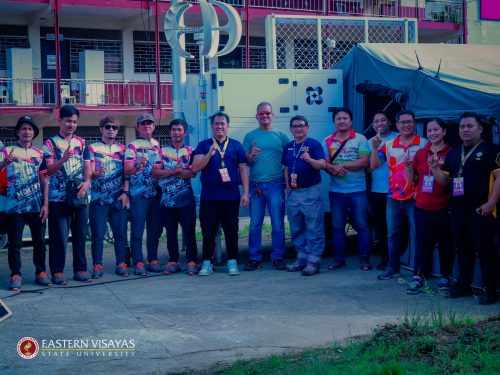
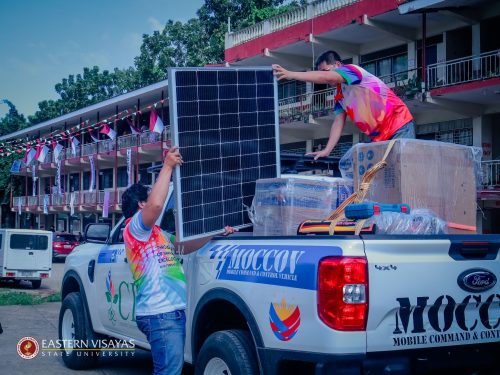
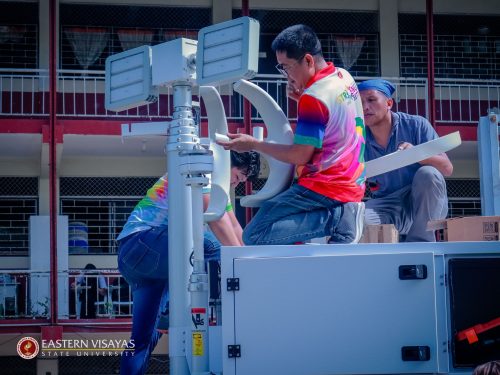
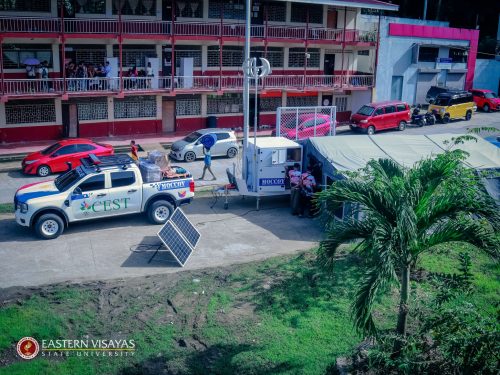
Recognizing the importance of technological innovation, institutional preparedness, and inter-agency coordination in addressing climate-related disasters, Eastern Visayas State University (EVSU) strengthened its disaster resilience initiatives in 2025 through its partnership with the Department of Science and Technology (DOST) under the project, Application of Science, Technology, and Innovation for the Enhancement of Disaster Risk Reduction and Management in Region 8.
A major component of this collaboration was the deployment of the Mobile Command and Control Vehicle with Triage Technology (MOCCOV), an advanced mobile emergency response and coordination platform designed to strengthen disaster preparedness, situational awareness, and emergency management operations. The initiative recognizes the vulnerability of Eastern Visayas to typhoons, flooding, landslides, storm surges, and other hazards that can disrupt essential services, damage infrastructure, isolate communities, and complicate emergency response operations.
EVSU announced its collaboration with DOST on March 13, 2025, highlighting the University’s role in supporting the deployment, operation, and management of the technology through its institutional expertise in engineering, information technology, and related technical disciplines. The vehicle was officially launched on April 10, 2025, at the University’s Office of Research and Development and Extension Services (ORDExS), marking an important step in strengthening the University’s capacity to contribute to regional disaster risk reduction and management.
MOCCOV serves as a mobile emergency operations platform equipped with advanced communication, monitoring, and response technologies. Its capabilities include real-time data gathering, GPS tracking, secure communication systems, surveillance equipment, drone-assisted aerial monitoring, weather monitoring facilities, and emergency response support equipment. It also incorporates renewable energy capabilities through solar and wind power systems, helping sustain operations during electricity interruptions that commonly occur during major disasters.
These technological features enable responders to establish a mobile command and coordination center in disaster-affected locations, gather relevant field information, monitor developing situations, and coordinate emergency operations. By supporting communication and situational awareness, the system helps address operational challenges that may arise when conventional communication infrastructure and other essential services are disrupted.
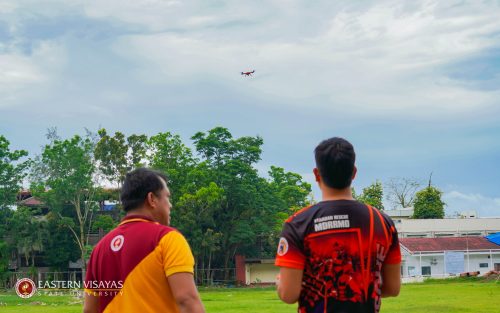
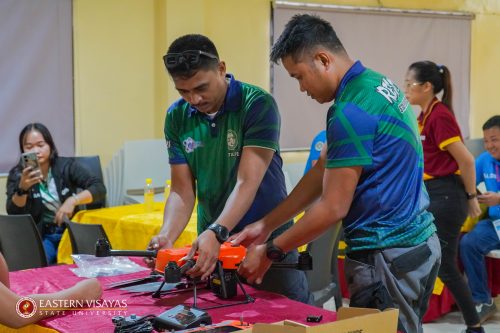
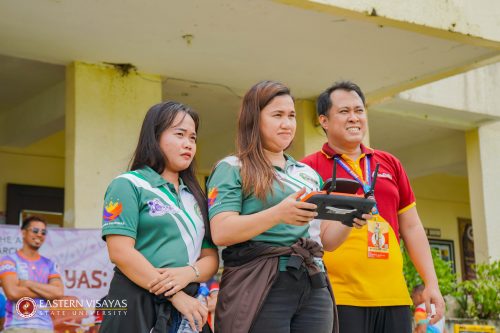
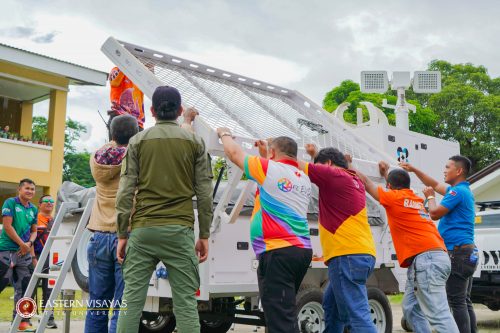
More importantly, EVSU extended the benefits of this technology beyond its own institutional operations by conducting capacity-building activities for local government disaster management personnel. On May 20, 2025, the University, through ORDExS and in partnership with DOST, conducted a hands-on training on MOCCOV management and operations for Municipal Disaster Risk Reduction and Management Councils (MDRRMCs) from various municipalities.
The training covered the use of the vehicle’s communication systems, surveillance and monitoring facilities, drone-assisted aerial observation, and the establishment of an Incident Command System using MOCCOV as a mobile operational base. Participants also took part in a field simulation in which they practiced deploying the vehicle and managing an emergency response scenario. This practical component enabled local disaster response personnel to familiarize themselves with the technology and develop the competencies necessary to integrate it into their respective emergency management operations.
The training is particularly significant because it demonstrates EVSU’s commitment to sharing its technological resources, technical knowledge, and institutional capabilities with local government stakeholders. By engaging municipal disaster management councils, the University helps strengthen coordination between higher education institutions and local authorities, promoting a more integrated approach to disaster preparedness, response, and community protection.
From a climate change adaptation perspective, MOCCOV provides an important operational mechanism for strengthening the resilience of communities exposed to extreme weather events and other climate-related hazards. Its weather monitoring, aerial assessment, emergency communication, and incident coordination capabilities support preparedness and response in situations where timely information and coordinated action are critical to reducing disaster impacts. The integration of renewable energy capabilities further contributes to operational continuity and resilience during prolonged emergencies.
The initiative also complements EVSU’s broader institutional commitment to becoming a National University for Resiliency and Climate Action (NURCA). It demonstrates how the University’s strategic direction is translated into tangible technological investments, personnel development, and collaborative interventions that strengthen both institutional and community resilience.
Through its partnership with DOST, the deployment of MOCCOV, and the training of municipal disaster response personnel, EVSU reinforces its role as a regional partner in science- and technology-driven disaster risk reduction and climate resilience. The initiative illustrates the University’s recognition that effective climate action requires not only institutional preparedness but also sustained collaboration, technical knowledge-sharing, and strengthened response capabilities among local governments and the communities they serve.
Promoting Climate Education, Policy Awareness, and Community Engagement through Klima-Eskwela
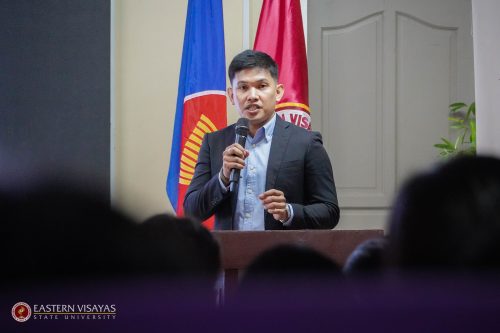
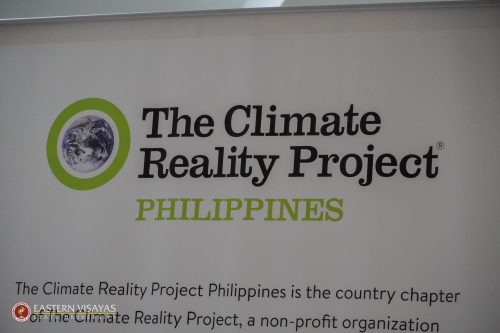
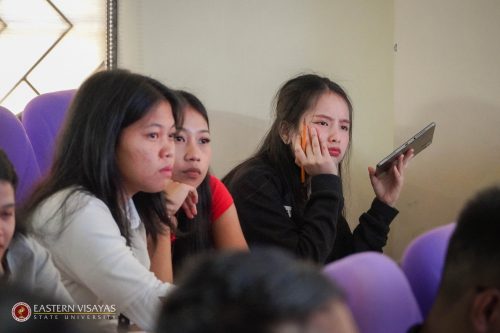
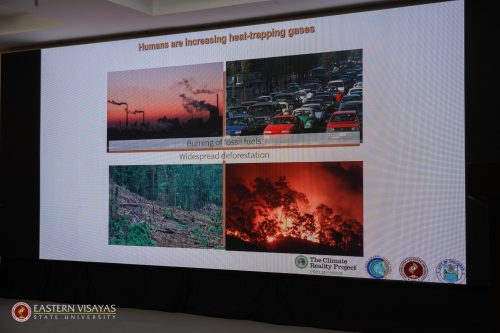

EVSU further strengthened its climate action advocacy through its co-hosting of Klima-Eskwela: Climate Science, Arts and Action, held on November 27–28, 2025, at the EVSU ORIES Studio Room.
The two-day initiative brought together EVSU, the Climate Reality Project Philippines, the Climate Change Commission, and the City Government of Tacloban in a collaborative effort to promote climate science education, environmental awareness, and practical climate solutions.
The activity provided participants with opportunities to understand the scientific foundations of climate change, examine its environmental and socioeconomic consequences, and explore the importance of climate-responsive policies and community participation. Discussions covered climate science and solutions, the relationship between climate change and the plastic crisis, and opportunities for developing localized environmental initiatives.
An important component of the activity was Project Niche, which encouraged participants to develop plastic-free projects and policies that could be presented and implemented in their respective campuses. This approach moved beyond conventional information dissemination by encouraging participants to translate climate knowledge into concrete institutional and community-level interventions.
The participation of the Climate Change Commission and the City Government of Tacloban strengthened the activity’s connection to national and local climate governance priorities. It also provided a platform for sharing climate action knowledge and encouraging cooperation among educational institutions, public-sector organizations, and community stakeholders.
Through Klima-Eskwela, EVSU demonstrated that its climate action agenda encompasses not only institutional policy development but also public education, stakeholder engagement, and the mobilization of young people as active participants in climate solutions.
Promoting Ecosystem Restoration and Community-Based Climate Action through Sibol Han Pagkaurusa
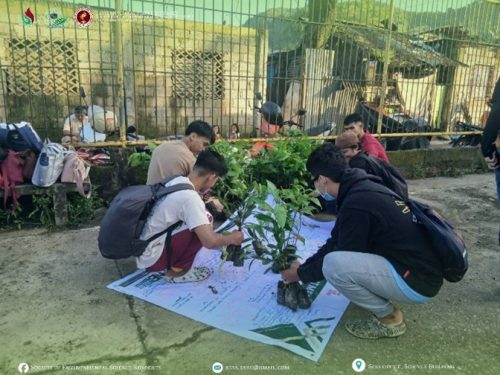
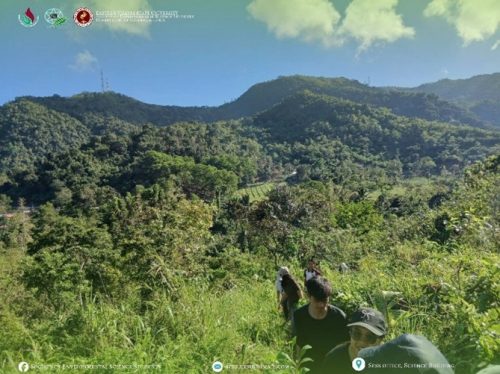
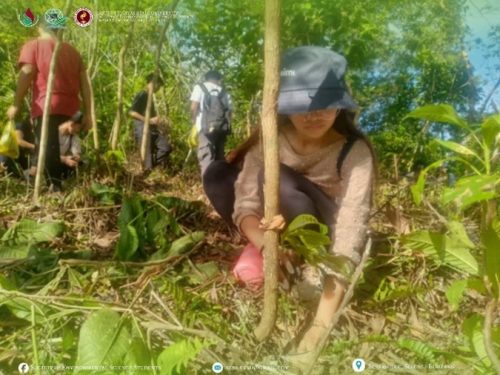
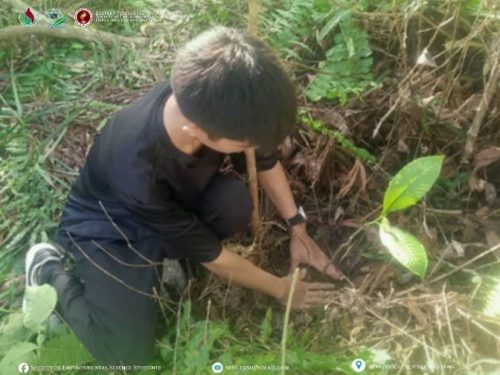
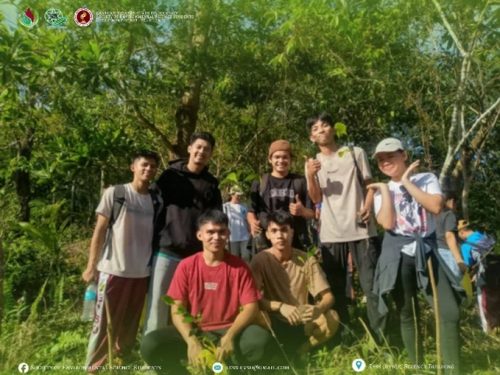
EVSU also recognizes nature-based solutions and ecosystem restoration as important components of climate action. In this regard, EVSU students participated in Sibol Han Pagkaurusa, a native tree-planting initiative conducted on November 29, 2025, in Barangay 104, Salvacion, Tacloban City.
Organized by Plan International Pilipinas under the Eco Project: Ugnayan sa Klima for Resilient Communities, the activity brought together EVSU fourth-year Bachelor of Science in Environmental Science students, members of the Society of Environmental Science Students, environmental organizations, and community stakeholders.
The initiative promoted the planting of native tree species as a practical contribution to ecosystem restoration and environmental protection. It also highlighted the importance of collective action in addressing environmental degradation and strengthening the ecological foundations of climate-resilient communities.
The participation of EVSU students in this initiative demonstrates how the University’s environmental education and extension orientation can be translated into community-based climate action. By working alongside NGOs and environmental organizations, EVSU extends its climate advocacy beyond the university and contributes to partnerships that promote biodiversity conservation, ecosystem restoration, and environmental stewardship.
Integration of Climate Action into the University’s Core Functions
Research, innovation, and technology development. The University recognizes research and innovation as important instruments for generating evidence-based solutions to environmental and climate-related challenges. Its research and extension capacities provide opportunities to develop and transfer appropriate technologies, improve disaster preparedness, support sustainable resource management, and address community vulnerabilities.
Extension and community engagement. Through collaborative extension programs and partnerships with LGUs, government agencies, NGOs, and community organizations, EVSU makes its technical expertise, scientific knowledge, and institutional resources available to communities. These initiatives promote community awareness, resilience-building, and the practical application of sustainable development solutions.
University operations and environmental management. EVSU’s sustainability commitments also extend to campus operations, including energy conservation, resource efficiency, waste management, environmental protection, and the promotion of low-carbon practices. These efforts reinforce the University’s responsibility to demonstrate sustainable practices within its own institutional environment while encouraging similar actions among its stakeholders.
EXPLORE OUR SDG 13 INITIATIVES & ACTIVITIES
EXPLORE OUR SDG 13 RESEARCH & PUBLICATIONS
SUSTAINABLE DEVELOPMENT GOALS