SDG 13 | CLIMATE ACTION

Climate Risk Monitoring, Early Warning, and Government Collaboration

The Eastern Visayas State University (EVSU) recognizes the critical role of climate risk monitoring, timely early warning systems, and strong government collaboration in reducing disaster-related vulnerabilities and strengthening institutional and community resilience. Situated in Eastern Visayas, a region frequently exposed to typhoons, flooding, storm surges, and other climate-related hazards, the University actively supports initiatives that enhance the capacity of communities and local institutions to anticipate, prepare for, and respond to climate risks. Through its research, academic, and extension capabilities, EVSU collaborates with local government units, national government agencies, disaster risk reduction and management offices, and other stakeholders in developing and implementing science-based monitoring, information dissemination, and early warning interventions. These collaborations facilitate the sharing of climate and hazard-related information, the strengthening of local preparedness mechanisms, the conduct of risk awareness and capacity-building activities, and the development of appropriate response strategies for vulnerable communities. Initiatives involving technology-assisted disaster monitoring, community-based early warning systems, flood risk mitigation, and coordinated disaster preparedness demonstrate the University’s contribution to bridging scientific knowledge, government action, and community-level resilience. Through these sustained partnerships, EVSU seeks to improve access to timely and relevant climate risk information, support evidence-based disaster risk management, and strengthen collective capacities to address the increasing impacts of climate change, consistent with its vision of becoming a National University for Resiliency and Climate Action by 2040.
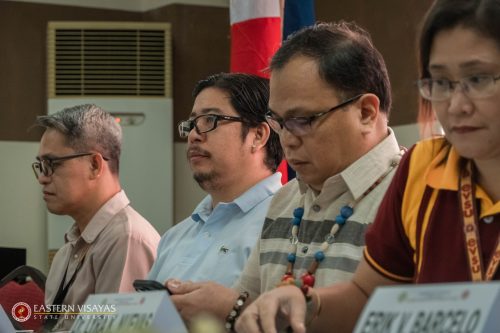
Informing and Supporting Local and Regional Governments
in Climate-Related Disaster Risk Early Warning and Monitoring

Eastern Visayas State University (EVSU) actively supports local and regional government institutions in strengthening their capacities for climate-related disaster risk early warning, monitoring, situational assessment, and emergency coordination. Situated in Eastern Visayas, a region frequently exposed to typhoons, flooding, storm surges, landslides, and other climate-related hazards, the University recognizes the importance of providing local governments with access to scientific knowledge, appropriate technologies, technical expertise, and institutional support to improve disaster preparedness and protect vulnerable communities.

Through its research, innovation, and extension programs, EVSU works with national government agencies, local government units (LGUs), and disaster management organizations to develop and operationalize solutions that address the information and technological requirements of disaster risk reduction and management. These initiatives are designed to strengthen the ability of government institutions to communicate timely warnings, monitor potentially hazardous situations, guide community evacuation, coordinate emergency responders, and make informed decisions before, during, and after disaster events.

EVSU–Abuyog SMART DEWS: Supporting Local Government in Local Climate Change Disaster/Risk Early Warning and Monitoring

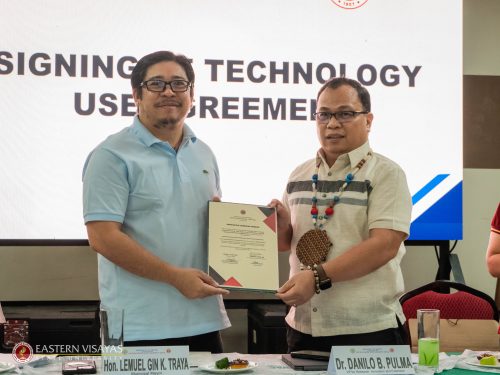
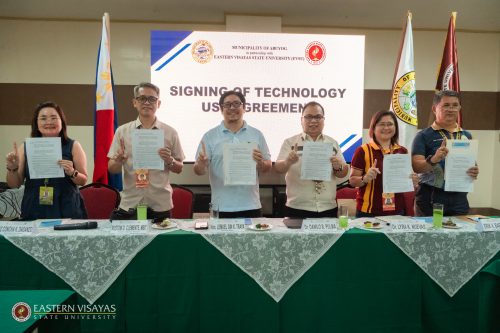
Eastern Visayas State University (EVSU), as an institution, informs and supports local government in local climate change disaster/risk early warning and monitoring through its partnership with the Municipal Government of Abuyog, Leyte in the development and implementation of the Beeware Application SMART DEWS (Disaster Early Warning System). Through this university–government initiative, EVSU provides technology and technical expertise that strengthen the Local Government Unit’s capacity to monitor disaster risks, disseminate timely warnings, and guide communities in taking appropriate preparedness and evacuation actions.

On September 24, 2025, EVSU and the Local Government Unit (LGU) of Abuyog formally launched and turned over the SMART DEWS application, marking the transition of a university-developed technological solution into an operational tool for local disaster risk reduction and management. The initiative was designed to strengthen the municipality’s capacity to provide timely and accessible disaster-related information to communities, particularly those exposed to hazards such as flooding, typhoons, and other climate-related risks.

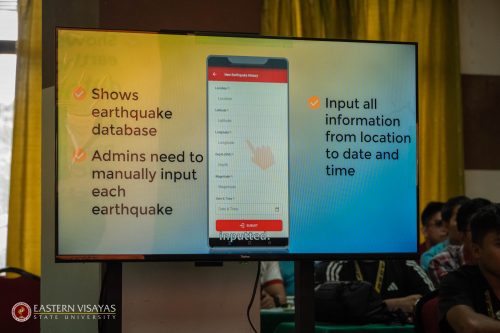
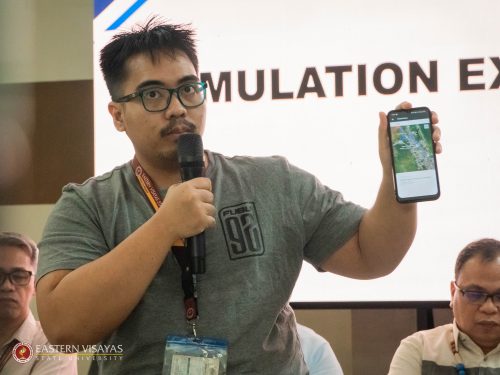
The SMART DEWS provides users with early warning alerts, location-based information, GPS-enabled evacuation routes, and guidance on when and where residents should evacuate. By making critical disaster information accessible through a digital platform, the system supports the ability of the local government and communities to monitor emerging risks, communicate warnings, and facilitate timely evacuation and response.

The initiative directly supports the Municipal Disaster Risk Reduction and Management Office (MDRRMO) of Abuyog by providing a technology-based mechanism that can complement existing local disaster preparedness and response systems. Through the partnership, EVSU contributes its expertise in research, technology development, and innovation while the LGU provides the institutional and community platform through which the system can be implemented and utilized.

This university–government collaboration demonstrates that EVSU’s role in climate action extends beyond awareness campaigns and academic research. The University actively develops, deploys, and transfers technology that enables local government to monitor disaster risks and communicate early warnings to vulnerable communities. The initiative therefore provides concrete evidence of EVSU’s contribution to strengthening local institutional capacity for climate-related disaster risk reduction.

The SMART DEWS is particularly relevant to Eastern Visayas, a region frequently exposed to typhoons, heavy rainfall, flooding, storm surges, and other hazards. By integrating digital technology, geolocation, warning dissemination, and evacuation information, the system helps bridge the gap between disaster-risk information and community-level action. It enables local authorities to communicate risk information more efficiently and helps residents make informed decisions regarding preparedness and evacuation.

The initiative also reflects EVSU’s research-to-community and innovation-for-public-service approach, wherein university-developed knowledge and technology are translated into practical solutions for local government and vulnerable communities. The formal turnover of the system to the LGU of Abuyog demonstrates institutional sustainability beyond a one-time research activity, as the technology is intended to become part of the municipality’s disaster risk reduction and management mechanisms.

Through the SMART DEWS partnership, EVSU therefore directly contributes to local climate change disaster/risk early warning and monitoring, while strengthening the capacity of local government to protect communities and coordinate timely disaster preparedness and response.

EVSU–DOST MoCCoV: Strengthening Local Government Disaster Early Warning, Monitoring, and Emergency Coordination in Eastern Visayas

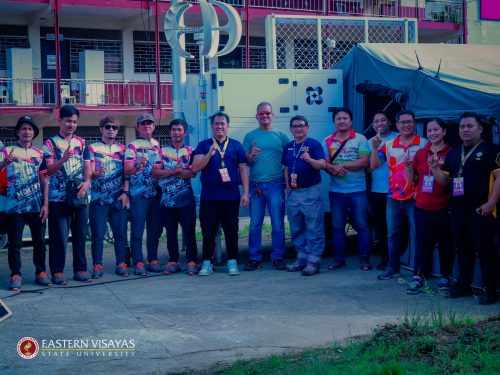
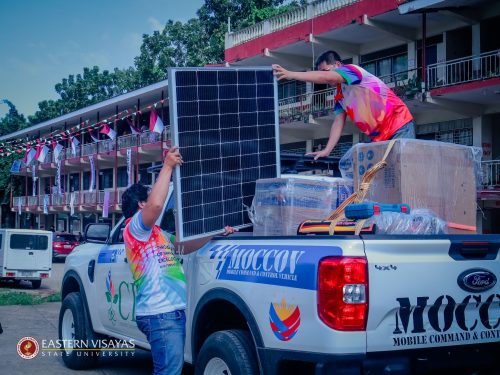
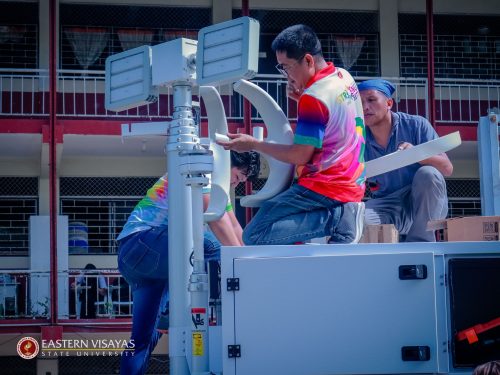
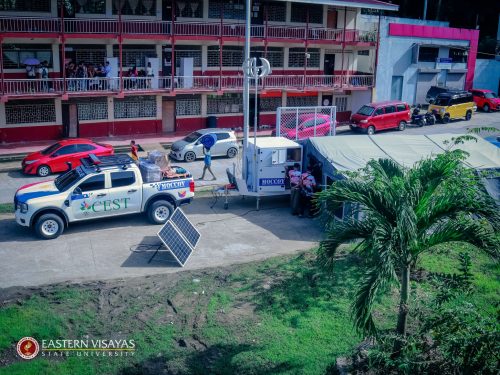
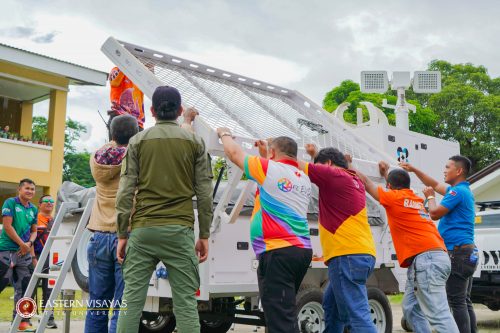
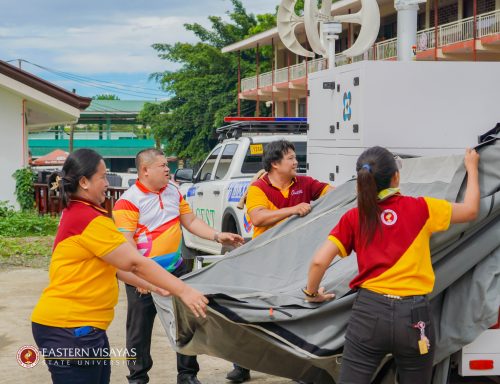
At the regional level, EVSU further contributes to strengthening government disaster monitoring and emergency response capabilities through its collaboration with the Department of Science and Technology (DOST) under the project Application of Science, Technology, and Innovation for the Enhancement of Disaster Risk Reduction and Management in Region 8. A major component of this collaboration was the deployment and launching of the Mobile Command and Control Vehicle with Triage Technology (MoCCoV) on April 10, 2025. 

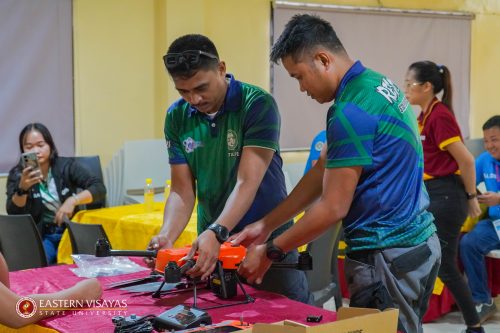
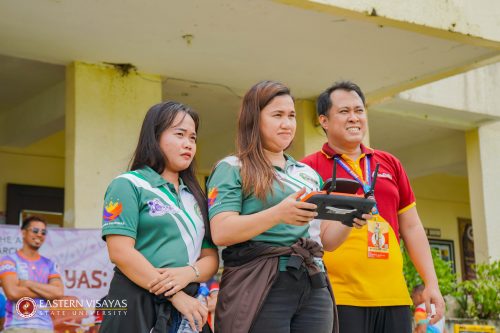
The initiative was particularly significant because EVSU extended the use and knowledge of this technology beyond the university and into local government disaster-management operations. On May 20, 2025, EVSU, through its Office of Research and Development and Extension Services (ORDExS), conducted a hands-on operational training for Municipal Disaster Risk Reduction and Management Councils (MDRRMCs) from various municipalities. The training equipped local government disaster responders with practical knowledge in operating the MoCCoV’s communication, surveillance, and monitoring systems. Participants were trained to use live-feed cameras and drones for aerial monitoring and practiced establishing an incident command system using the MoCCoV as a mobile command platform.

The activity demonstrates EVSU’s institutional role in informing, equipping, and supporting local government in disaster risk monitoring and early warning-related operations. Through access to real-time situational information, aerial surveillance, GPS-based information, and emergency communications, local government responders are better positioned to monitor hazards, assess emerging situations, coordinate response actions, and communicate critical information during disasters.

The EVSU–DOST collaboration also demonstrates a broader science-to-community and research-to-action approach, in which university expertise and government science and technology resources are translated into practical disaster risk reduction capabilities for local communities. This is particularly relevant to Eastern Visayas, a region highly exposed to typhoons, flooding, storm surges, landslides, and other climate-related hazards.

By working directly with DOST and providing technology training to municipal disaster risk reduction and management councils, EVSU contributes to strengthening the local disaster risk information, monitoring, communication, and response ecosystem. The initiative therefore provides concrete evidence that the university, as an institution, participates in supporting government authorities in disaster risk monitoring and preparedness, contributing to more timely and informed decision-making and enhanced community resilience.

Informing Local Stakeholders on Flood Hazards and Disaster Risk Reduction Measures

Complementing the SMART DEWS and MOCCOV interventions, EVSU also participated in multi-stakeholder efforts to strengthen local understanding and management of flood-related disaster risks through the Building Resilience Together Through Flood Control and Mitigation Forum, held on March 7, 2025, at the EVSU Graduate School Function Hall in Tacloban City. The forum brought together representatives from government agencies, technical institutions, community organizations, and other stakeholders to discuss flood control, mitigation strategies, and collaborative approaches to disaster resilience.The activity provided a venue for sharing perspectives and technical knowledge on flood-related vulnerabilities and the importance of coordinated disaster risk reduction measures. Through its participation, EVSU contributed to discussions that support more informed approaches to flood risk management and encourage collaboration among institutions responsible for community safety and environmental protection. Such engagement is important in local disaster risk management because effective monitoring and early warning must be complemented by an understanding of the underlying hazards, the exposure of communities, and the appropriate mitigation and preparedness measures that government institutions can implement. The forum consequently reinforced the role of academic institutions in facilitating the exchange of knowledge and supporting government and community stakeholders in addressing climate-related disaster risks.

Advancing Climate-Resilient Communities through Integrated Early Warning, Disaster Monitoring, and Government Collaboration

Taken together, these initiatives demonstrate EVSU’s multidimensional contribution to informing and supporting local and regional governments in climate-related disaster risk early warning and monitoring. Through SMART DEWS, the University facilitates the transfer of an accessible digital early warning and evacuation guidance system to a local government. Through its collaboration with DOST on MoCCoV, it contributes to improving technological resources for field monitoring, situational awareness, and emergency coordination at the regional level. Through operational training for MDRRMC representatives, it strengthens the competencies of local government personnel in utilizing disaster monitoring and response technologies. Through its participation in flood control and mitigation discussions, it also contributes scientific and institutional perspectives to collaborative approaches to disaster risk reduction.These efforts reflect EVSU’s recognition that universities have an important responsibility in supporting evidence-informed public governance, particularly in regions where communities face recurring climate-related hazards. By mobilizing its research, innovation, and extension capabilities in collaboration with government institutions, EVSU helps bridge the gap between scientific and technological solutions and their practical application in local disaster management. Its initiatives contribute to improving access to disaster-related information, strengthening the operational readiness of government responders, enhancing community preparedness, and supporting coordinated action to reduce the adverse impacts of climate-related hazards.

Consistent with its vision of becoming the National University for Resiliency and Climate Action by 2040, EVSU continues to position its academic expertise, technological innovations, and community engagement programs as important instruments for advancing climate resilience in Eastern Visayas. Through sustained partnerships with national government agencies and local governments, the University seeks to strengthen disaster risk reduction systems and contribute to safer, better-informed, and more resilient communities.

EXPLORE OUR SDG 13 INITIATIVES & ACTIVITIES

2026202520242023
SDG 13: Initiatives for 2026
SDG 13: Initiatives for 2025
SDG 13: Initiatives for 2024
SDG 13: Initiatives for 2023

EXPLORE OUR SDG 13 RESEARCH & PUBLICATIONS

202520242023
SDG 13: Publications for 2025
SDG 13: Publications for 2024
SDG 13: Publications for 2023

SUSTAINABLE DEVELOPMENT GOALS

20252024
2025: Sustainable Development Goals
2024: Sustainable Development Goals