



SDG 13 | CLIMATE ACTION
Commitment to Carbon Neutral University
The Eastern Visayas State University (EVSU) recognizes the importance of reducing its institutional carbon footprint and advancing the transition toward a low-carbon and climate-resilient university. Guided by its vision of becoming a National University for Resiliency and Climate Action by 2040, the University continuously pursues initiatives that promote environmental sustainability, energy efficiency, renewable energy adoption, responsible resource utilization, and the reduction of greenhouse gas emissions across its campuses and operations. Through institutional policies, campus-based sustainability programs, research and innovation, and partnerships with government agencies and other stakeholders, EVSU seeks to integrate climate change mitigation into its governance, infrastructure development, academic activities, and operational practices. These efforts include promoting energy-efficient technologies and practices, exploring and utilizing renewable energy sources, implementing sustainable transportation and waste management initiatives, enhancing green spaces, and encouraging environmentally responsible behavior among students, faculty members, employees, and other stakeholders. The University also recognizes the importance of systematically monitoring its energy consumption, identifying major sources of institutional emissions, and strengthening its capacity for greenhouse gas accounting and carbon footprint management to support evidence-based emission reduction strategies. Through these complementary measures, EVSU endeavors to progressively minimize its carbon footprint, institutionalize low-carbon practices, and establish a pathway toward a more sustainable, resource-efficient, and climate-responsive university.
A University-Wide Climate Action and Low-Carbon Development Agenda Through ONE EVSU 2.0

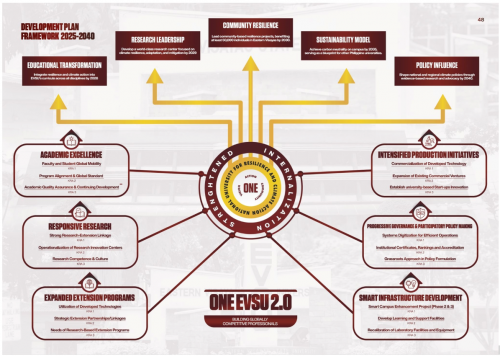
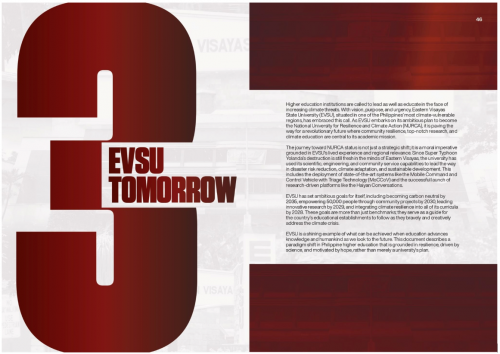
EVSU established a long-term institutional climate-action direction under its ONE EVSU 2.0 initiative, which was launched in 2025 with the vision of transforming the University into the National University for Resilience and Climate Action (NURCA). The initiative provides a university-wide 15-year strategic direction toward 2040, integrating climate action, resilience, sustainable infrastructure, renewable energy, resource efficiency, and environmental stewardship into institutional planning and operations. This institutional aspiration, advanced by University President Dr. Dennis C. de Paz following his reappointment in May 2025, establishes climate resilience and environmental sustainability as central considerations in the University’s long-term development. It reflects EVSU’s recognition that higher education institutions have a significant responsibility not only to educate communities about climate change but also to demonstrate leadership through sustainable institutional governance, responsible resource utilization, environmentally conscious infrastructure development, and the progressive reduction of greenhouse gas emissions associated with their operations.
The NURCA 2040 vision provides an overarching strategic direction for integrating climate action into the University’s institutional policies, programs, and operational priorities. It encourages the incorporation of climate-responsive considerations into academic instruction, research and innovation, community extension, campus administration, and infrastructure development. More importantly, it provides a long-term institutional framework within which EVSU can progressively transition toward a low-carbon and climate-resilient university system. By positioning climate action as an integral component of its institutional identity and development agenda, EVSU recognizes that its contribution to addressing climate change must extend beyond individual environmental projects and encompass the systematic transformation of its institutional practices.
Strengthening the 2040 Climate Action Vision and Carbon Neutrality target Through Strategic Foresight
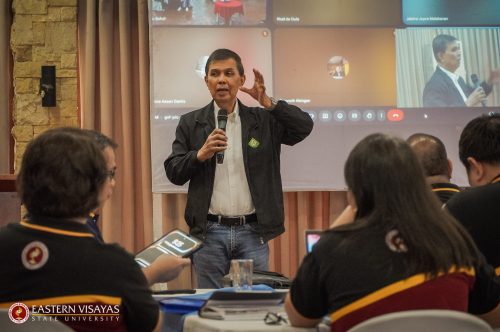

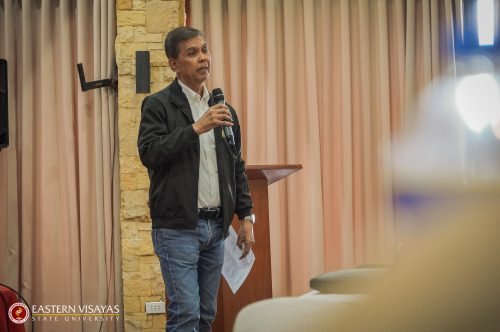
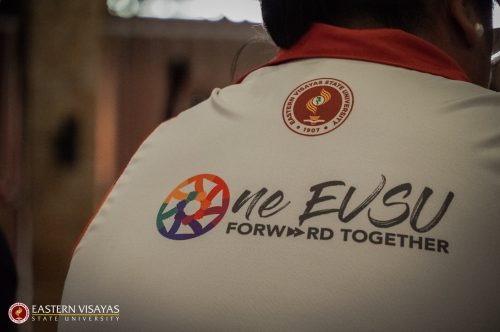
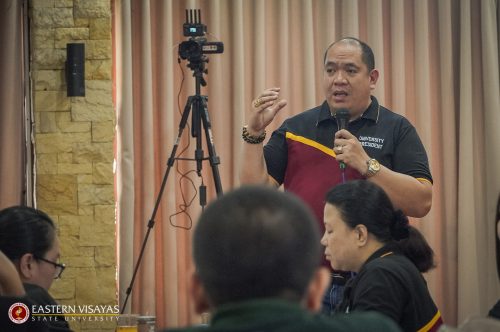
This commitment is reinforced through the university’s 2025 Futures Thinking and Strategic Foresight program. The July 2025 activity specifically linked EVSU’s long-term strategic direction to its ambition of becoming NURCA and to SDG 13: Climate Action, emphasizing long-term and anticipatory strategies for transformative change.
In July 2025, Eastern Visayas State University (EVSU) conducted a three-day Capacity Development on Futures Thinking and Strategic Foresight – Module 3: Policy Foresight, held on July 16–18, 2025 in Ormoc City. The activity brought together EVSU educators, researchers, and administrators to strengthen institutional capacity for long-term planning, policy development, and anticipatory action in support of the University’s vision of becoming the National University for Resilience and Climate Action (NURCA).
The training is relevant to EVSU’s long-term carbon neutrality commitment because it established a strategic and policy-oriented approach for anticipating climate risks, identifying future scenarios, and developing institutional responses. Participants undertook strategic foresight exercises involving horizon scanning, scenario planning, systems mapping, and backcasting, enabling the University to consider long-term environmental and climate challenges and work backward toward desired future outcomes.
A significant component of the activity was the integration of SDG 13: Climate Action with innovation, infrastructure, and green solutions. The discussions emphasized the role of universities in anticipating future climate risks and developing resilient and adaptable policies. The session on “Strategic Futures: From Foresight to Backcasting” further enabled participants to envision future scenarios involving climate-related calamities and identify appropriate institutional responses.
The activity formed part of EVSU’s ONE EVSU 2.0 transformation agenda and provided an institutional mechanism for translating the University’s climate-resilience vision into long-term strategies and policies. This direction was subsequently framed within EVSU’s 15-year 2025–2040 roadmap toward becoming the National University for Resiliency and Climate Action (NURCA).
Through this foresight-based approach, EVSU is establishing the strategic foundation for setting measurable long-term climate targets, including the progressive reduction of institutional greenhouse gas emissions and the eventual achievement of carbon neutrality. The initiative demonstrates that carbon neutrality is being approached not as a short-term environmental project, but as a long-term institutional transformation requiring policy integration, evidence-based planning, infrastructure and technology interventions, and continuous monitoring.
Thus, the 2025 Futures Thinking and Strategic Foresight training serves as evidence of EVSU’s institutional preparation for a long-term, university-wide climate action pathway toward 2040, consistent with its NURCA vision and its commitment to climate action under SDG 13.
Advancing Energy-Efficient and Climate-Responsive University Infrastructure
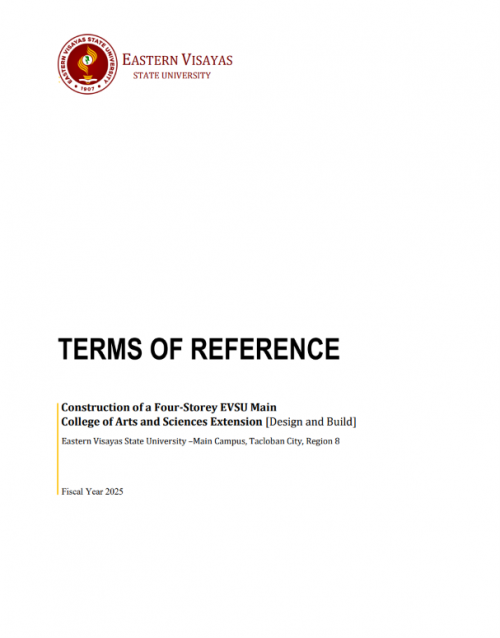
In 2025, Eastern Visayas State University (EVSU) further demonstrated its commitment to energy efficiency and environmentally responsible campus development by incorporating sustainability considerations into the planning requirements for the construction of the four-storey College of Arts and Sciences Extension Building at the Main Campus. Notably, the project’s Terms of Reference included an Energy Efficiency Plan among its requirements, reflecting the University’s recognition that the environmental performance of its facilities must be considered from the earliest stages of infrastructure planning and design, rather than addressed only after buildings become operational.
The inclusion of this requirement represents an important step toward mainstreaming energy efficiency into the University’s infrastructure development processes. By requiring energy efficiency considerations during project planning, EVSU provides an opportunity to incorporate design features and building systems that optimize electricity consumption, minimize unnecessary energy losses, and improve the overall operational efficiency of its facilities. Such considerations may include the appropriate utilization of natural lighting and ventilation, energy-efficient lighting and electrical systems, efficient cooling and ventilation technologies, and other building design strategies that reduce dependence on conventional energy consumption. These approaches are particularly relevant in the Philippine setting, where cooling requirements and electricity consumption can significantly influence the operational energy demands of institutional buildings.
From a broader institutional perspective, integrating energy efficiency into new construction and infrastructure improvements is an important component of EVSU’s transition toward low-carbon campus operations. As the University continues to expand its facilities to accommodate increasing academic, administrative, research, and student service requirements, the environmental implications of its infrastructure investments become increasingly significant. Incorporating energy performance considerations at the design stage can help prevent the long-term establishment of energy-intensive building systems, reduce future electricity requirements, and minimize the greenhouse gas emissions associated with the operation of university facilities.
Furthermore, this initiative complements EVSU’s broader commitment under its ONE EVSU 2.0 vision of becoming a National University for Resilience and Climate Action by 2040. By integrating sustainability requirements into infrastructure development, the University demonstrates how its climate action aspirations can be translated into practical administrative and development decisions. It also establishes an opportunity to progressively institutionalize energy-efficient building standards across its campuses, ensuring that future infrastructure projects contribute not only to the University’s physical expansion but also to its long-term environmental sustainability objectives.
In relation to the University’s prospective carbon neutrality agenda, energy-efficient infrastructure represents a critical emissions reduction intervention, particularly in addressing indirect greenhouse gas emissions associated with purchased electricity (Scope 2). When complemented by renewable energy adoption, systematic energy consumption monitoring, and periodic assessment of building performance, these measures can contribute to a more measurable and sustained reduction in the University’s operational carbon footprint.
Through the integration of an Energy Efficiency Plan into its 2025 infrastructure development requirements, EVSU demonstrates its intention to make environmental performance an integral consideration in campus expansion and modernization. This provides a practical foundation for advancing low-carbon infrastructure development and supports the University’s longer-term ambition of building a climate-responsive, resource-efficient, and environmentally sustainable university system.
Advancing Renewable Energy Research and Innovation Through Solar-Powered Safety Technology



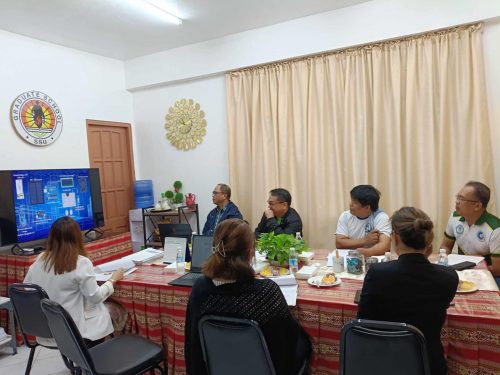
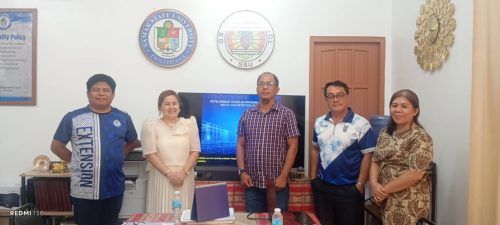
In 2025, Eastern Visayas State University (EVSU) further demonstrated its contribution to low-carbon development through research and innovation initiatives that promote the practical application of renewable energy technologies. A notable example was the work of Prof. Ferdinand C. de la Cruz, an EVSU faculty-researcher, whose study entitled “Evaluation of Performance of the Developed Solar-Powered Portable Multi-Gas Detector Device” received international recognition and was published in the International Journal of Open-access, Interdisciplinary and New Educational Discoveries (iJOINED ETCOR), Volume IV, Issue 4, covering October–December 2025. The publication also qualified Prof. de la Cruz for recognition at the ETCOR Awards 2025 in Bangkok, Thailand.
The research focused on the development and performance evaluation of a solar-powered portable multi-gas detector designed to monitor potentially hazardous gases, including carbon monoxide (CO), methane (CH₄), and hydrogen sulfide (H₂S). The device integrates renewable energy utilization with environmental monitoring and occupational safety applications. Its solar-powered design enables continuous operation even in remote and off-grid locations, where access to conventional electricity may be limited. This feature is particularly relevant to communities, industrial facilities, and other environments that require reliable monitoring of potentially hazardous atmospheric conditions without depending entirely on conventional electricity sources.
Beyond its contribution to workplace and environmental safety, the innovation demonstrates how renewable energy can be incorporated into practical technological solutions that address real-world challenges. By utilizing solar energy to operate an environmental monitoring device, the research illustrates the potential of clean energy technologies to support essential functions while reducing reliance on conventional electricity supply. Its application in remote and off-grid settings also highlights the value of decentralized renewable energy solutions, particularly in geographically isolated and resource-constrained areas.
The study underwent a double-blind peer evaluation, with experts in Electronics, Engineering, and Industrial Technology assessing its scientific basis, functionality, reliability, and practical relevance. The reported findings indicated high functionality and reliability, as well as compliance with established safety standards, supporting the potential applicability of the developed technology in industrial and domestic environments. These findings underscore the importance of university-based research in developing technological innovations that combine environmental sustainability, public safety, and practical utility.
From an institutional perspective, Prof. de la Cruz’s work reflects EVSU’s broader commitment to strengthening research and innovation as instruments for advancing sustainable development. It demonstrates the University’s capacity to generate knowledge and develop technologies that contribute to the adoption of renewable energy beyond conventional power generation applications. Such innovations can inform future opportunities for technology transfer, community utilization, and the integration of clean energy-based systems into institutional and public service applications.
Strengthening Institutional Environmental Stewardship and Advancing a Low-Carbon University by 2040
Complementing its renewable energy, energy efficiency, and research and innovation initiatives, Eastern Visayas State University (EVSU) continues to advance environmental stewardship through activities promoting tree planting, biodiversity conservation, campus greening, and responsible waste management, including collaborations with environmental partners such as the Department of Environment and Natural Resources (DENR). These initiatives reinforce the University’s recognition that climate change mitigation requires an integrated approach that combines the reduction of greenhouse gas emissions with the protection and enhancement of natural ecosystems. Through tree-growing activities and campus greening, EVSU contributes to vegetation restoration and potential carbon sequestration, while biodiversity conservation and improved waste management support ecosystem protection, resource efficiency, and environmentally responsible campus operations.Taken together, these institutional commitments and initiatives demonstrate EVSU’s progressive efforts to establish a climate-responsive and low-carbon university system. Its aspiration to become a National University for Resilience and Climate Action by 2040 provides the long-term strategic direction for embedding climate action into institutional governance, infrastructure development, energy management, research and innovation, and environmental stewardship. Meanwhile, its initiatives on renewable energy utilization, energy-efficient infrastructure, solar-powered technological innovations, and ecosystem conservation represent complementary approaches toward minimizing the environmental impacts of university operations and contributing to broader climate change mitigation efforts.
Ultimately, EVSU’s 2040 vision provides an institutional foundation for advancing a more systematic and measurable transition toward carbon neutrality. By consolidating its existing climate action initiatives under a university-wide decarbonization strategy, establishing a comprehensive greenhouse gas emissions inventory consistent with the Greenhouse Gas Protocol, and defining measurable emissions reduction targets and a specific carbon neutrality deadline, the University can translate its long-term climate aspirations into a concrete institutional commitment. This would enable EVSU not only to strengthen its contribution to climate resilience and sustainable development but also to demonstrate accountability for progressively reducing and ultimately neutralizing the greenhouse gas emissions associated with its institutional operations.
EXPLORE OUR SDG 13 INITIATIVES & ACTIVITIES
EXPLORE OUR SDG 13 RESEARCH & PUBLICATIONS
SUSTAINABLE DEVELOPMENT GOALS



