

SDG 7 | AFFORDABLE AND CLEAN ENERGY
University Energy Efficiency Plan
Eastern Visayas State University (EVSU) recognizes energy efficiency and conservation as fundamental components of sustainable institutional management, responsible utilization of public resources, and environmental stewardship. As an institution operating multiple academic, administrative, research, and support facilities, the University acknowledges the importance of managing its energy requirements systematically while ensuring the continuous delivery of quality instruction, research, extension, and administrative services. Accordingly, EVSU advances an institutional approach to energy management that emphasizes the efficient utilization of electricity, the adoption of energy-saving technologies, the integration of energy-efficiency considerations into infrastructure development, the promotion of responsible energy-use practices, and the continuous improvement of its campus operations. These measures collectively support the University’s objective of minimizing unnecessary energy consumption, improving operational efficiency, and establishing more sustainable and climate-responsive university facilities.
Reduction of Energy Consumption through Flexible d Work Arrangements and Sustainable Administrative Practices
Eastern Visayas State University (EVSU) recognizes that improving institutional energy efficiency requires not only the adoption of energy-saving technologies and infrastructure but also the rationalization of daily university operations to minimize unnecessary energy consumption. As a geographically dispersed institution with academic, administrative, research, and extension functions, the University’s regular operations require the utilization of electricity and other resources across its campuses and offices. Recognizing that the frequency of physical reporting, the scheduling of administrative activities, and the utilization of campus facilities influence overall operational energy demand, EVSU incorporates flexible work arrangements and sustainable administrative practices as complementary measures in advancing its institutional energy efficiency objectives.
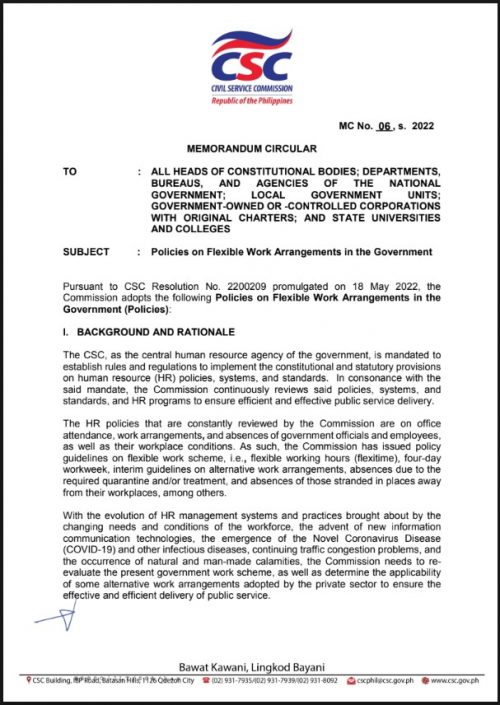
Anchored on the Civil Service Commission (CSC) Memorandum Circular No. 6, s. 2022, entitled “Policies on Flexible Work Arrangements in the Government,” EVSU supports alternative work arrangements that promote organizational productivity, employee well-being, operational efficiency, and environmental sustainability, the University implements flexible instructional arrangements that allow students to continue their academic activities without necessarily reporting to campus.
These include the conduct of online and asynchronous classes during long weekends and holidays, as well as during weather disturbances, transportation difficulties, and other travel disruptions. Such arrangements are particularly beneficial to students residing in distant municipalities and communities, as they eliminate or minimize unnecessary trips to the University while ensuring continuity of instruction and learning
EVSU also implements administrative arrangements such as Flexible Time Work and Compressed Work Schedules, as provided under Section 149, page 140, of the University’s 2017 Administrative Services Manual, subject to applicable guidelines, authorization, and operational requirements. These arrangements provide opportunities to rationalize the use of university facilities, optimize personnel work schedules, and minimize unnecessary on-campus activities. By organizing administrative operations more efficiently, the University seeks to manage the demand for electricity associated with office occupancy, lighting, air-conditioning, office equipment, and other routine workplace operations.
In particular, authorized work-from-home arrangements enable eligible personnel to perform designated administrative, technical, and other work-related responsibilities remotely. When implemented, these arrangements reduce the need to occupy office spaces on designated work-from-home days, creating opportunities to limit the operation of lighting, air-conditioning units, computers, and other office equipment in unoccupied work areas. Similarly, compressed work schedules allow personnel to complete their prescribed working hours within fewer working days, potentially reducing the number of days during which offices and other workplace facilities need to accommodate regular personnel attendance. These arrangements can contribute to more efficient facility utilization by reducing the duration or frequency of routine office occupancy, subject to the University’s operational requirements.
Meanwhile, skeleton workforce arrangements, when authorized, allow the University to maintain essential academic and administrative functions through a limited number of personnel physically reporting to their respective workplaces. By reducing the number of employees simultaneously occupying university facilities, these arrangements provide opportunities to rationalize the use of office spaces and associated energy-consuming equipment while ensuring the continuity of essential services. Such practices demonstrate how administrative flexibility can complement conventional energy conservation measures by addressing not only how energy is consumed but also the operational demand that drives its consumption.
From an institutional energy management perspective, these administrative practices support the University’s efforts to address energy consumption through operational efficiency and demand management. Reducing unnecessary office occupancy and optimizing the use of campus facilities can help minimize avoidable electricity consumption associated with lighting, cooling systems, computers, printers, and other workplace equipment. Furthermore, reducing the frequency of employee commuting through flexible work arrangements provides an additional environmental benefit through potentially lower fuel consumption and transportation-related greenhouse gas emissions. Thus, these practices generate complementary sustainability benefits by addressing both workplace energy demand and the environmental impacts associated with daily commuting.
EVSU’s approach also recognizes that effective energy efficiency measures require continuity of essential institutional functions. Flexible work arrangements and adjusted administrative schedules are therefore implemented subject to applicable policies, authorization, and service requirements to ensure that academic instruction, research, extension, student services, and administrative operations remain responsive to the needs of the University’s stakeholders. This balance between operational efficiency and service continuity reinforces the University’s commitment to responsible energy utilization without compromising its mandate as a public higher education institution.
Furthermore, these administrative practices provide opportunities for strengthening institutional energy monitoring and evaluation. Relevant measures may include tracking the number of personnel covered by approved flexible work arrangements, the number of work-from-home days implemented, the frequency of compressed work schedules, office occupancy levels, and electricity consumption during periods of reduced physical reporting. Consolidating these records with the University’s monthly electricity consumption data would allow EVSU to assess whether adjustments in work arrangements and facility utilization contribute to measurable reductions in energy demand. Such monitoring can also provide an evidence base for establishing energy conservation targets, evaluating the effectiveness of operational measures, and identifying additional opportunities for improvement.
Institutional Commitment to Energy Efficiency through the Smart Campus Enhancement Program

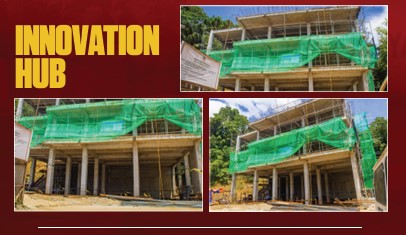
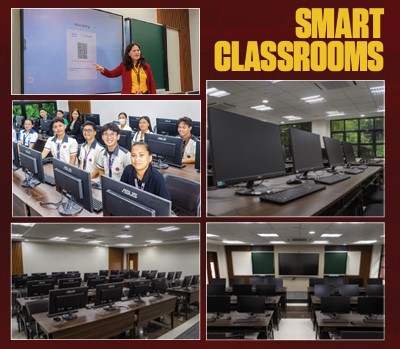
Eastern Visayas State University (EVSU) demonstrates its commitment to promoting energy efficiency and reducing overall energy consumption through its Smart Campus Enhancement Program, a flagship institutional initiative aimed at modernizing university infrastructure, transforming campus operations, and integrating smart technologies into its physical and operational environment. The initiative reflects the University’s recognition that sustainable campus development requires not only the construction of modern facilities but also the adoption of intelligent systems and more efficient approaches to managing institutional resources, particularly energy.
As part of its broader vision of becoming the region’s first smart university, EVSU launched the Smart University Project in December 2023, supported by a substantial investment of PHP 1.5 billion. The project is designed to enhance the University’s infrastructure and operational capabilities through technology-driven improvements. A significant component of this undertaking is the integration of Internet of Things (IoT) technologies for enhanced security and energy efficiency, demonstrating the University’s intention to incorporate intelligent and technology-enabled solutions into campus facility management. By integrating IoT systems into its infrastructure, EVSU is advancing a more responsive and efficient campus environment where technological innovations can support the management and utilization of institutional resources.
The energy efficiency dimension of the program is particularly reflected in the modernization of campus facilities and the development of infrastructure designed to support contemporary academic and administrative operations. The project encompasses the construction and development of several major facilities, including the Innovation Hub Building, Administration Building, Powerhouse, e-Laboratories, and smart classrooms. It also involves the transformation of conventional classrooms into hybrid-ready smart learning environments. These infrastructure improvements form part of the University’s broader effort to modernize its facilities and integrate technology into the delivery of academic and administrative services.


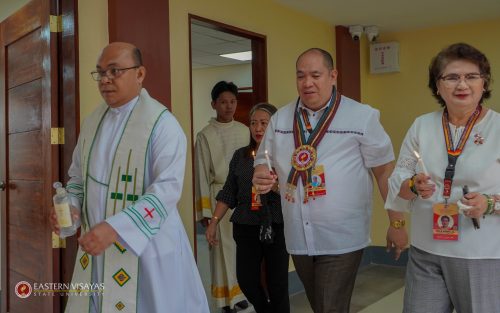
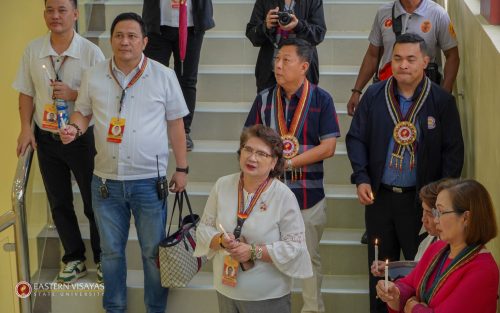
The conversion of traditional classrooms into smart classrooms is especially relevant to the University’s energy efficiency agenda because it accompanies the wider integration of intelligent technologies into campus infrastructure. Together with the planned and ongoing deployment of IoT-enabled systems, these developments provide opportunities for more efficient facility operations and technology-supported resource management. The inclusion of energy efficiency as an explicit objective of the Smart Campus Enhancement Program further establishes that energy considerations are being incorporated into the University’s institutional infrastructure development strategy rather than being treated solely as an independent operational concern.
The development of the Powerhouse also forms part of this comprehensive campus modernization initiative. Alongside the University’s other major infrastructure investments, it represents an important component of the physical infrastructure supporting the University’s expanding and increasingly technology-enabled operations. Its development, together with the integration of smart technologies, demonstrates EVSU’s efforts to strengthen the infrastructure necessary to support the operational requirements of a modern university.
According to the University’s Phase 1 project updates as of April 2025, the Smart University Project had achieved 37% completion, with several major infrastructure developments already delivered or progressing, including smart classrooms, e-laboratories, the Administration Building, the Powerhouse, and the Innovation Center. These developments demonstrate that the University’s energy efficiency objectives are being pursued alongside its broader institutional investments in infrastructure modernization, technological advancement, and improved campus operations.
Through the Smart Campus Enhancement Program, EVSU is establishing the technological and infrastructural foundations for a more energy-conscious university environment. By incorporating energy efficiency into its smart campus development agenda and investing in IoT-enabled technologies and modern facilities, the University demonstrates an institutional commitment to improving the efficiency of its operations, promoting more responsible energy utilization, and supporting the long-term sustainability of its campuses. This initiative forms part of EVSU’s continuing efforts to align institutional modernization with environmental responsibility and sustainable development.
Implementation of Government Energy Conservation Directives: Switching Off Unused Lights and Air-Conditioning Units During Periods of Reduced Office Activity
Eastern Visayas State University (EVSU) strengthens its institutional energy efficiency efforts through the implementation of government-mandated energy conservation measures that promote the responsible use of electricity in government offices. Recognizing that lighting systems and air-conditioning units account for a significant portion of electricity consumption in administrative workplaces, the University observes energy-saving practices that minimize unnecessary operation of electrical equipment, particularly during lunch breaks and periods when offices are temporarily unoccupied.
This institutional practice is anchored on Presidential Memorandum Circular No. 48, series of 2024, entitled Directing All Government Agencies and Instrumentalities and Encouraging Local Government Units to Adopt and Immediately Implement Low-Cost Energy Efficiency and Conservation Measures, issued on May 13, 2024. Under Item No. 2(c), all departments, agencies, bureaus, and offices of the National Government are directed to adopt low-cost energy efficiency and conservation measures, including:
“turning off unused lights and air-conditioning units.”
The circular further directs government agencies to intensify efforts toward the efficient and judicious utilization of energy, consistent with the Government Energy Management Program (GEMP).
In support of this directive, EVSU incorporates the switching off of office lights and air-conditioning units during lunch breaks into its routine administrative energy conservation practices. By temporarily shutting down these electrical facilities when offices are not fully occupied, the University minimizes avoidable electricity consumption and reduces the operating hours of energy-intensive equipment. This measure is particularly relevant to air-conditioning systems, which require substantial electrical energy to maintain indoor cooling, and to lighting facilities that may otherwise remain unnecessarily operational during periods of reduced office activity.
The practice also reinforces the University’s commitment to cultivating energy-conscious behavior among its employees. Faculty members, administrative personnel, and other university staff are encouraged to take responsibility for ensuring that electrical facilities are switched off when not needed. Through consistent implementation across offices, this simple but practical intervention promotes collective participation in institutional energy conservation.
Furthermore, this measure complements EVSU’s broader energy efficiency initiatives, including the Smart Campus Enhancement Program, the integration of energy-efficient technologies, and the optimization of administrative operations. While infrastructure modernization provides opportunities for long-term improvements in energy performance, switching off unused electrical equipment represents an immediate and practical operational measure for reducing unnecessary electricity consumption.
Through compliance with the national energy conservation directive, EVSU demonstrates its commitment to translating government energy efficiency policies into everyday institutional practices. The initiative contributes to reducing avoidable electricity consumption, promoting responsible energy utilization, and strengthening a culture of conservation throughout the University.
Gradual Replacement and Adoption of Energy-Efficient Appliances and Equipment
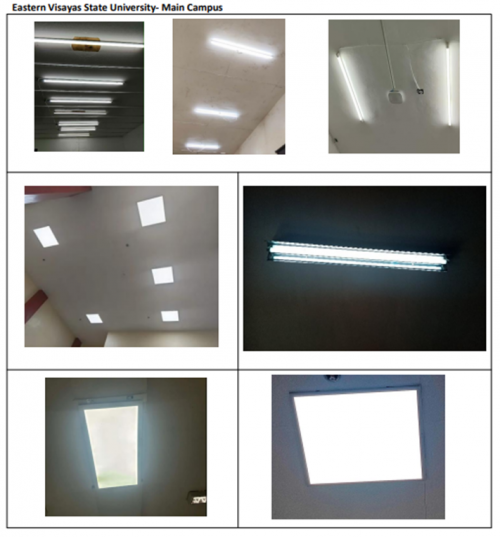
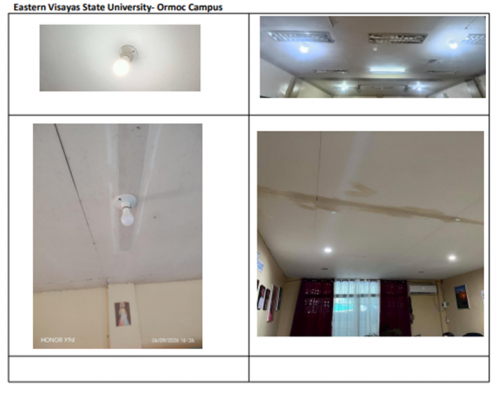
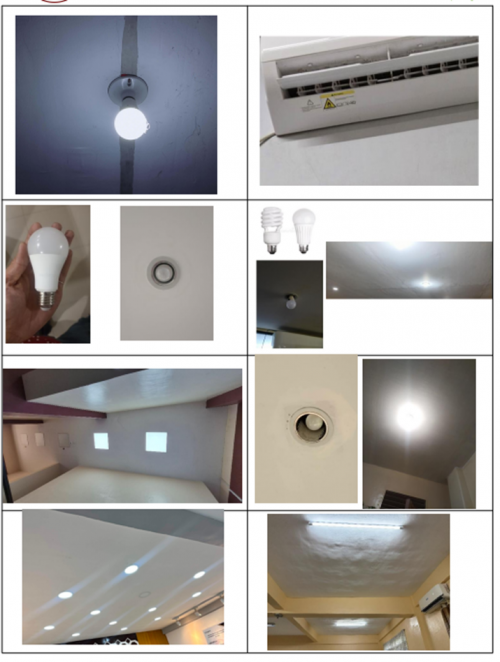
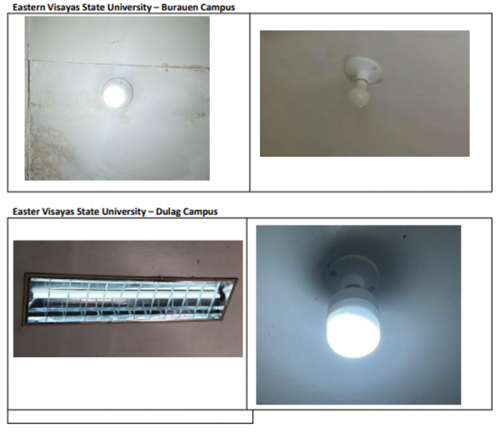
A major component of EVSU’s building energy-efficiency improvement efforts is the gradual replacement of conventional appliances and equipment with energy-efficient alternatives. The University’s energy-efficient appliances inventory, covering its Main, Ormoc, Burauen, Tanauan, and Dulag campuses, documents the adoption of more efficient technologies across various categories of equipment used in academic, administrative, and support facilities. These include lighting fixtures, computers, printers and photocopying machines, air-conditioning units, water dispensers, electric fans, refrigerators, television sets, and cooking and heating appliances.
The maintenance of an institutional inventory of energy-efficient appliances reflects the University’s efforts to identify and document the equipment used across its geographically distributed campuses and to support the transition toward more energy-conscious facility operations. By gradually replacing conventional appliances with energy-efficient alternatives, EVSU seeks to improve the efficiency of electricity utilization, minimize unnecessary energy demand, and reduce the operational energy requirements of its buildings and facilities.
Particular attention to lighting systems, air-conditioning units, and office equipment is significant because these are among the common electricity-consuming assets in university facilities. The adoption of more efficient lighting technologies and cooling equipment, together with energy-efficient computers and other office appliances, provides opportunities to reduce electricity consumption while maintaining the functional requirements of academic instruction, research, administrative services, and other university operations.
The inventory also provides an important reference for the University’s continuing energy management efforts. By documenting energy-efficient equipment across its campuses and different equipment categories, EVSU can identify opportunities for further replacement and upgrading, establish priorities for future procurement, and strengthen the monitoring of its energy conservation initiatives. This supports a more systematic approach to improving building energy performance and integrating energy efficiency considerations into institutional resource planning.
EVSU’s Institutional Commitment to Energy Efficiency and Conservation
Eastern Visayas State University (EVSU) recognizes energy efficiency and conservation as integral components of its commitment to environmental sustainability, responsible resource management, and the development of sustainable university campuses. As a public higher education institution with multiple campuses and diverse academic, research, extension, and administrative operations, EVSU acknowledges its responsibility to manage energy resources efficiently, minimize unnecessary electricity consumption, and continuously improve the energy performance of its buildings, facilities, and institutional operations.
Guided by national government policies and energy conservation directives, particularly the Government Energy Management Program (GEMP) and the applicable energy efficiency and conservation issuances, EVSU commits to integrating energy-saving principles into its institutional policies, administrative practices, infrastructure development, and equipment management. This commitment is reflected in its implementation of practical energy conservation measures, including switching off unused lighting and air-conditioning units during lunchtime, promoting responsible electricity use among university personnel, and adopting energy-conscious practices in the utilization of campus facilities.
EXPLORE OUR SDG 7 INITIATIVES & ACTIVITIESS
EXPLORE OUR SDG 7 RESEARCH & PUBLICATIONS
SUSTAINABLE DEVELOPMENT GOALS