
SDG 7 | AFFORDABLE AND CLEAN ENERGY

Low Carbon Energy Use

Eastern Visayas State University (EVSU) recognizes the importance of reducing carbon emissions associated with institutional energy consumption as part of its commitment to environmental sustainability and climate change mitigation. Through the integration of renewable energy technologies and the monitoring of electricity consumption across its campuses, the University continues to undertake initiatives that support the transition toward more sustainable and low-carbon campus operations.

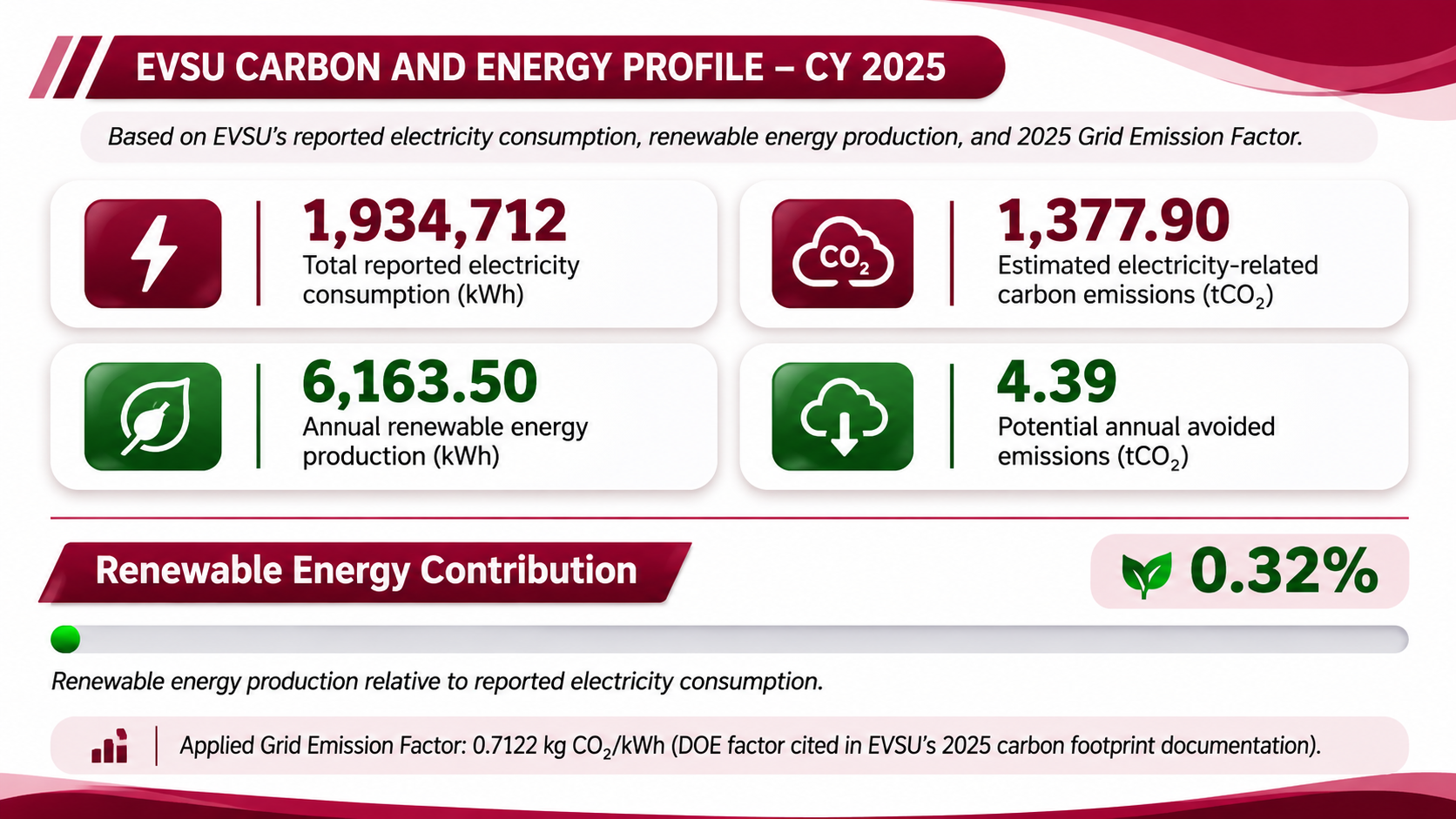
Based on the University’s electricity consumption records for Calendar Year 2025, EVSU registered a reported total electricity consumption of 1,934,712 kilowatt-hours (kWh) across its campuses. Electricity is primarily utilized for lighting, cooling, heating, laboratory operations, and other essential academic and administrative activities. Using the Department of Energy’s 2022–2024 Luzon-Visayas Grid Operating Margin emission factor of 0.7310 metric tons of carbon dioxide per megawatt-hour (tCOâ‚‚/MWh), the University’s reported electricity consumption corresponds to an estimated 1,414.27 metric tons of carbon dioxide (tCOâ‚‚). This provides an initial estimate of the University’s electricity-related carbon emissions and establishes a basis for evaluating the environmental implications of its energy consumption.
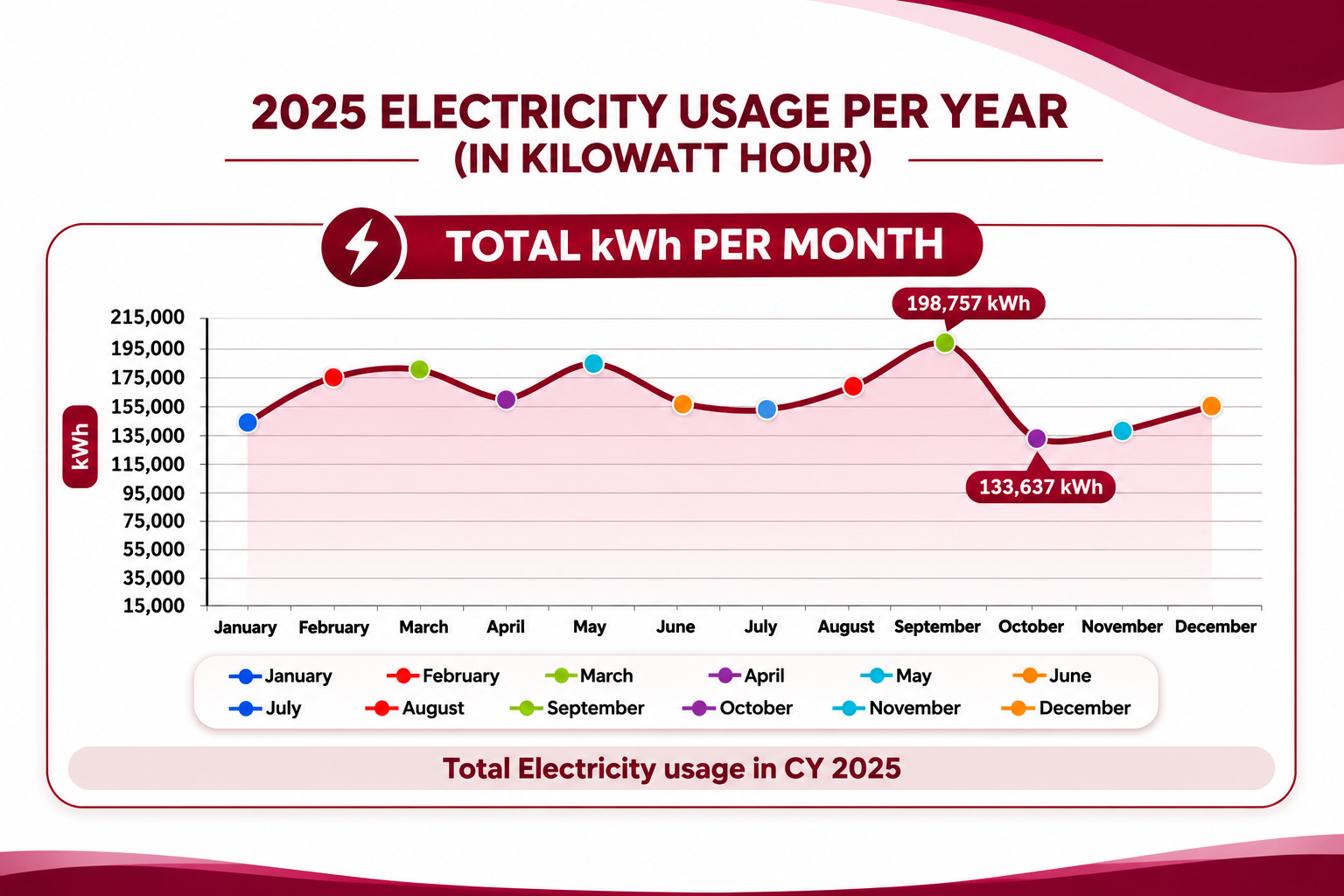
Low Carbon Energy Use (2025)

To mitigate the environmental impact of conventional electricity use, EVSU has invested in renewable energy technologies, particularly solar and wind energy systems, across selected campus facilities and institutional operations. These include solar-powered LED streetlights in the Carigara, Tanauan, and Ormoc campuses; 500-watt rooftop solar photovoltaic installations at the Main and Dulag campuses; and the integration of solar and wind energy technologies into the University’s Mobile Command and Control Vehicle (MoCCoV). These installations provide alternative sources of electricity for campus lighting, supplementary power requirements, digital connectivity, and emergency response operations.
The annual renewable energy production is distributed among the University’s various installations as follows:

Renewable Energy InstallationAnnual Production (kWh)
Solar streetlights – Carigara Campus328.50
Solar streetlights – Tanauan Campus2,946.60
Solar streetlights – Ormoc Campus262.80
Solar PV installation – Main Campus1,095.00
Solar PV installation – Dulag Campus1,095.00
MoCCoV – Solar energy system167.20
Subtotal – Solar Energy5,895.10
MoCCoV – Mini wind turbine268.40
Subtotal – Wind Energy268.40
TOTAL RENEWABLE ENERGY PRODUCTION6,163.50

Based on the University’s documented renewable energy production estimates, these installations collectively generate approximately 6,163.50 kWh of renewable energy annually, consisting of 5,895.10 kWh from solar energy and 268.40 kWh from wind energy. When compared with the University’s reported annual electricity consumption of 1,934,712 kWh, its renewable energy production represents approximately 0.32% of total reported electricity consumption. This figure provides an indication of the contribution of the University’s existing renewable energy installations relative to its overall electricity requirements and serves as a reference for assessing opportunities to further expand renewable energy utilization.

Furthermore, applying the same DOE grid emission factor to the University’s documented annual renewable energy production indicates a potential avoidance of approximately 4.39 metric tons of COâ‚‚ emissions annually, assuming that the generated renewable electricity displaces electricity that would otherwise be supplied by the conventional power grid. This estimated environmental benefit highlights the contribution of EVSU’s solar and wind energy initiatives to reducing the carbon emissions associated with institutional energy use.

Low Carbon Energy Use (2025)

Through these initiatives, Eastern Visayas State University demonstrates its continuing commitment to responsible energy utilization and carbon emission reduction. The University’s documented renewable energy production, its measurable contribution relative to electricity consumption, and its estimated potential carbon emissions avoidance represent important indicators of its progress toward low-carbon campus operations. Moving forward, EVSU seeks to further strengthen these efforts through expanded renewable energy installations, improved energy monitoring, and the implementation of sustainable energy management practices, reinforcing its role in promoting climate-responsive and environmentally responsible higher education.

EVSU’s Institutional Commitment to Low-Carbon Energy Use

Eastern Visayas State University (EVSU) remains steadfast in its pursuit of a sustainable, energy-efficient, and low-carbon university environment. Building on its existing initiatives in solar and wind energy utilization, the University continuously seeks to expand renewable energy applications, improve energy efficiency, and promote responsible electricity consumption across its campuses. With its documented annual renewable energy production of 6,163.50 kWh, representing approximately 0.32% of reported electricity consumption, EVSU recognizes the importance of further strengthening its investments in clean energy technologies.

The University also commits to continuously monitoring its energy consumption and electricity-related carbon emissions, identifying opportunities for energy conservation, and integrating sustainable energy practices into its campus operations. Through sustained innovation, institutional collaboration, and the gradual expansion of renewable energy initiatives, EVSU endeavors to progressively reduce its dependence on conventional energy sources and minimize its carbon footprint.

Through these continuing efforts, EVSU reaffirms its commitment to advancing low-carbon energy use and building a greener, more energy-efficient, and climate-responsive university—contributing to the achievement of SDG 7 (Affordable and Clean Energy)

EXPLORE OUR SDG 7 INITIATIVES & ACTIVITIESS

2026202520242023
SDG 7: Initiatives for 2026
SDG 7: Initiatives for 2025
SDG 7: Initiatives for 2024
SDG 7: Initiatives for 2023

EXPLORE OUR SDG 7 RESEARCH & PUBLICATIONS

202520242023
SDG 7: Publications for 2025
SDG 7: Publications for 2024
SDG 7: Publications for 2023

SUSTAINABLE DEVELOPMENT GOALS

20252024
2025: Sustainable Development Goals
2024: Sustainable Development Goals