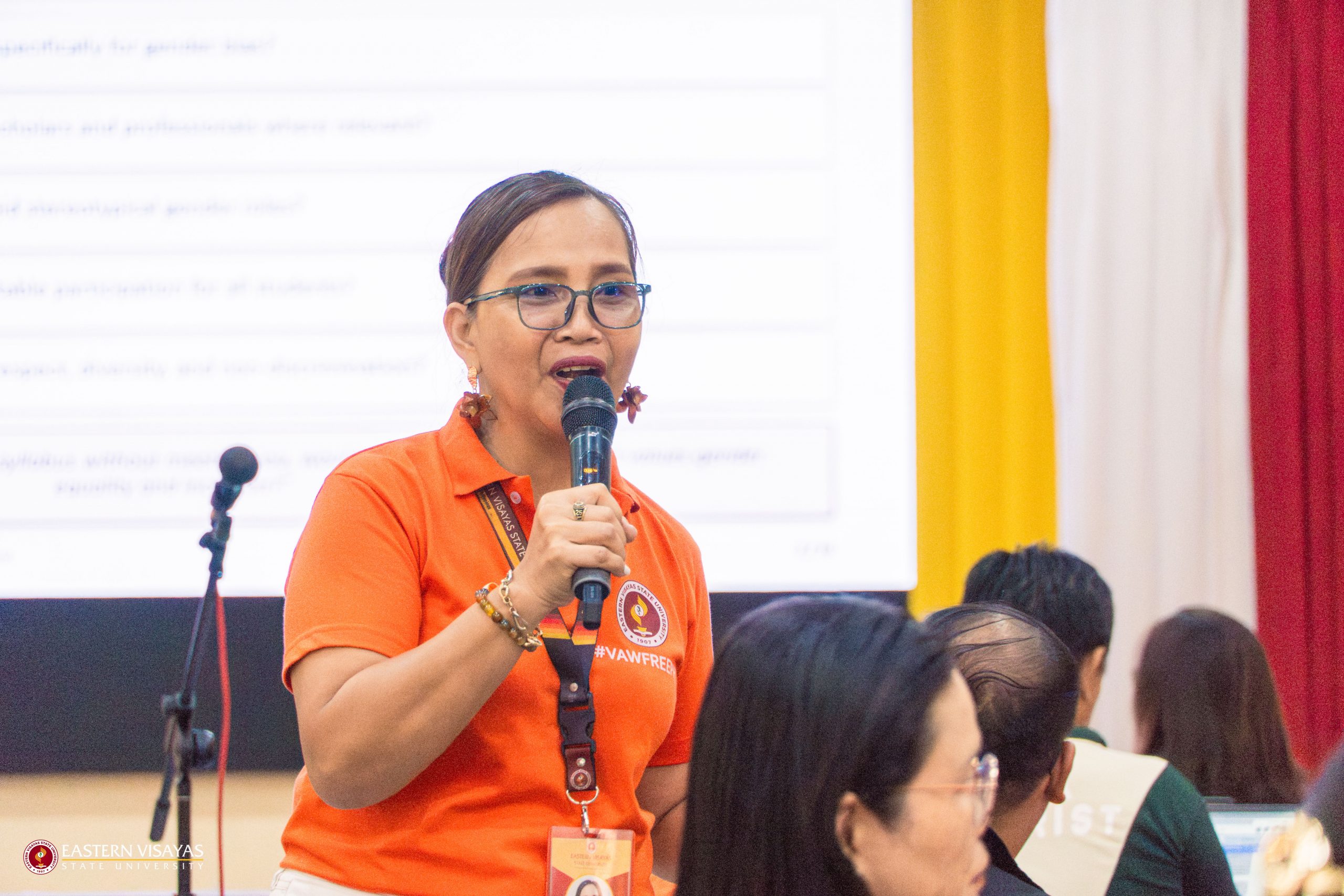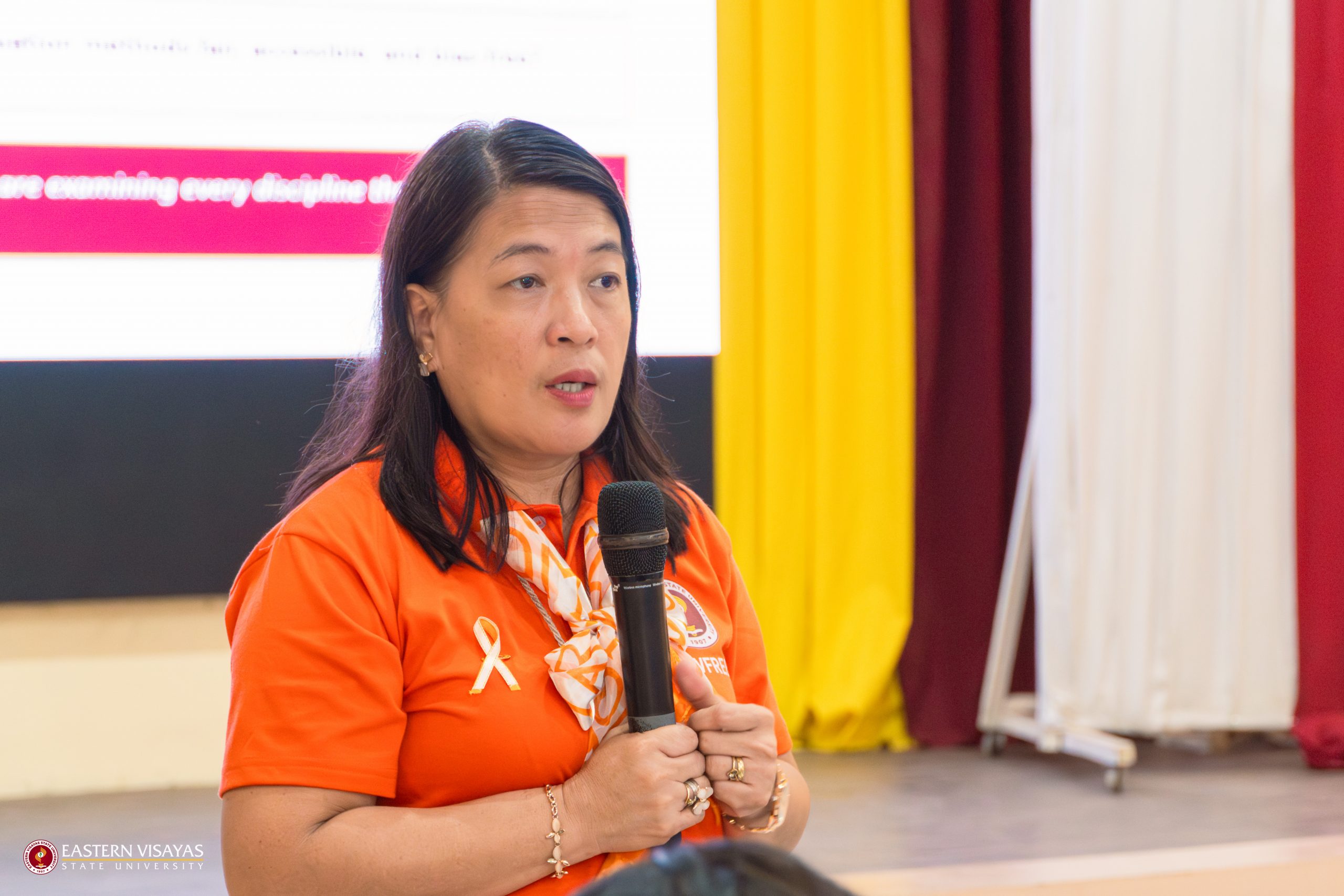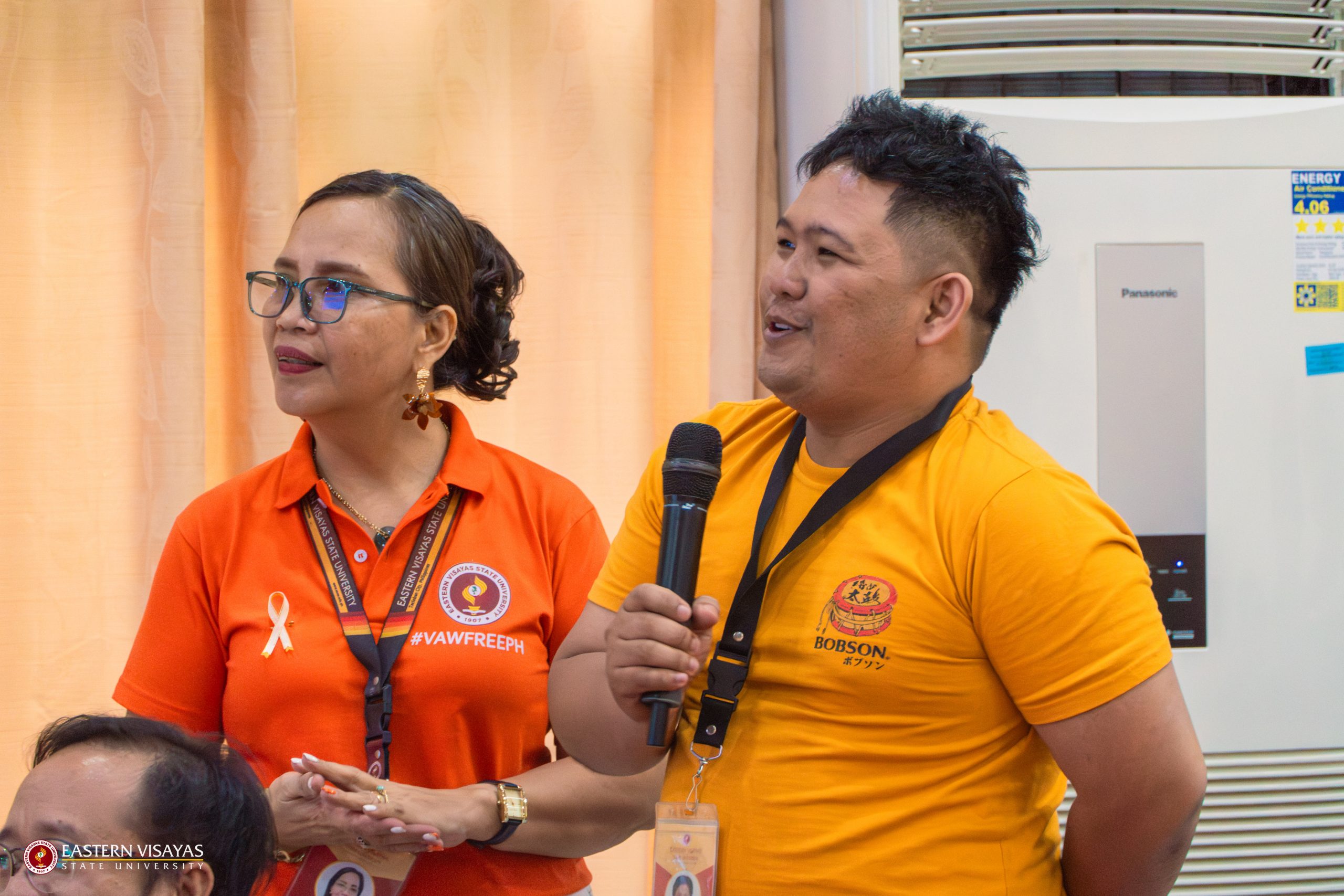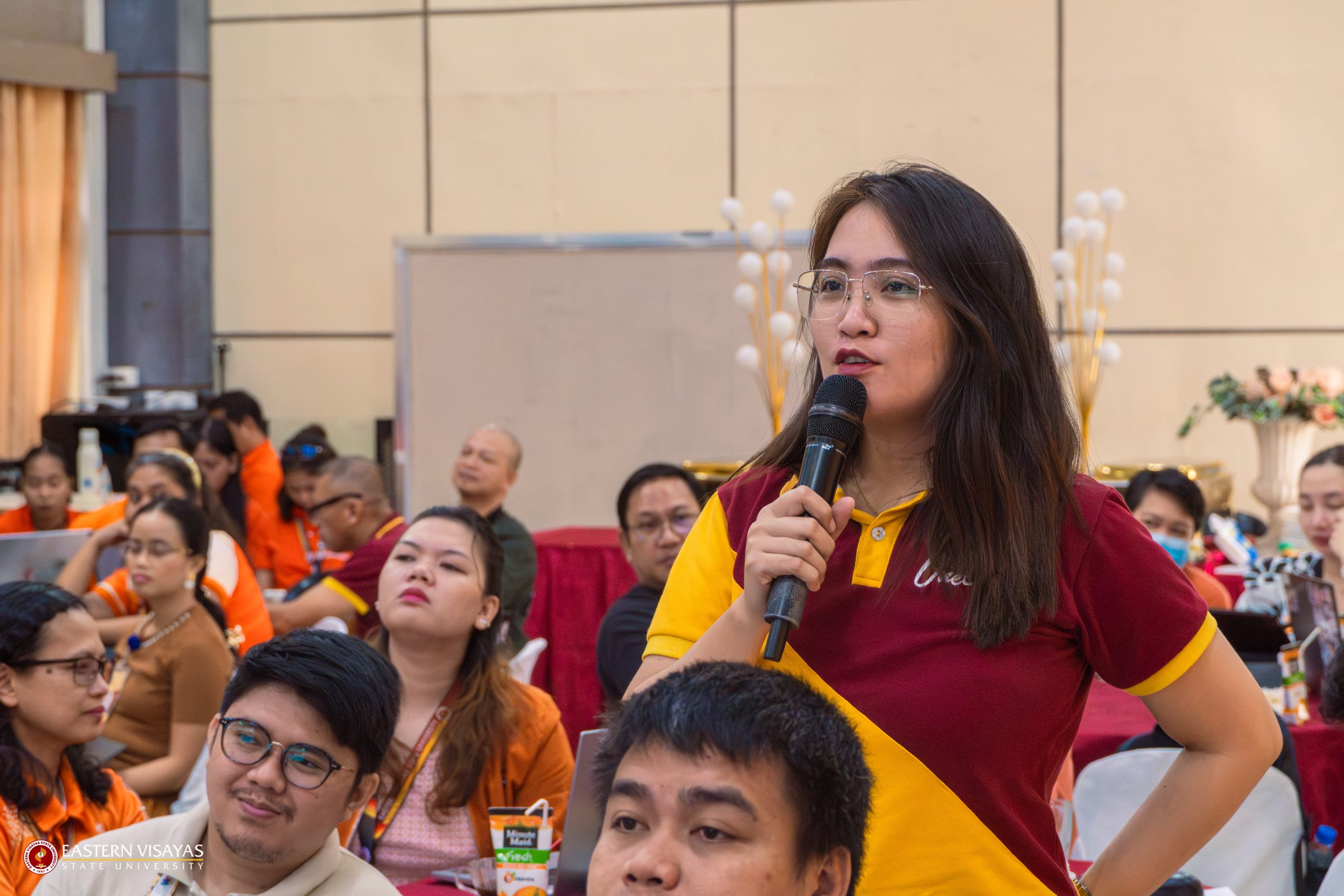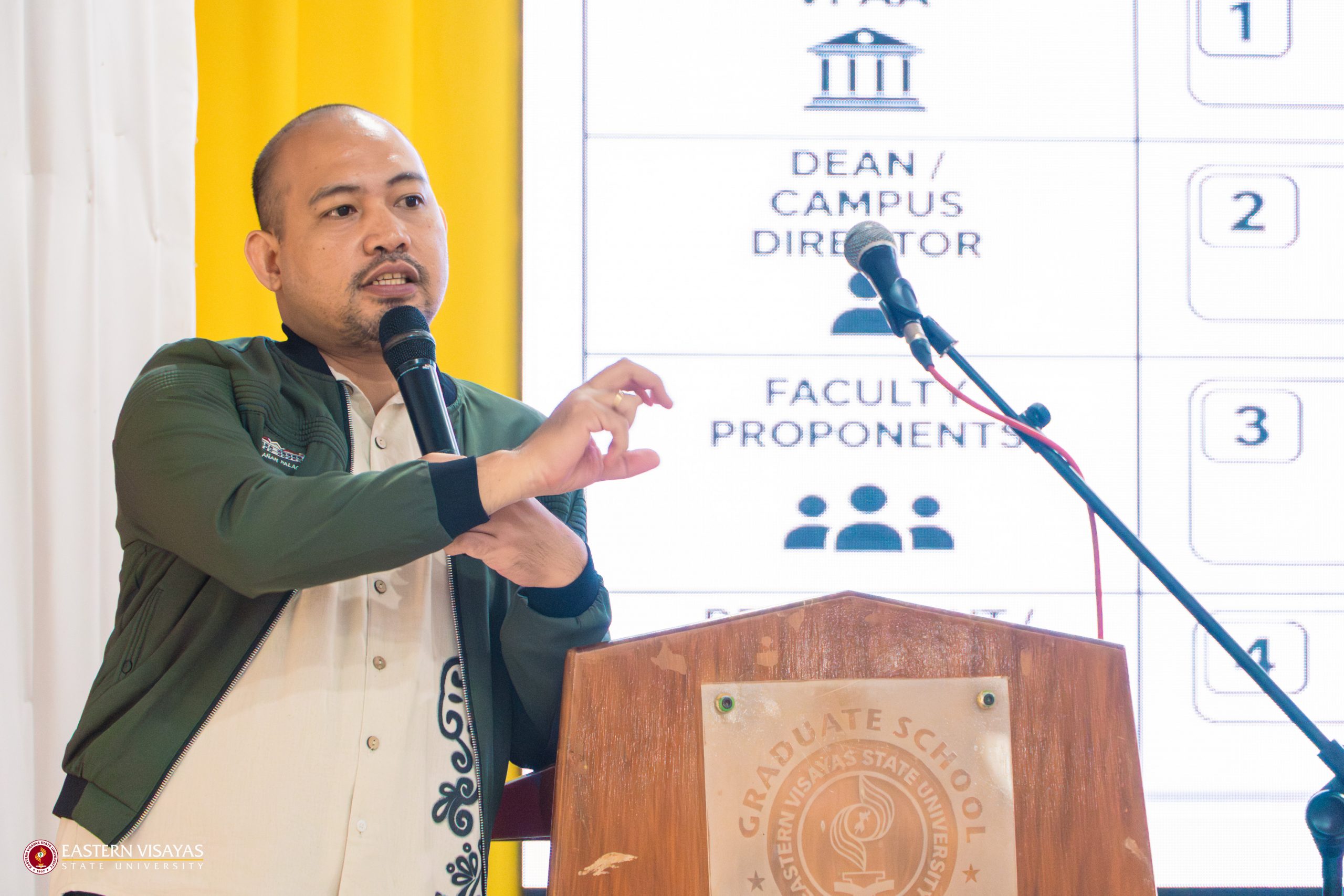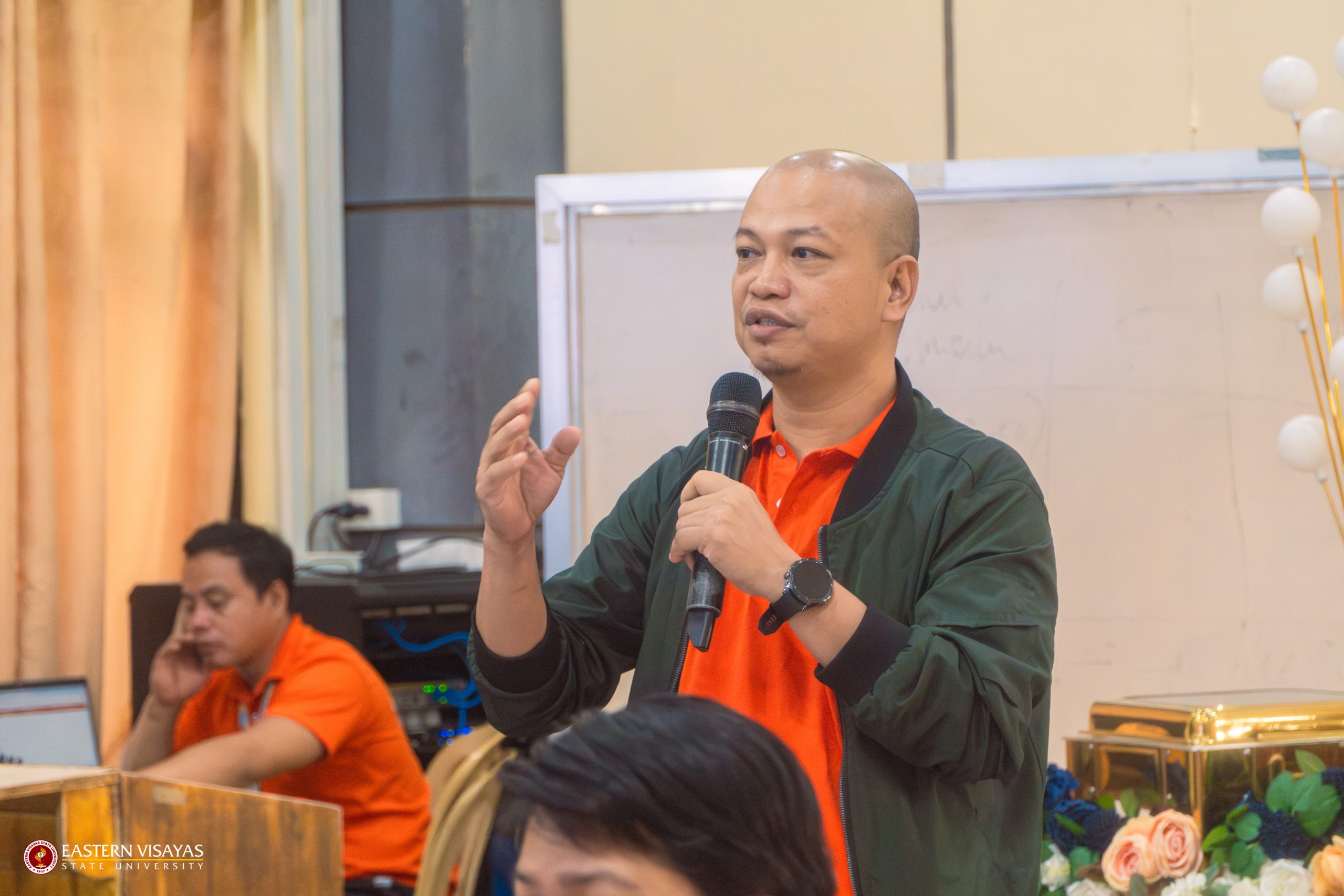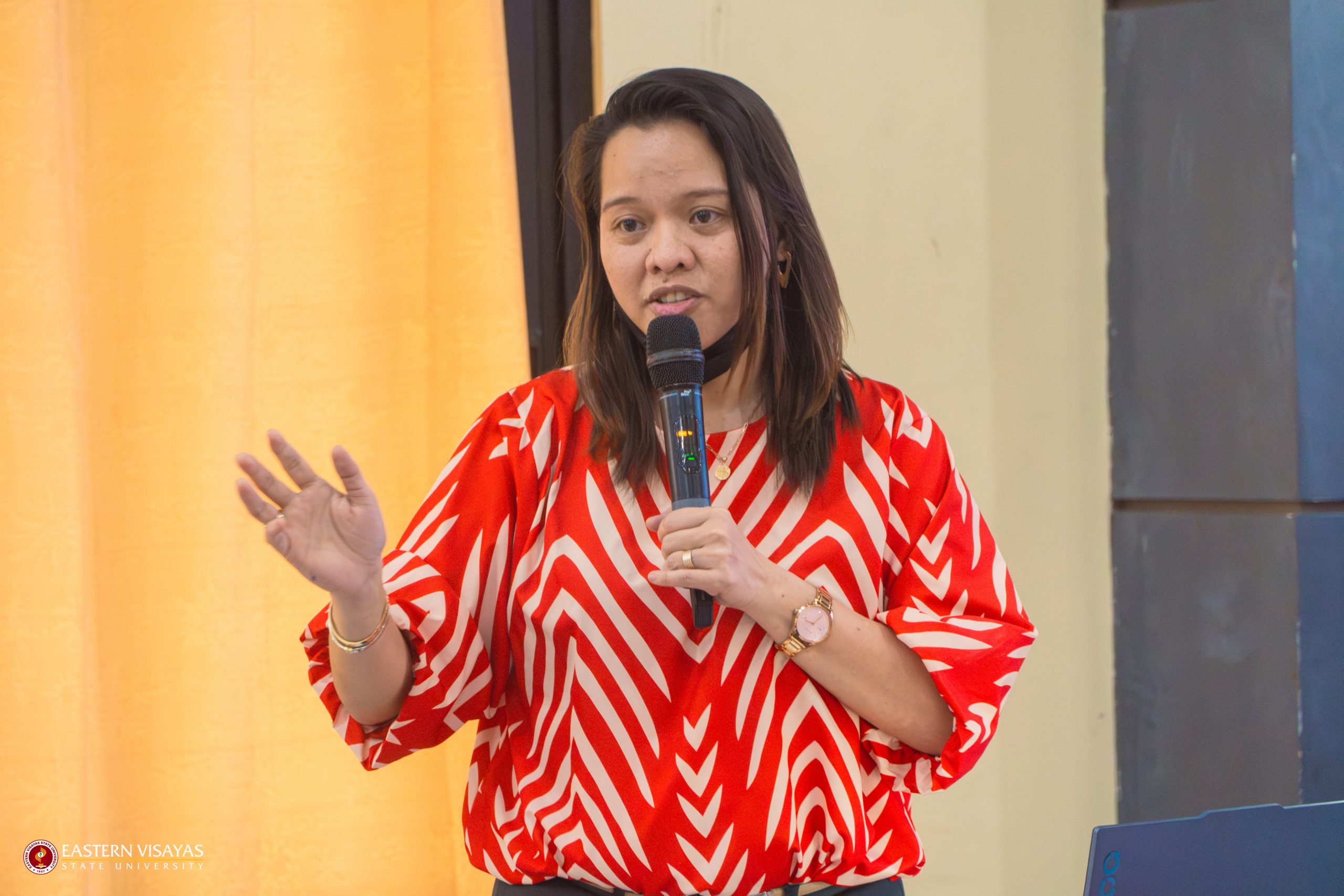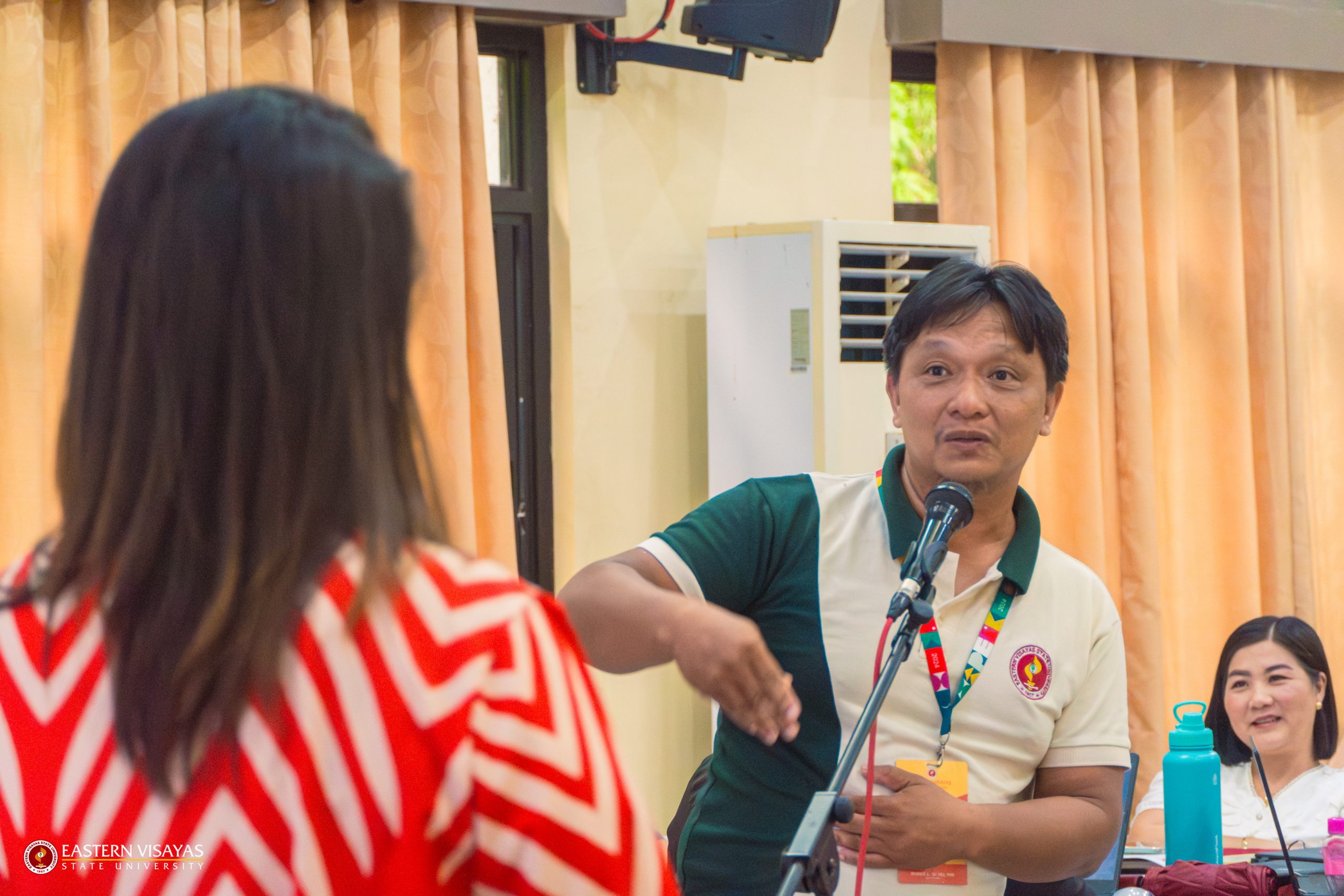
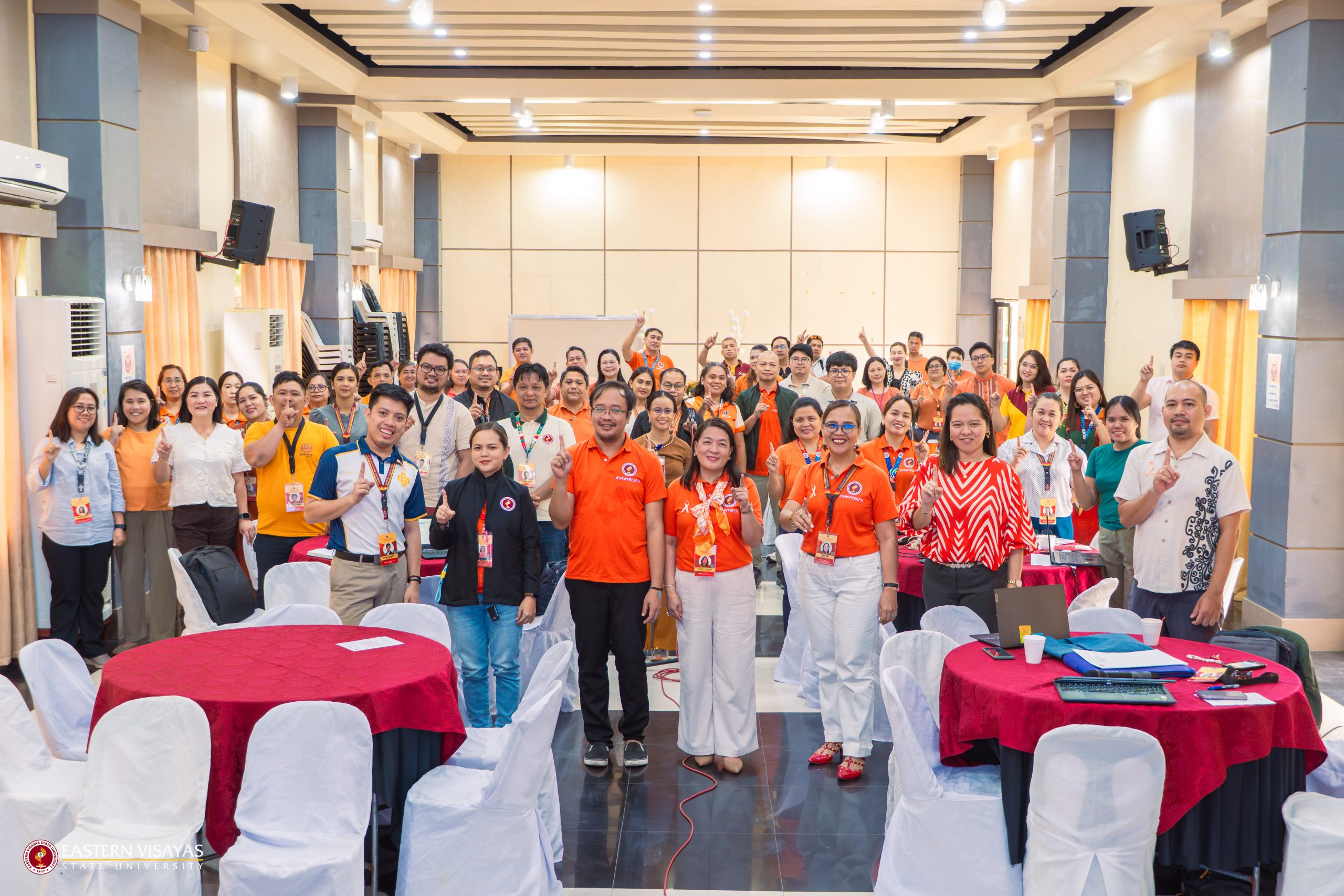
Eastern Visayas State University brought its academic leaders and senior faculty together on November 23 and 24, 2026, at the Graduate School Function Hall for the Seminar-Workshop on Gender-Responsive Syllabus Development: Faculty Orientation on the Revised EVSU Syllabus Template. The Curriculum and Instructional Materials Development Office (CIMDO) organized it with the Gender and Development (GAD) Office. It was designed to orient faculty on the newly approved template and its evaluation tools and on the procedures for revising and approving syllabi.
The two-day workshop-seminar was attended by all academic department heads, senior faculty member per department, and all CIMD coordinators from the Main Campus and external campuses. The gathering also forms part of EVSU’s broader initiatives for the nationwide 18-Day Campaign to End Violence Against Women and Children (VAWC). Conducted in alignment with the Philippine Commission on Women (PCW), the Inter-Agency Council on Violence Against Women and Their Children (IACVAWC), and partner government agencies, the effort advances the mandates of Republic Act No. 9262 (Anti-Violence Against Women and Their Children Act of 2004) and Republic Act No. 9710 (Magna Carta of Women) by institutionalizing gender-responsive and bias-free instruction across the curriculum.
Vice President for Academic Affairs Dr. Analyn Españo opened the program by describing the syllabus as the point where the university’s vision, mission, and outcomes meet the classroom. Under constructive alignment, she said, everything must fit together. That runs from institutional and program outcomes down to course and lesson outcomes, and it includes the teaching-learning activities, assessments, and materials. For her, a syllabus is not “a piece of paper that you submit for compliance.” It is a promise about what happens inside the classroom. She also asked program heads to remind their faculty why evaluation matters, and she hoped for less resistance whenever faculty are evaluated. She called the attendees’ presence “more than a gesture of compliance” but a commitment to educational transformation.
Dr. Valentine Blez L. Lampayan, Director of CIMDO, presented the rationale for the new template. She framed the syllabus as the faculty’s plan of teaching and the students’ guide to the course. The old template, she said, gave every course a structure and served the university well. But outcomes-based expectations from CHED have grown and so have international quality frameworks such as AUN-QA, WURI, and Times Higher Education. Those frameworks ask universities to show how each course shapes its graduates. The revision has five objectives: strengthen outcomes-based, student-centered, inclusive teaching; make the syllabus clearer and easier to use; bring in national and global frameworks; ensure completeness and consistency across disciplines; and build a stronger process for preparing, reviewing, and quality-assuring syllabi.
Meanwhile, Dr. Glenda Tupaz, Gender and Development Director, highlighted on her talk the delineation between being gender-sensitive from being gender-responsive. Being aware of bias is not enough, she said. A teacher is gender-responsive only when doing something about it. She reiterated that the syllabus serves as the roadmap- guiding both the teacher and students on what to achieve and how to achieve it. She told faculty to ask which experiences their content represents and whose are missing. Additionally, her suggestions covered how faculty employ pedagogical approaches, which include redistributing students when forming groups, respecting students’ rights as regards their gender identity, among others. She grounded these points in several policies and frameworks: RA 9710, which in Section 13 calls for eliminating gender stereotyping in educational materials, CHED Memorandum Order No. 1, series of 2015, The PCW’s Harmonized Gender and Development Guidelines (HGDG) checklist, a joint memorandum circular on evaluating instructional materials, and EVSU’s own GAD policy, Board Resolution No. 2026-012, dated February 26, 2026, and its accompanying guidebook of alternative, bias-free terms. She closed by emphasizing that gender mainstreaming is a shared responsibility across the university; one that requires turning gender equality into an everyday habit in teaching, curriculum design, and academic life rather than treating it as a one-off requirement.
In the afternoon, Prof. Stephen Paul Cajigas, Curriculum and Development Head, centered his topic on Structural and Policy Compliance Syllabus Assessment Tool. The session moved from presentations to practice. After the Faculty Expert tool orientation, participants went into a workshop, where they revisited their existing syllabi and refined them to align with the revised template.
The seminar-workshop marks the start of a new syllabus review cycle. Dr. Lampayan told participants the revised template is only “the first one,” and that the university will keep refining it. A syllabus may satisfy compliance requirements, but it exists for students: it is a commitment to deliver quality, relevant, and gender-responsive instruction.
This article is aligned with Sustainable Development Goals (SDG) 05: Gender Equality; SDG 04: Quality Education; SDG 10: Reduced Inequalities; and SDG 16: Peace, Justice, and Strong Institutions.
via Jacob Genobiagon