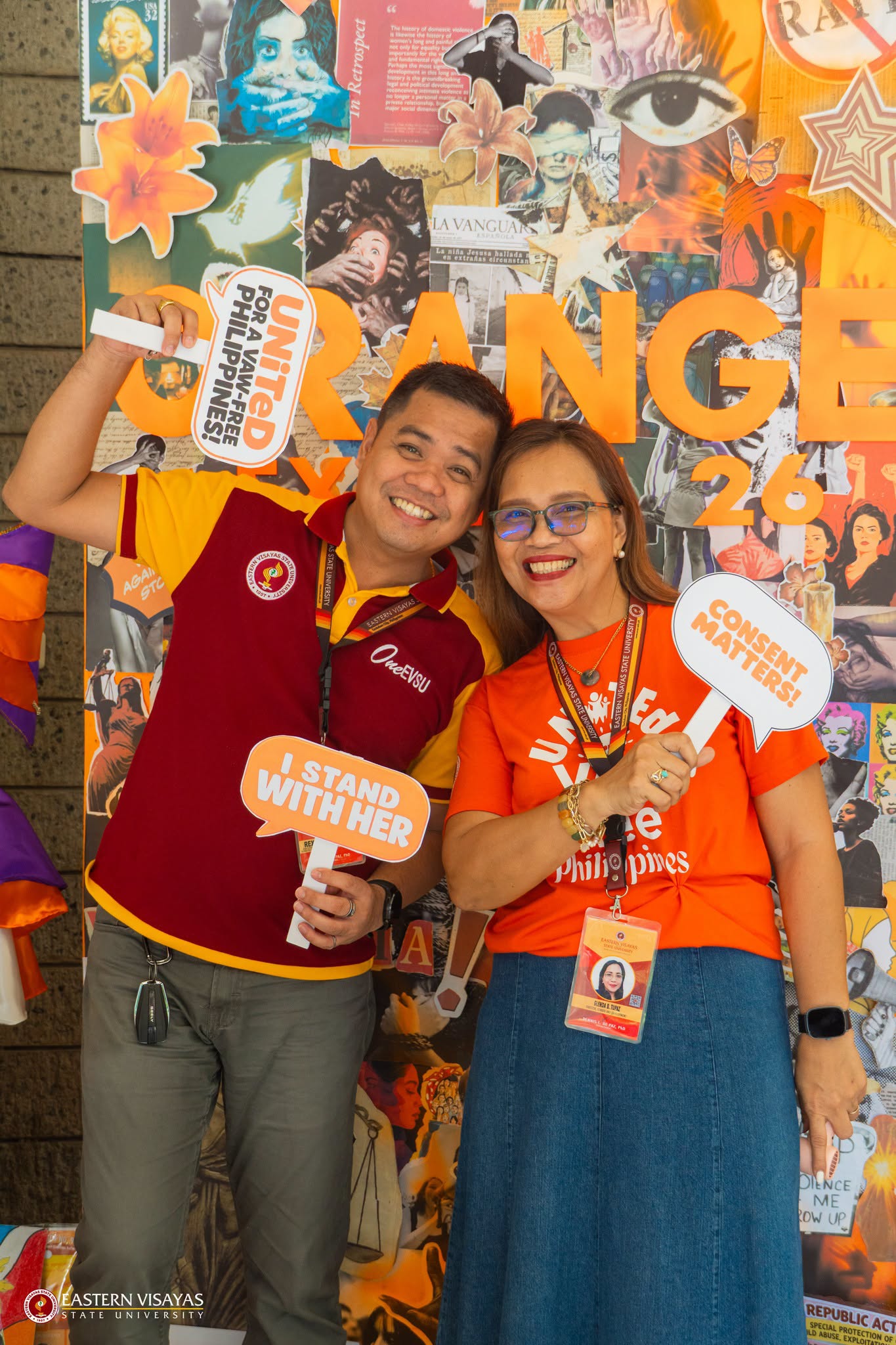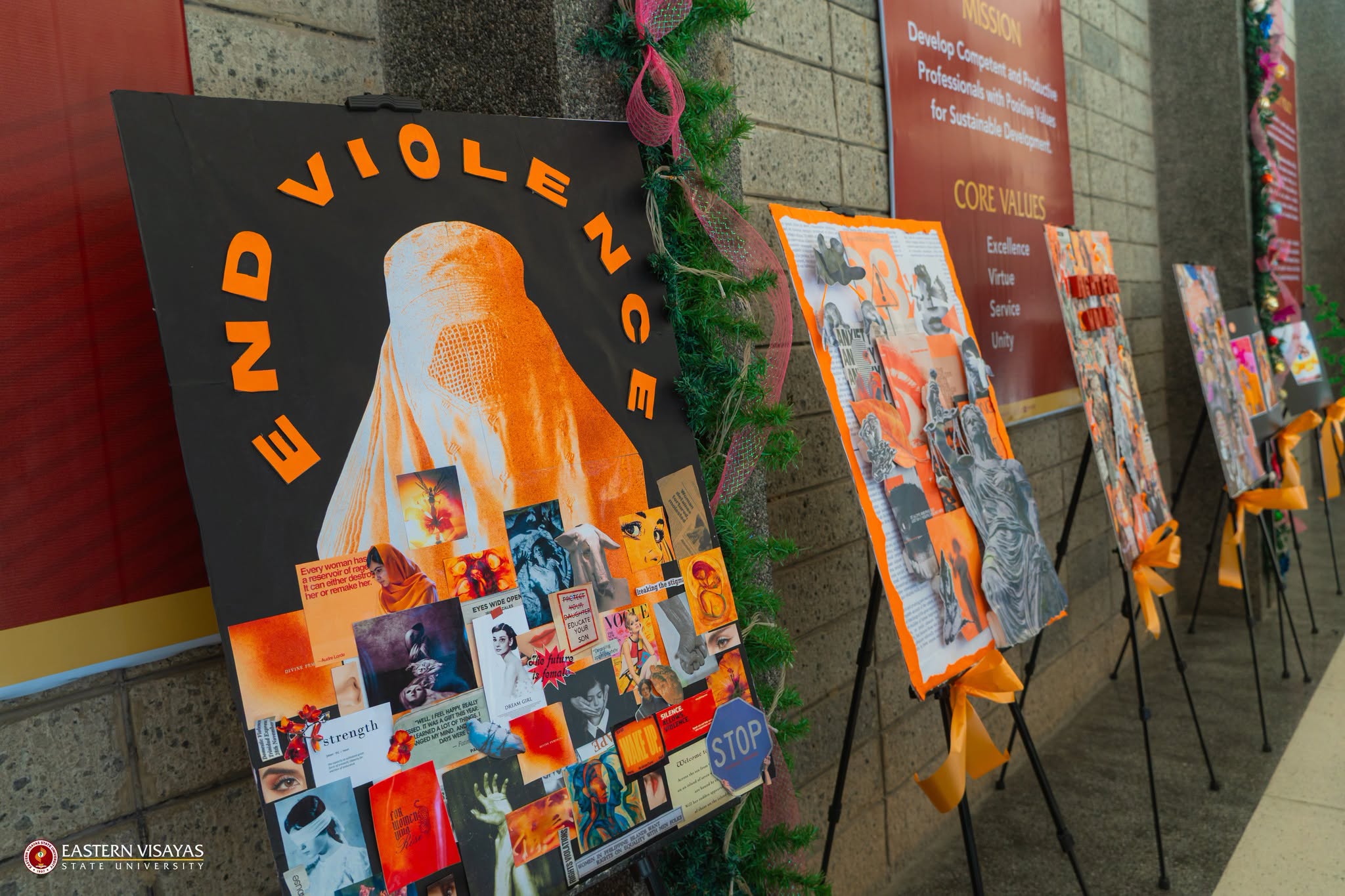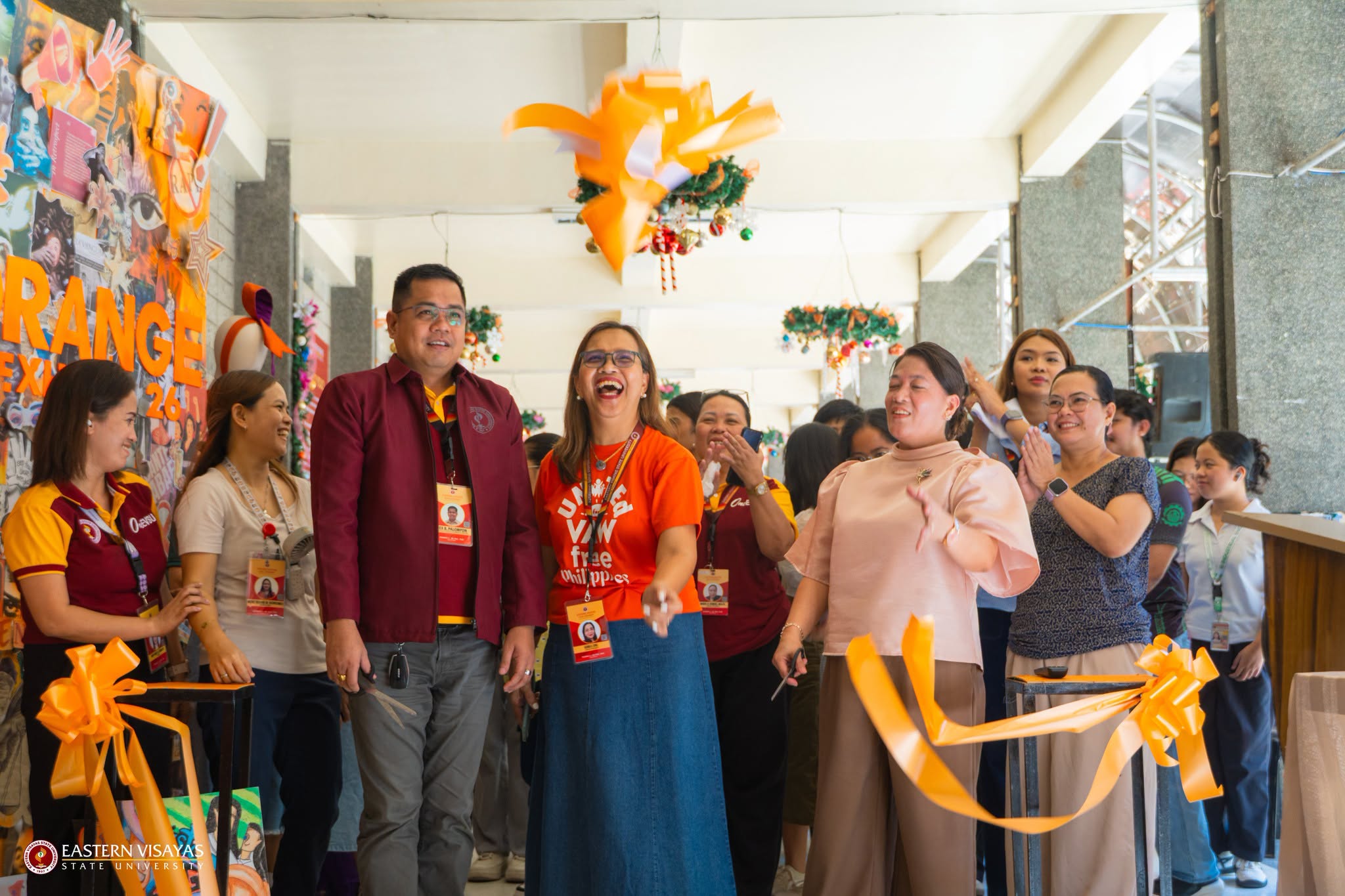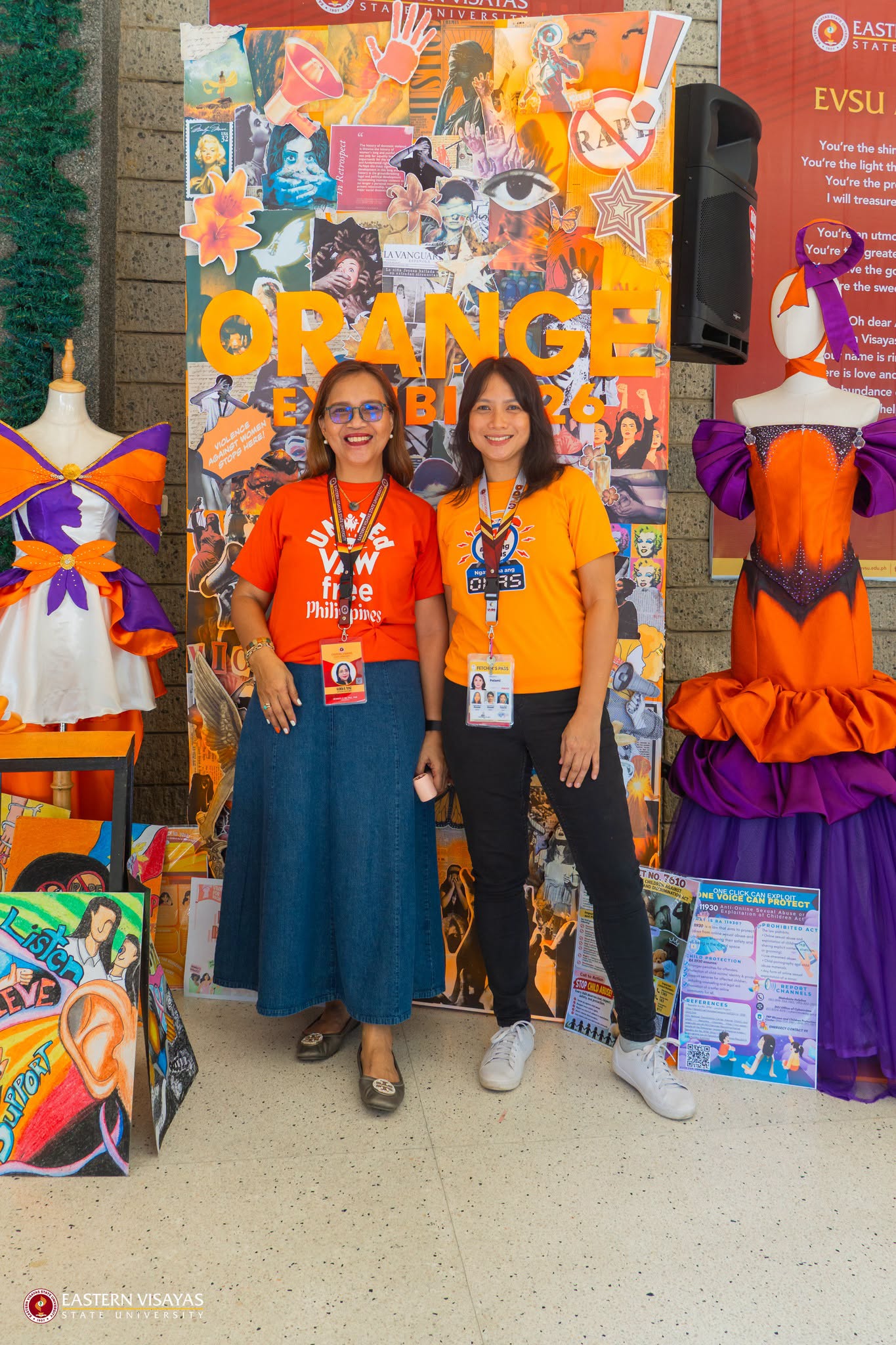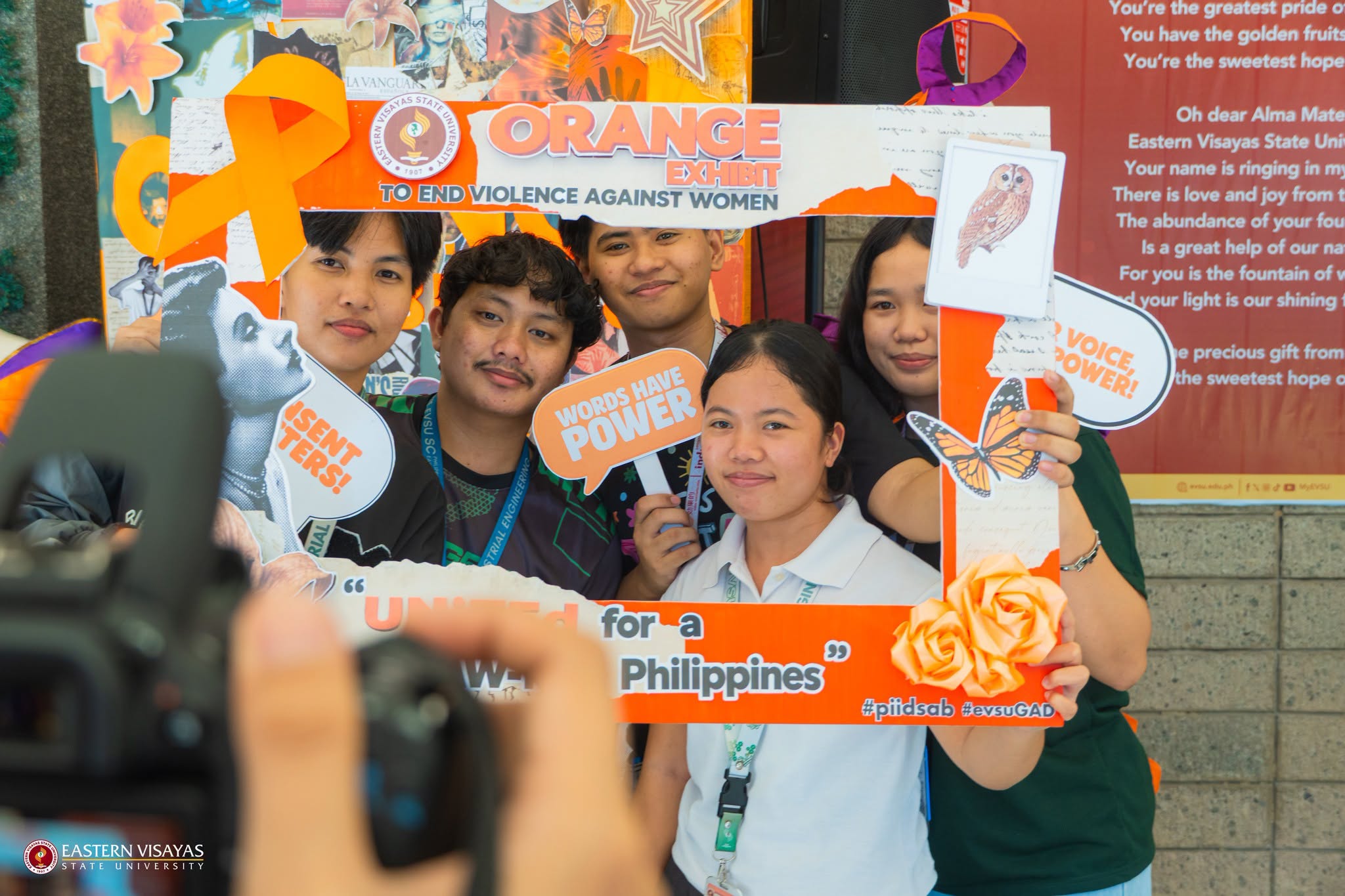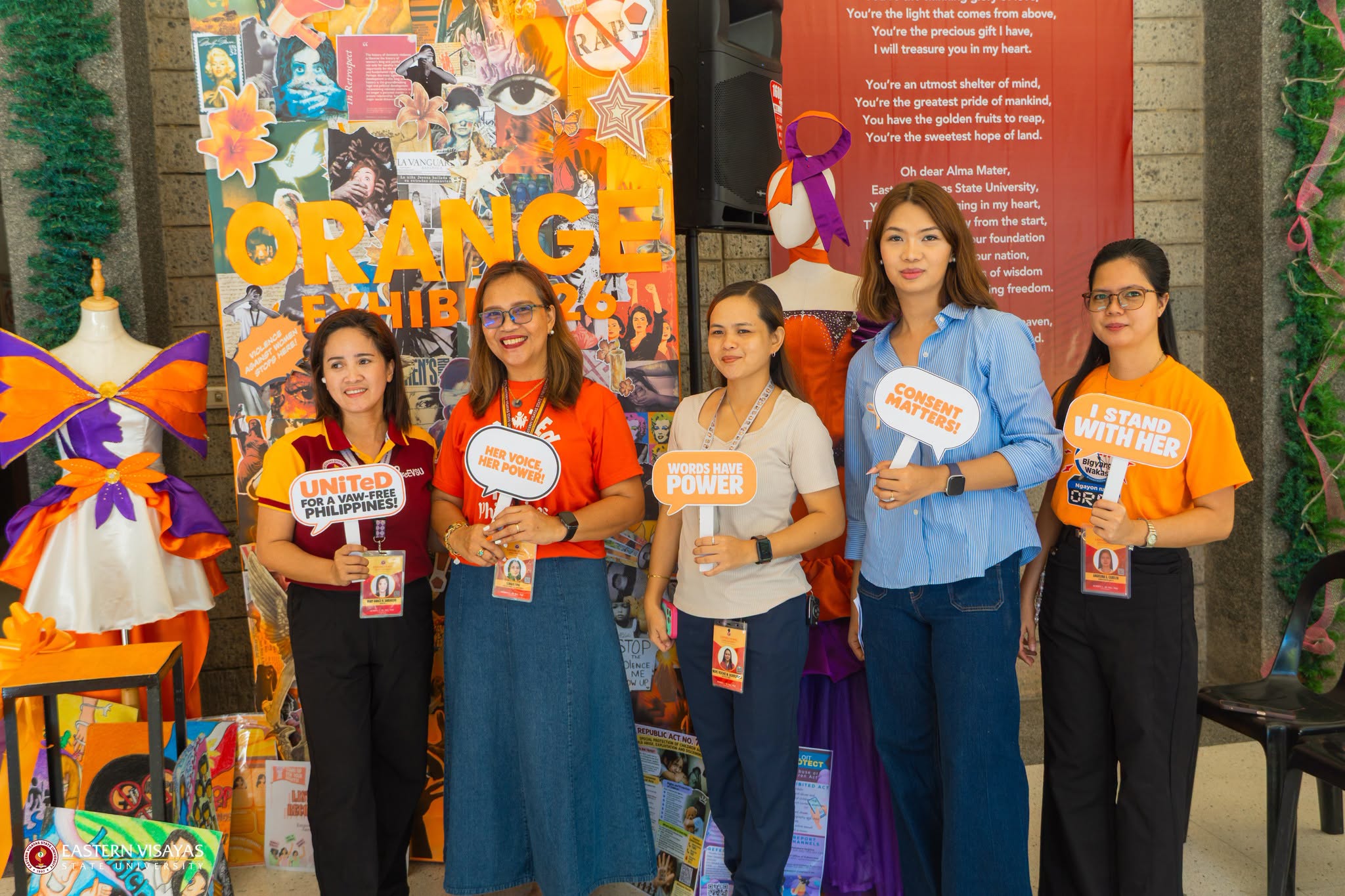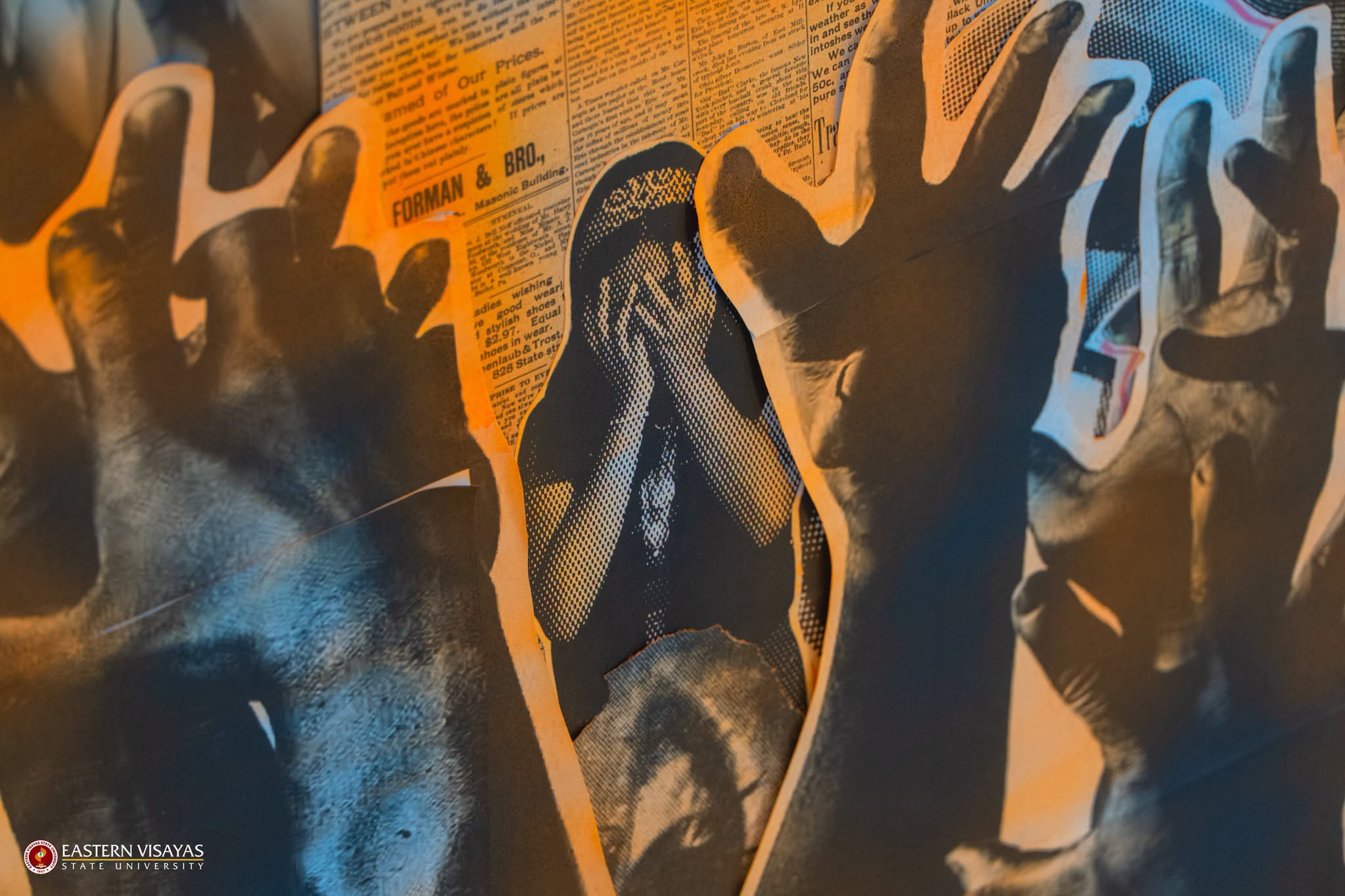
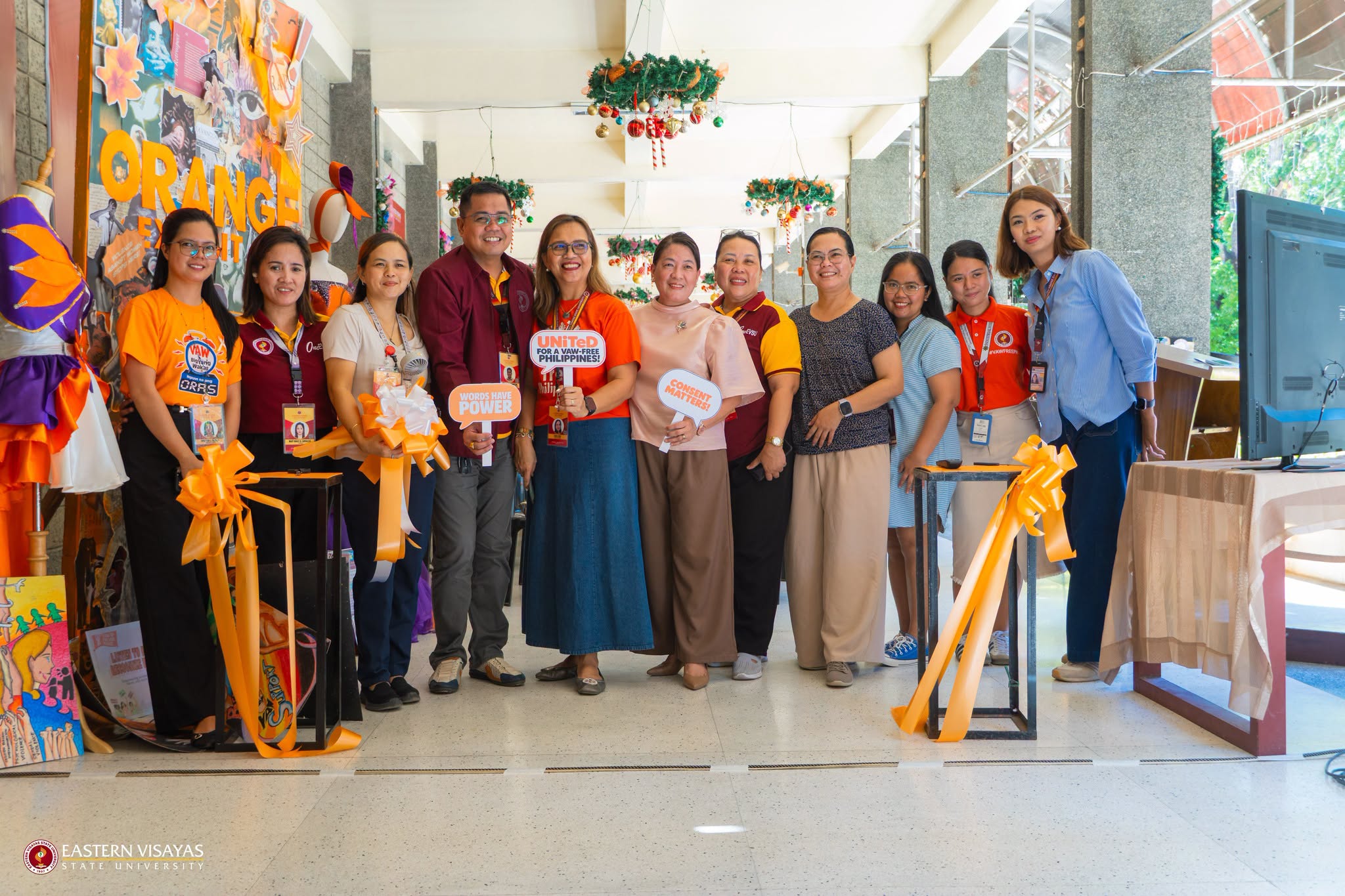
Tacloban City, Philippines – On November 25, at the administration lobby of the EVSU main campus, the annual Orange Exhibit was held amid a sea of orange. Led by the Office of Gender and Development (GAD) under the direction of Dr. Glenda B. Tupaz, the exhibit showcased various artworks advocating for the elimination of violence against women and children.
In her opening message, Vice President for Academic Affairs Analyn C. Españo stated, “Women are wonderful even without men. But since we are all born equal, we walk forward with men.” She reflected on a time when women were generally expected to obey men, noting that this is no longer the case because of the great minds and leadership of contemporary women who have continuously strived for equity. Through their efforts, society has increasingly recognized the individuality, uniqueness, and capabilities of women. She concluded her message with a gentle reminder for everyone to remain conscious of and appreciate the true essence of womanhood.
According to IDr. Darryl C. Monge, “Why orange? Orange sits between red and yellow. Red symbolizes intensity, while yellow represents a bright future for women. Violence Against Women (VAW) carries a strong message that needs our attention.” Monge highlighted the significance of the color orange as a symbol of hope and a collective commitment to ending violence against women and children.
Also in attendance were Mr. Rex B. Palompon, Chief University Assistant to the University President, GAD coordinators and GAD youth leaders who gathered to celebrate women’s rights, promote gender equality, and reaffirm their commitment to protecting women and children from all forms of violence.
The symbolism of the Orange Exhibit deserves special recognition. More than just a display of creative expression, it served as a powerful reminder of society’s shared responsibility to uphold the dignity, rights, and welfare of women and children. Through art, advocacy, and meaningful conversations, the event inspired participants to become champions of a safer, more equitable, and violence-free community for all.
This article is aligned with Sustainable Development Goals (SDG) 05: Gender Equality; SDG 04: Quality Education; SDG 10: Reduced Inequalities; and SDG 16: Peace, Justice, and Strong Institutions.
via MSia