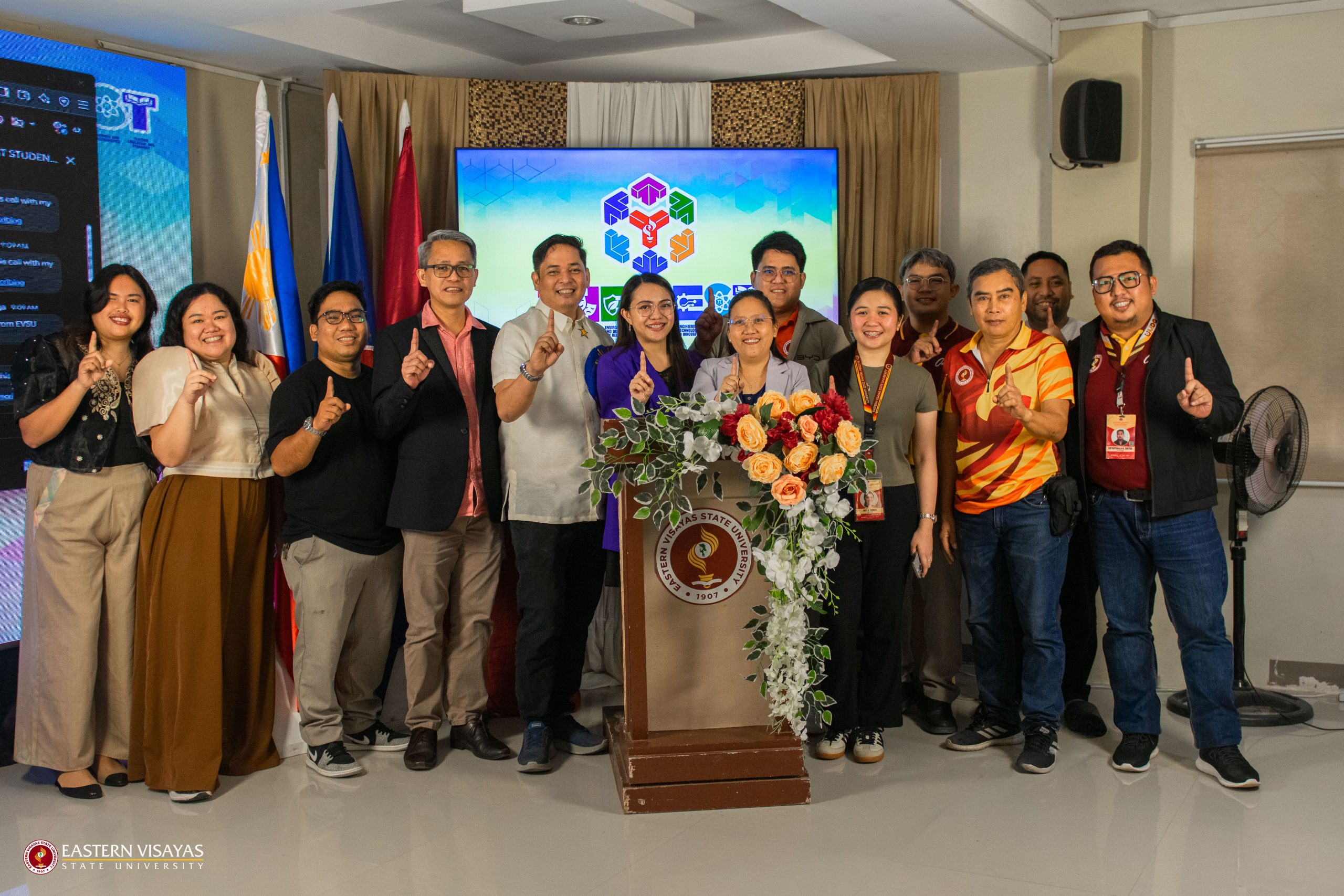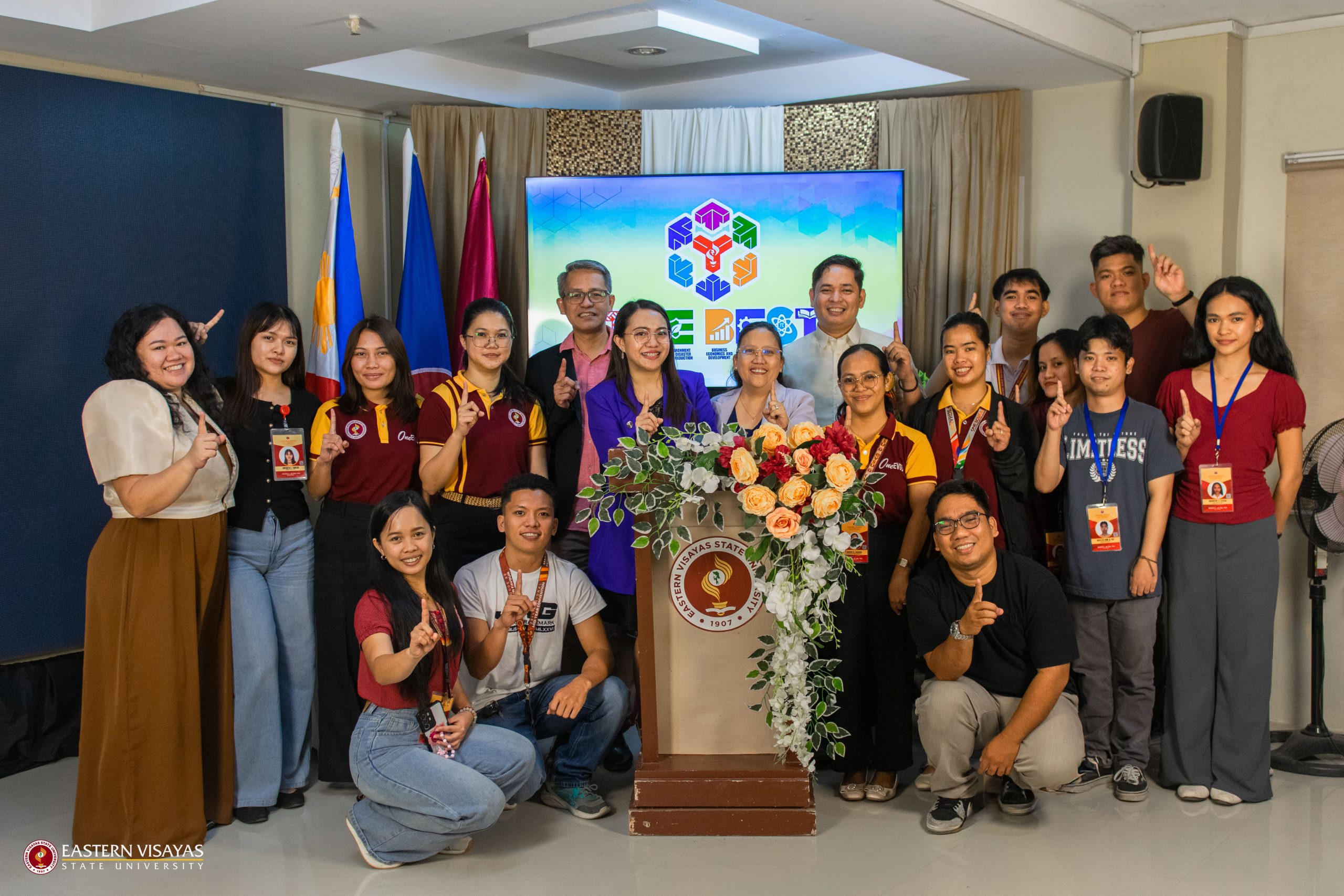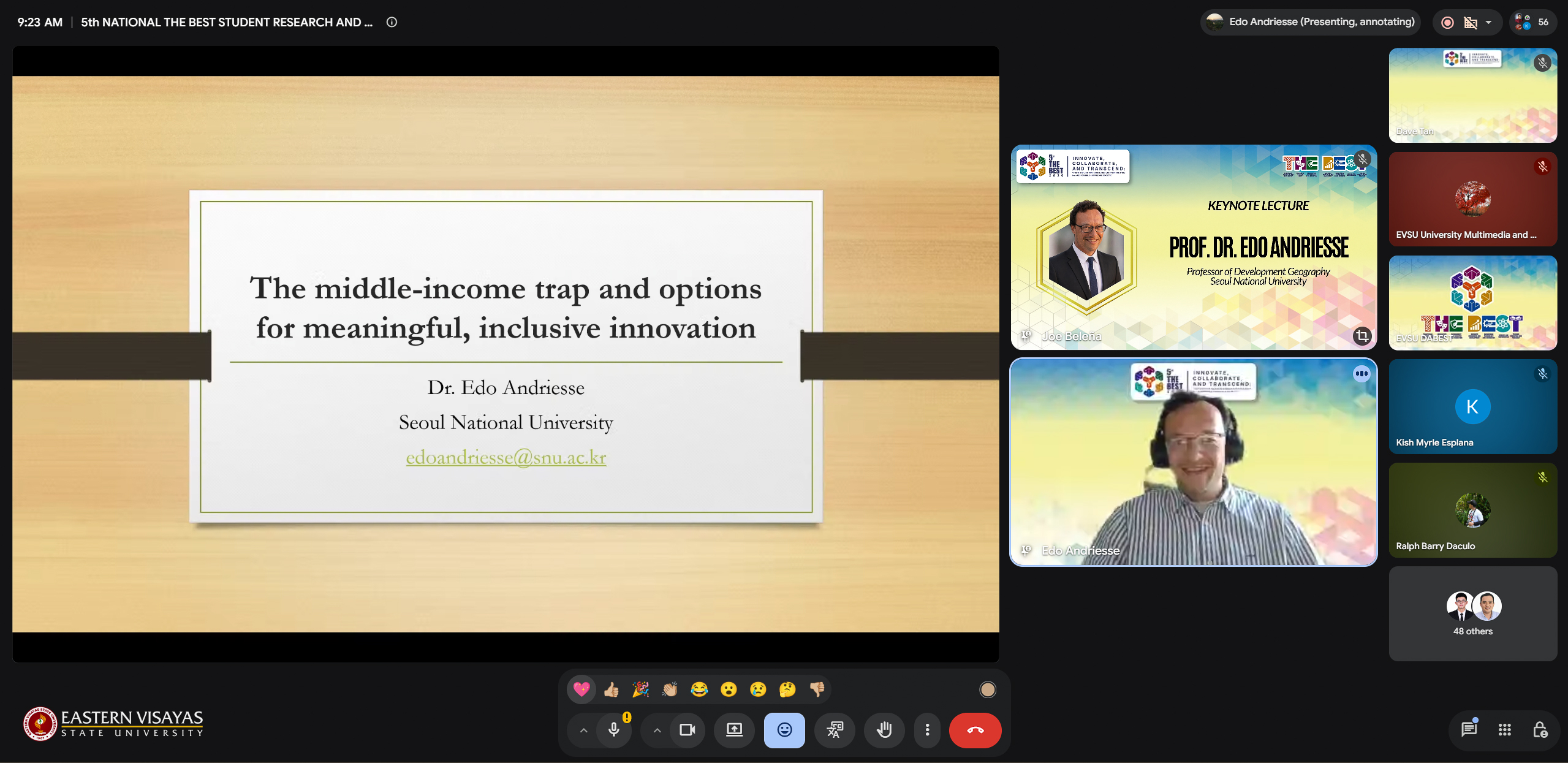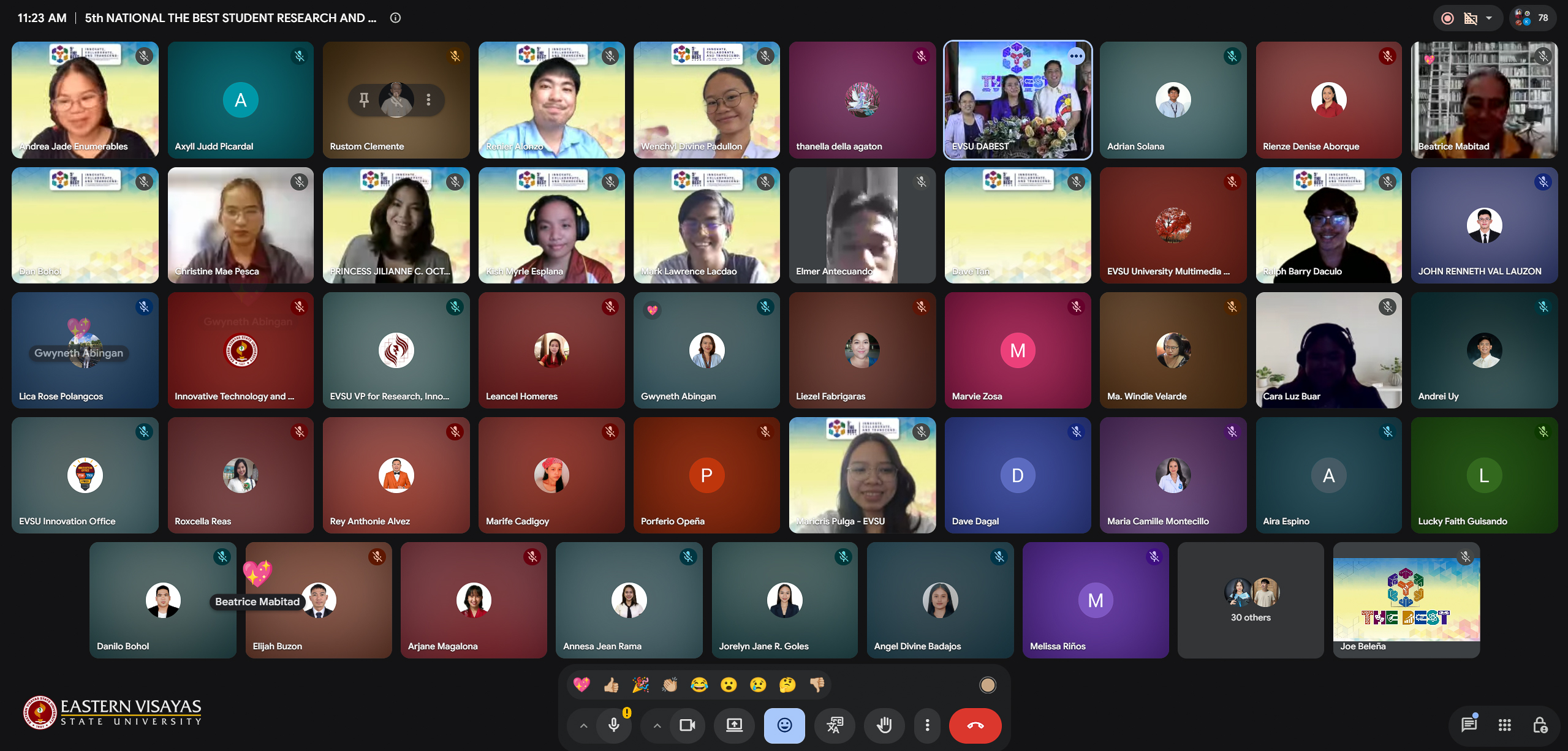
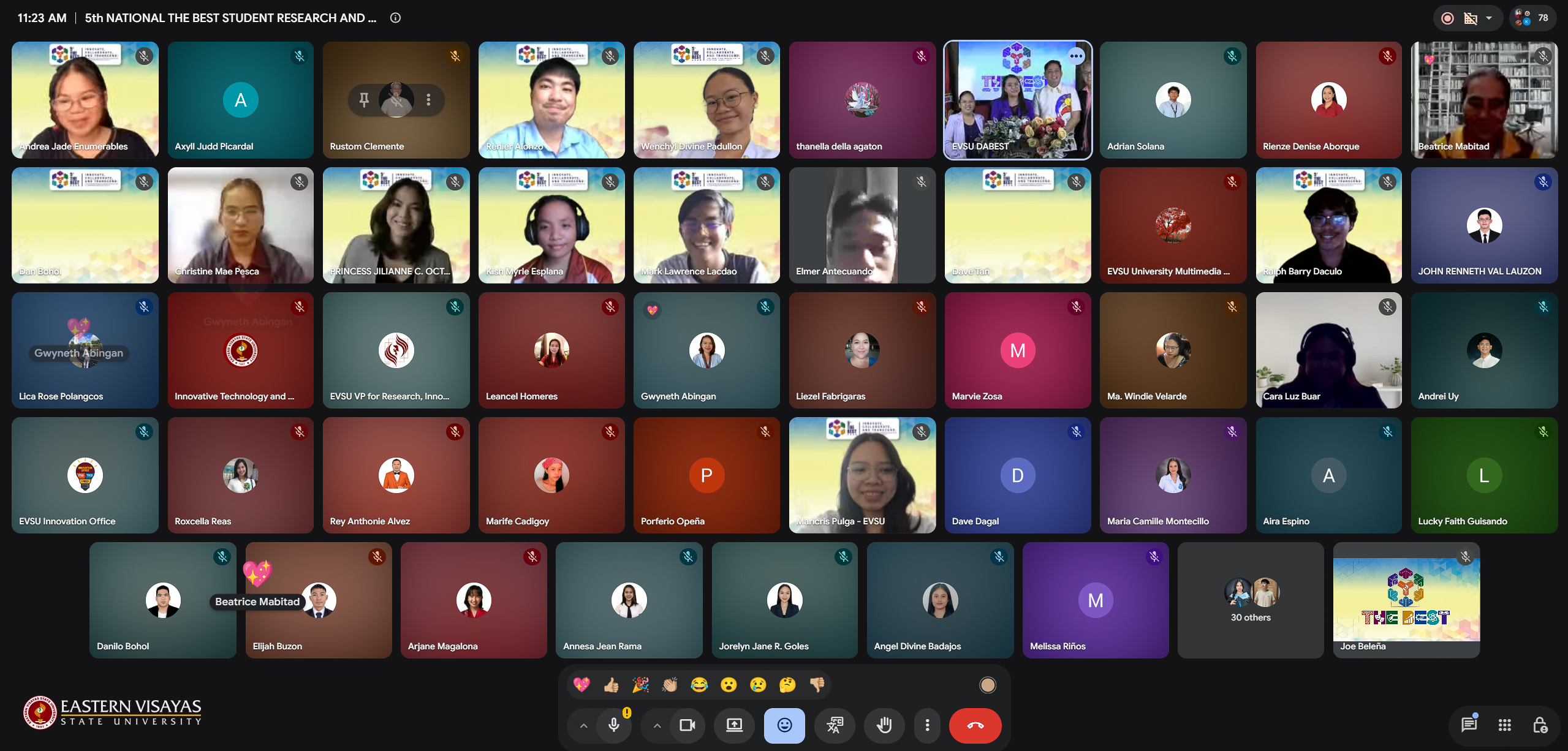
EVSU brought student researchers and innovators together online for the two-day 5th National “THE BEST” Student Research and Innovation Congress. Guided by the theme, “Innovate, Collaborate, and Transcend: Youth Driving Research & Innovation Revolution for a Responsible Knowledge Society,” the virtual event challenged young scholars to turn their academic studies into practical answers for everyday community problems.
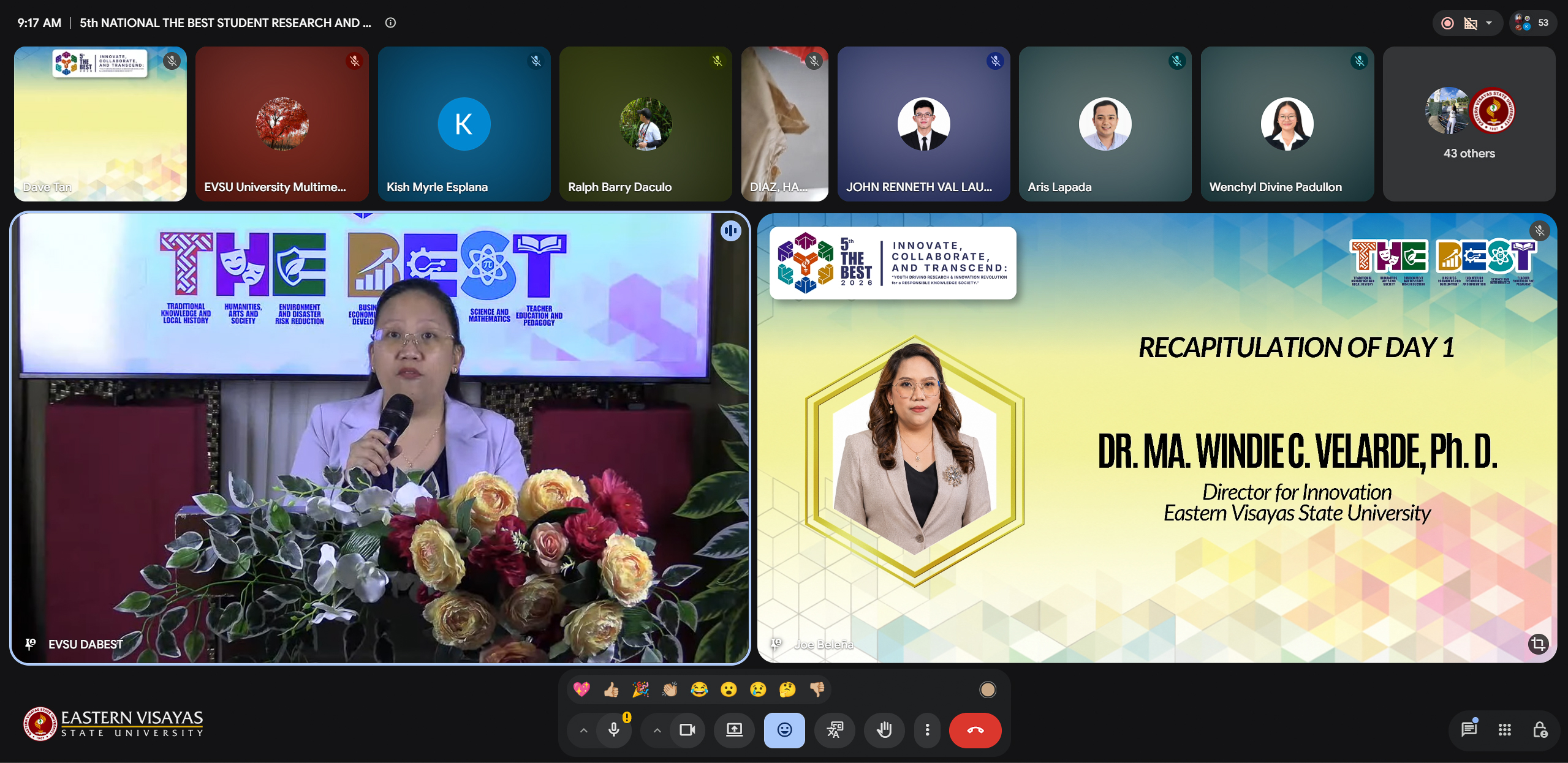
During the opening sessions, speakers made it clear that research should help real people rather than sit unread in libraries. In her welcome remarks on Day 1, EVSU Vice President for Academic Affairs Dr. Analyn C. Españo explained that good research relies on three habits: sharing ideas, caring for the people affected by the problem, and pairing up through strong partnerships. Similarly, Commission on Higher Education (CHED) Regional Office VIII Director Dr. Maximo C. Aljibe urged students to bring their findings outside school walls so local leaders can make better decisions and improve daily life. Building on this idea during Day 2, Dr. Aris A. Lapada introduced the “funds of knowledge” approach, showing how students can use the everyday skills of local farmers, fisherfolk, and families as the starting point for solid scientific studies.
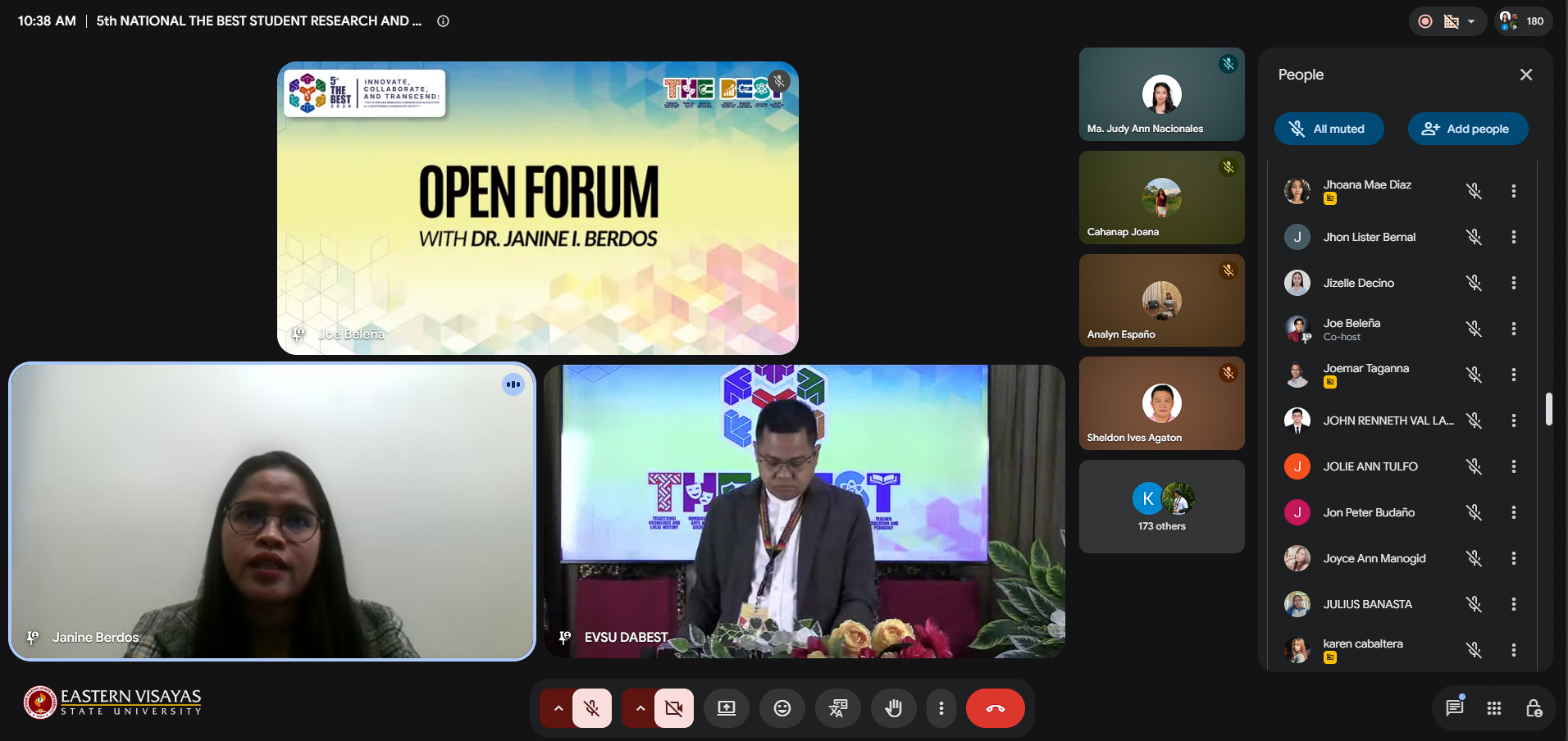
Beyond helping communities, speakers also discussed the mindset students need to grow as researchers. EVSU Vice President for Research, Innovation and Extension Services Dr. Sheldon Ives G. Agaton encouraged participants to protect their curiosity, stay strong when facing difficulties, and treat the online congress as the start of their research journey. Day 1 keynote speaker Dr. Janine I. Berdos of Tarlac Agricultural University echoed this through her talk, “From Choosing Animal Science to Creating Global Impact.” She noted that a student’s college course is just a starting point, not a limit, and that true research is about helping others rather than just earning a diploma. She left students with three guiding questions – what problem deserves their curiosity, what knowledge they can add, and who will benefit from their work – reminding them that while their field is their starting point, their contribution is their legacy.
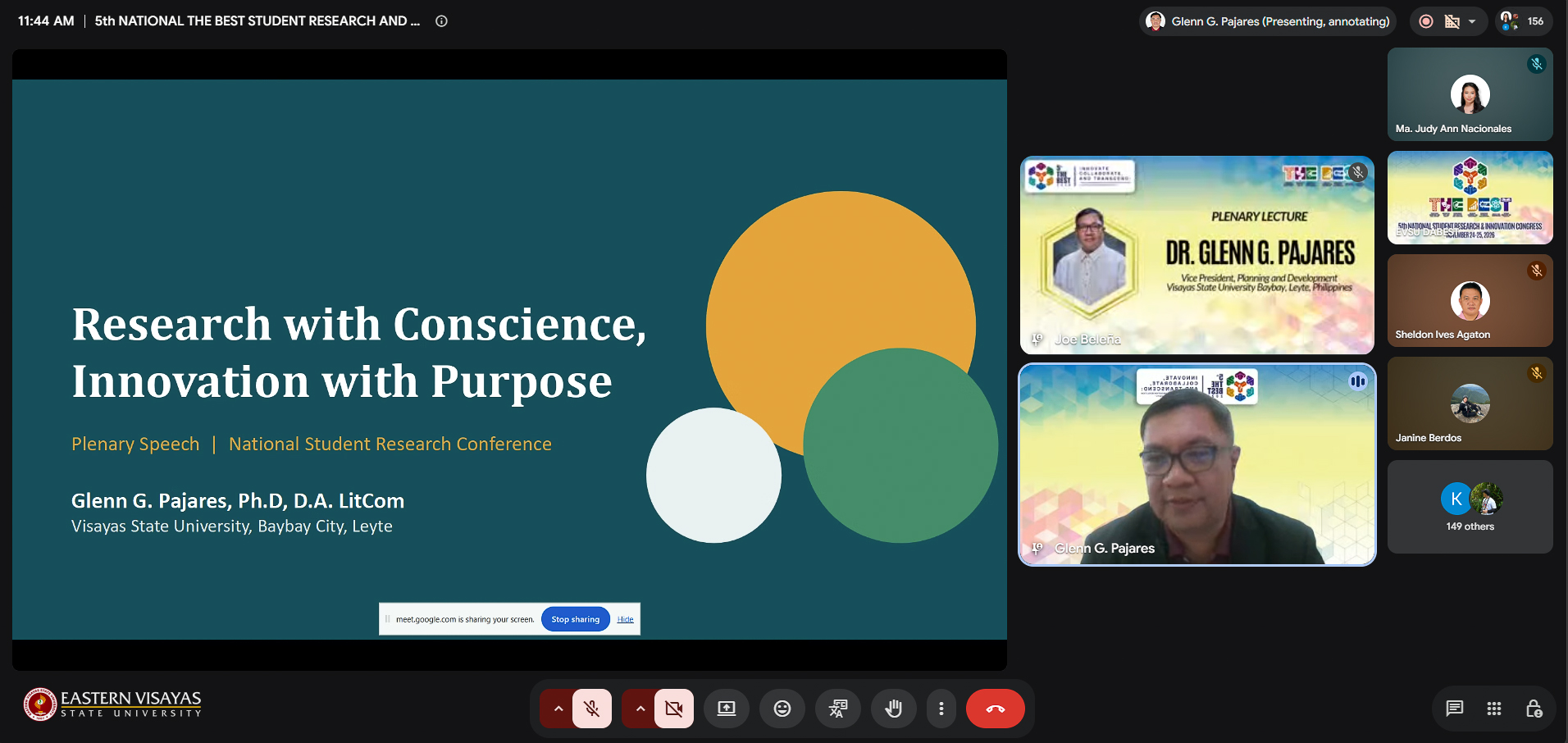
However, speakers stressed that curiosity must be paired with honesty and careful protection of ideas. In his talk, “Research with Conscience, Innovation with Purpose,” Dr. Glenn G. Pajares of Visayas State University asked students whether they do research just to graduate and win medals, or because a real problem needs fixing. Guided by conscience, purpose, and courage, he urged students to use artificial intelligence responsibly and introduced the idea of “research valorization,” which means that publishing a paper is only the halfway mark and the work must still reach the people it was meant to help. He also warned students to protect their inventions before sharing them publicly, know who owns the work, and document every step – a process supported at EVSU by the Innovation and Technology Support Office (ITSO). In the same way, Day 2 speaker Mr. Aljun I. Conciliado stressed that historical research must rely on hard proof from original records and archives rather than guesses.
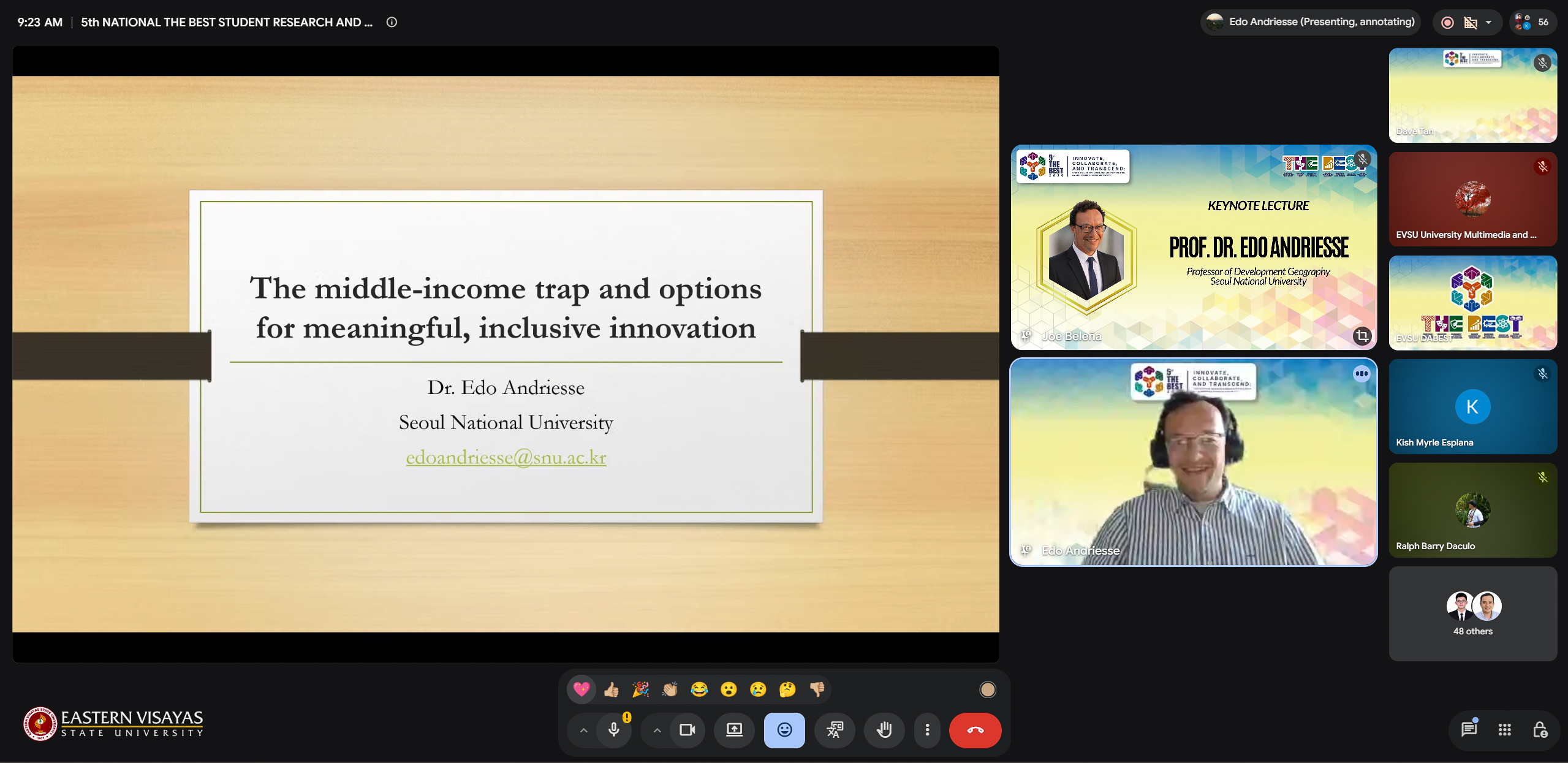
Another major focus of the congress was turning school projects into useful products that support economic growth. On Day 1, startup founder Dr. Joemar C. Taganna pointed out that having an idea or a working model is not enough. Explaining the difference between inventing a tool and building a real business, he urged students to talk to actual users, find out what people genuinely need and will use, and avoid confusing busy work with real progress. Day 2 keynote speaker Dr. Edo Andriesse connected this practical mindset to bigger regional problems. He explained that Southeast Asia faces a “middle-income trap,” where growing economies get stuck, alongside a “poly-crisis” of climate disasters, global conflicts, and rising food and fuel costs. To overcome these issues, he urged young innovators to create fair solutions that reduce poverty, pointing to Vietnam’s fast economic rise through hard work as a clear example.
To put these lessons into action, student participants presented their own studies in online parallel sessions across four tracks: Social Science; Science, Mathematics, Environment and Disaster Risk Reduction; Engineering; and Teacher Education. The two-day gathering closed with a virtual awards ceremony honoring standout entries with the Best Presenter, Best Paper, and Best Innovation awards.
In his closing remarks, the THEBEST congress’ overall chairperson and Director for Extension Services Dr. Rustom B. Clemente told the participants that simply having the courage to share their ideas already makes them winners. Dr. Clemente also encouraged the young researchers to keep improving their projects with a clear purpose, reminding them that the true goal of research is to serve others and help solve everyday problems in their communities. The congress concluded with Director for Research, Assoc. Prof. Bernard Niño Q. Membrebe formally launching and announcing that the 6th National “THE BEST” Congress will take place on October 21-22, 2027, with the theme, “Igniting Possibilities: Youth-led Social Inquiry, Creative Design, and Innovation for a Future-ready Society.”
Through events like the National “THE BEST” Congress, EVSU continues to give young researchers a space to share their work, learn from experts, and build useful solutions. By connecting students from different schools and fields, the university helps turn classroom ideas into real projects that support communities and improve everyday life.
This article is aligned with Sustainable Development Goals (SDG) 04: Quality Education; SDG 09: Industry, Innovation, Technology and Infrastructure; and SDG 17: Partnerships for the Goals
via JS Beleña