Eastern Visayas State University (EVSU) continues to advance its vision as a transformative institution in 2025, steadfast in its commitment not only to excellence in instruction, research, and extension, but also to shaping a resilient, inclusive, and sustainable future. Anchored on its aspiration to become the National University for Resiliency and Climate Action, EVSU upholds sustainability as both a strategic priority and a shared responsibility across all sectors of the university.
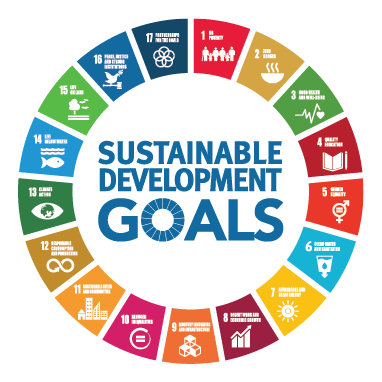
Guided by the principles of the United Nations’ 2030 Agenda for Sustainable Development, EVSU further strengthens the integration of the Sustainable Development Goals (SDGs) into its core functions. In 2025, the University deepens its SDG alignment by embedding sustainability-driven approaches in academic programs, expanding interdisciplinary research on climate and community resilience, and enhancing partnerships that address both local and global challenges. These efforts ensure that sustainability is not treated as a standalone agenda, but as a unifying framework that informs decision-making, innovation, and impact.
Building on the foundations established in previous years, EVSU continues to enhance its sustainability governance by promoting inclusive education, advancing health and well-being initiatives, strengthening environmental stewardship, supporting sustainable livelihoods, and fostering strong institutional collaborations. Through a whole-of-university approach, every initiative—whether in the classroom, in research laboratories, in communities, or within campus operations—contributes to the realization of the SDGs and the broader goal of sustainable development.
This 2025 report captures the collective efforts of the EVSU community—its students, faculty, staff, and partners—whose dedication drives meaningful and measurable change. It reflects the University’s enduring commitment to responsible leadership, ethical governance, and transformative action as it continues to serve as a catalyst for sustainable development in Eastern Visayas and beyond.
SDG 10: Reduced Inequalities – EVSU 2025 Initiatives
EVSU’s contribution to Sustainable Development Goal 10: Reduced Inequalities is reflected in its efforts to expand access to higher education, provide opportunities for disadvantaged and underserved groups, promote inclusion and non-discrimination, and strengthen community participation. Its 2025 initiatives demonstrate the University’s commitment to making educational resources, skills development, and institutional opportunities more accessible, particularly to individuals and communities facing economic, social, and other barriers.
In 2025, Eastern Visayas State University (EVSU) strengthened its contribution to Sustainable Development Goal 10: Reduced Inequalities through initiatives that expanded access to higher education, provided learning and skills development opportunities for underserved groups, promoted social inclusion, and strengthened partnerships aimed at addressing economic and social disparities. These efforts reflect the University’s commitment to ensuring that educational opportunities and institutional resources reach individuals and communities who may experience barriers arising from financial circumstances, social conditions, or limited access to services.
One significant initiative was the provision of financial assistance through the Tertiary Education Subsidy (TES) program, implemented in partnership with the Commission on Higher Education (CHED) and the Unified Student Financial Assistance System for Tertiary Education (UniFAST). On March 18, 2025, a total of 131 students from EVSU and the Asian Development Foundation College (ADFC) received a subsidy of ₱10,000 each, representing a combined grant of ₱1,910,000 for the second semester of Academic Year 2023–2024. The assistance helps ease the financial burden of higher education by supporting tuition, miscellaneous fees, and other school-related expenses, particularly for students from low-income households. Through this initiative, EVSU contributes to reducing economic barriers that may prevent deserving learners from accessing and completing tertiary education.
The University also continued its participation in the Department of Social Welfare and Development’s Tara, Basa! Tutoring Program, which addresses educational inequalities among disadvantaged elementary learners. Through this partnership, EVSU students were trained and deployed as tutors to provide foundational reading support to children who need additional assistance in developing literacy skills. The program also involves Youth Development Workers who conduct learning sessions with parents and guardians, strengthening their capacity to support children’s education at home. By extending academic assistance to underserved learners and engaging families in the learning process, the initiative helps address disparities in educational opportunities and promotes more inclusive learning outcomes.
Beyond its enrolled student population, EVSU extended educational and developmental opportunities to marginalized groups through its community extension programs. A notable example was the Literacy, Integration, Fitness, and Empowerment (LIFE) Project, implemented by EVSU–Carigara Campus under its HOPE (Holistic Outreach for Personal Empowerment) Program. On May 23, 2025, the University’s Extension Services Office conducted a learning session entitled “Writing with Purpose: Crafting Effective Workplace Documents” for persons deprived of liberty at the Bureau of Jail Management and Penology Carigara District Jail. The activity focused on practical workplace communication, including the preparation of resumes and other professional documents, helping participants develop competencies that may support their personal development and future reintegration into society. This initiative demonstrates EVSU’s recognition that access to education and skills development should extend to individuals regardless of their circumstances or previous experiences.
EVSU likewise promoted digital inclusion through its partnership with FundLife International and Mentors Without Borders under the Tech2Thrive: Building Future Skills through Digital Mentorship Project at EVSU–Dulag Campus. The initiative was designed to initially benefit 25 students through access to digital equipment, internet connectivity, structured skills development, and mentorship from volunteer professionals in the technology sector. By providing access to digital resources and specialized guidance, the project seeks to strengthen students’ technological competencies and improve their readiness for future educational and employment opportunities. It also helps address disparities in access to digital learning resources, particularly among students who may have limited access to such facilities and professional networks.
The University further advanced social inclusion through activities that promote gender sensitivity, respect for human dignity, and safe learning and working environments. On September 12, 2025, EVSU employees and students participated in a Gender Sensitivity Seminar designed to foster empathy, understanding, and a more inclusive institutional culture. In addition, the University’s December 12, 2025, internship pre-deployment orientation included a seminar on work ethics and the Safe Spaces Act (Republic Act No. 11313), equipping students with greater awareness of respectful workplace behavior and protection against gender-based sexual harassment. These activities reinforce the University’s efforts to promote non-discrimination and ensure that students and personnel can participate in academic and professional environments with dignity and respect.
EVSU also strengthened its engagement with civil society and development organizations to expand opportunities for participation and community empowerment. On June 24, 2025, the University formalized a partnership with the Philippine National Volunteer Service Coordinating Agency (PNVSCA) through a Memorandum of Agreement aimed at promoting volunteerism. The collaboration provides a framework for encouraging students and personnel to participate in volunteer activities and contribute their knowledge and skills to community development initiatives. Through partnerships with government agencies and non-government organizations, EVSU helps mobilize resources and expertise to address social needs and extend institutional services to communities beyond its campuses.
Furthermore, the University’s collaboration with Side-by-Side Alliance Inc. through the FORGE Extension Project provided technical training opportunities to residents of Barangays Pitogo and Catoogan in Sta. Fe, Leyte. The welding training culminated on October 24, 2025, with five beneficiaries earning Welding National Certificate II (NC II). By extending competency-based training to community members, the University helps create pathways for skills development, employability, and livelihood opportunities among individuals who may have limited access to formal technical-vocational education.
These initiatives are supported by EVSU’s institutional policy on reduced inequalities, which is aligned with the Indigenous Peoples’ Rights Act (Republic Act No. 8371), the Magna Carta of Women (Republic Act No. 9710), and the Accessibility Law (Batas Pambansa Blg. 344). The policy commits the University to promoting equitable access to education and institutional resources for Indigenous Peoples, women, persons with disabilities, economically disadvantaged students, and other underrepresented groups. It also emphasizes inclusive and accessible facilities, non-discrimination, financial assistance, livelihood and skills development, and partnerships with government agencies and civil society organizations.
Overall, EVSU’s 2025 initiatives demonstrate its contribution to SDG 10 by addressing barriers to education, strengthening access to digital resources and skills development, promoting the inclusion of marginalized populations, and fostering a culture of respect and equal opportunity. Through its scholarship programs, community-based learning interventions, inclusive institutional activities, and collaborative partnerships, the University continues to extend its educational and social development mission to individuals and communities who may otherwise have limited access to opportunities. These efforts affirm EVSU’s role as a socially responsive public university committed to reducing inequalities and advancing inclusive development in Eastern Visayas.
SDG 10 in Action: EVSU’s 2025 Reduced Inequalities Initiatives
Through its holistic approach to sustainability, Eastern Visayas State University (EVSU) demonstrates that each initiative—whether in health, education, economic development, or collaborative partnerships—contributes to a larger, integrated vision of progress aligned with the United Nations’ 2030 Agenda. By embedding the principles of the Sustainable Development Goals across research, teaching, extension, and governance, EVSU not only addresses immediate regional and national challenges but also equips future leaders to innovate responsibly, act ethically, and advocate for inclusive growth.
As EVSU moves forward, the university remains committed to tracking measurable outcomes, strengthening stakeholder engagement, and fostering transformative partnerships that accelerate the attainment of all 17 SDGs. This report reflects EVSU’s unwavering dedication to building a resilient, equitable, and sustainable future—demonstrating that collective action, guided by knowledge and ethical stewardship, can truly make a lasting impact for generations to come.