Eastern Visayas State University (EVSU) continues to advance its vision as a transformative institution in 2025, steadfast in its commitment not only to excellence in instruction, research, and extension, but also to shaping a resilient, inclusive, and sustainable future. Anchored on its aspiration to become the National University for Resiliency and Climate Action, EVSU upholds sustainability as both a strategic priority and a shared responsibility across all sectors of the university.
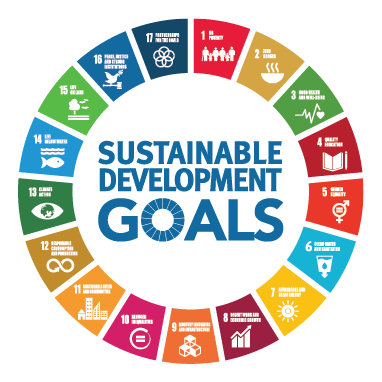
Guided by the principles of the United Nations’ 2030 Agenda for Sustainable Development, EVSU further strengthens the integration of the Sustainable Development Goals (SDGs) into its core functions. In 2025, the University deepens its SDG alignment by embedding sustainability-driven approaches in academic programs, expanding interdisciplinary research on climate and community resilience, and enhancing partnerships that address both local and global challenges. These efforts ensure that sustainability is not treated as a standalone agenda, but as a unifying framework that informs decision-making, innovation, and impact.
Building on the foundations established in previous years, EVSU continues to enhance its sustainability governance by promoting inclusive education, advancing health and well-being initiatives, strengthening environmental stewardship, supporting sustainable livelihoods, and fostering strong institutional collaborations. Through a whole-of-university approach, every initiative—whether in the classroom, in research laboratories, in communities, or within campus operations—contributes to the realization of the SDGs and the broader goal of sustainable development.
This 2025 report captures the collective efforts of the EVSU community—its students, faculty, staff, and partners—whose dedication drives meaningful and measurable change. It reflects the University’s enduring commitment to responsible leadership, ethical governance, and transformative action as it continues to serve as a catalyst for sustainable development in Eastern Visayas and beyond.
SDG 11: Sustainable Cities and Communities – EVSU 2025 Initiatives
EVSU’s contributions to SDG 11 in 2025 reflect its role in promoting safer, more inclusive, resilient, and sustainable campus and community environments. Its initiatives included disaster preparedness, emergency response, cultural heritage promotion, and research addressing urban mobility and community development. Through these efforts, the University advanced its commitment to making its campuses and surrounding communities safer, more accessible, and better prepared for environmental and social challenges.
A particularly significant contribution was EVSU’s use of its campus facilities as temporary evacuation centers during severe weather events. During Typhoon Opong in September 2025, the University accommodated 176 residents from nearby communities at its Main Campus, coordinating with the Department of Social Welfare and Development (DSWD) and local government units to help address evacuees’ immediate needs. During Typhoon Tino in November, EVSU provided temporary shelter to 649 individuals, including residents of nearby barangays and members of the university community. The University also accommodated more than 150 evacuees during Typhoon Uwan later that month. These responses demonstrate how public university facilities can serve as vital community resources during emergencies, contributing to local disaster preparedness, public safety, and community resilience.
Beyond emergency shelter operations, EVSU strengthened disaster awareness and the preservation of community experiences through its Disaster Memory Study Program, conducted in Tacloban City from March 10–18, 2025, in partnership with Kobe University’s Graduate School of International Cooperation Studies in Japan. The program examined how experiences from Super Typhoon Yolanda are documented, communicated across generations, and translated into improved disaster preparedness, response, recovery, and community resilience. Through engagements with government agencies, local communities, coastal barangays, and disaster memorial sites, the initiative contributed to understanding how lessons from past disasters can inform safer and more resilient communities.
EVSU also contributed to sustainable urban development through research addressing local transportation and road safety concerns. Studies published in 2025 examined commuter accessibility in Tacloban’s University Belt and road safety along the Tigbao–Caibaan Bypass Road. These research initiatives provide evidence and insights relevant to improving public transportation access, addressing traffic congestion, and identifying road safety risks—important considerations in developing more accessible and people-centered communities.
The University’s commitment to sustainable communities is further reflected in its efforts to preserve cultural heritage and provide public access to educational and cultural spaces. Through its heritage exhibits, cultural performances, and student-led creative showcases, EVSU helps preserve and promote the traditions, artistic expressions, and historical identity of Eastern Visayas. Its sustainability framework also recognizes the importance of accessible libraries, galleries, open spaces, and campus green areas as shared resources that support community engagement, recreation, and lifelong learning.
These initiatives are guided by EVSU’s SDG 11 institutional policy, which is anchored in the Urban Development and Housing Act (Republic Act No. 7279), the Green Building Code of the Philippines, and the Philippine Disaster Risk Reduction and Management Act (Republic Act No. 10121). The policy commits the University to developing climate-resilient and environmentally responsible campuses, integrating disaster risk reduction into institutional planning and community extension, strengthening partnerships with local governments, and promoting cultural preservation. Collectively, EVSU’s 2025 initiatives demonstrate that its contribution to sustainable cities and communities extends beyond campus operations to include disaster response, research-informed urban development, cultural preservation, and partnerships that help build safer, more inclusive, and resilient communities across Eastern Visayas.
SDG 11 in Action: EVSU’s 2025 Sustainable Cities and Communities Initiatives
Through its holistic approach to sustainability, Eastern Visayas State University (EVSU) demonstrates that each initiative—whether in health, education, economic development, or collaborative partnerships—contributes to a larger, integrated vision of progress aligned with the United Nations’ 2030 Agenda. By embedding the principles of the Sustainable Development Goals across research, teaching, extension, and governance, EVSU not only addresses immediate regional and national challenges but also equips future leaders to innovate responsibly, act ethically, and advocate for inclusive growth.
As EVSU moves forward, the university remains committed to tracking measurable outcomes, strengthening stakeholder engagement, and fostering transformative partnerships that accelerate the attainment of all 17 SDGs. This report reflects EVSU’s unwavering dedication to building a resilient, equitable, and sustainable future—demonstrating that collective action, guided by knowledge and ethical stewardship, can truly make a lasting impact for generations to come.