



SDG 13 | CLIMATE ACTION
Climate Adaptation Partnerships with Non-Governmental Organizations
The Eastern Visayas State University (EVSU) recognizes the important role of non-governmental organizations (NGOs), civil society organizations, and other development partners in advancing inclusive, community-driven, and sustainable climate adaptation initiatives. Acknowledging the need for collective action in addressing the growing impacts of climate change, the University promotes partnerships that complement government-led programs and mobilize diverse expertise, resources, and community networks toward building climate-resilient communities. Through its research, instruction, and extension functions, EVSU engages with non-governmental and community-based organizations in initiatives that promote climate change awareness, environmental conservation, disaster preparedness, sustainable resource management, and the development of locally appropriate adaptation strategies. These collaborations provide opportunities to translate scientific knowledge and academic expertise into practical community interventions, strengthen the adaptive capacities of vulnerable populations, and encourage participatory approaches to climate risk reduction and resilience building. By fostering partnerships that connect academic institutions, civil society, and local communities, EVSU reinforces its commitment to collaborative climate action, inclusive development, and the advancement of its vision of becoming a National University for Resiliency and Climate Action by 2040.
EVSU’s Collaboration with NGOs and Environmental Civil Society Organizations
in Advancing Climate Adaptation
Eastern Visayas State University (EVSU) recognizes that addressing the impacts of climate change requires sustained cooperation among higher education institutions, non-governmental organizations (NGOs), environmental advocacy groups, development organizations, government agencies, and local communities. Given the vulnerability of Eastern Visayas to typhoons, flooding, storm surges, coastal hazards, and other climate-related risks, the University actively engages external organizations in initiatives that promote environmental sustainability, strengthen community resilience, and develop adaptive capacities. Through these partnerships, EVSU extends its academic and research capabilities beyond the campus and contributes to practical, community-oriented climate adaptation interventions.
In 2025, EVSU demonstrated this institutional commitment through collaborative initiatives involving international development organizations, climate advocacy groups, and environmental civil society organizations. These engagements addressed different but complementary dimensions of climate adaptation, including nature-based solutions, ecosystem restoration, climate education, youth empowerment, environmental advocacy, and research on the lived experiences of communities facing climate-related vulnerabilities.
Partnership with Plan International Pilipinas: Advancing Nature-Based Solutions and Community Ecosystem Restoration
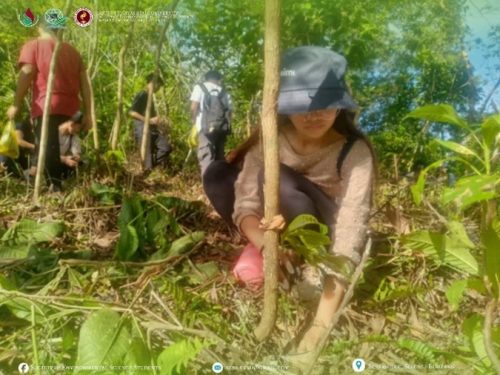
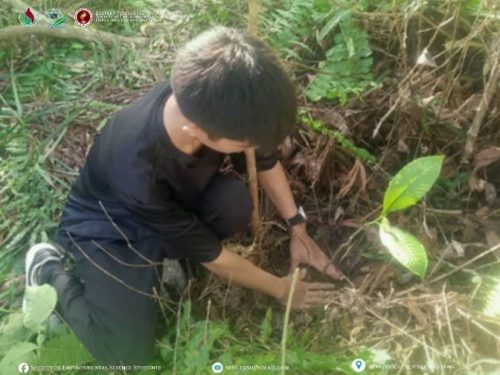
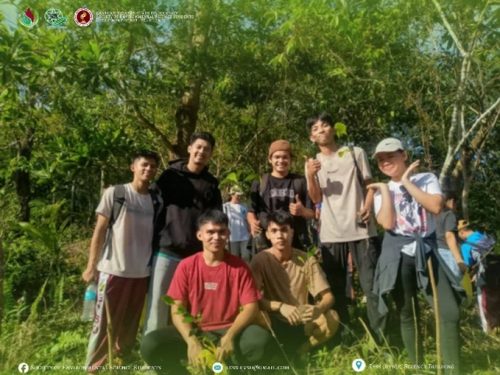
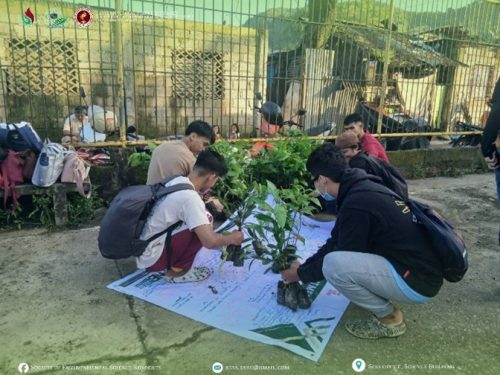
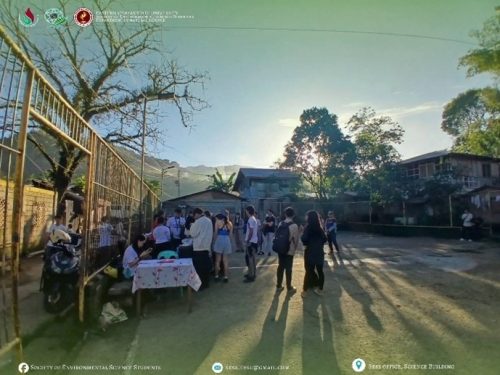
One of EVSU’s significant demonstrations of collaboration with an international development NGO was its participation in Sibol Han Pagkaurusa, a native tree-planting initiative conducted on November 29, 2025, in Barangay 104, Salvacion, Tacloban City. The activity was organized by Plan International Pilipinas under its Eco Project: Ugnayan sa Klima for Resilient Communities, bringing together academic institutions, environmental organizations, volunteer groups, and community-oriented partners in a shared effort to strengthen local environmental resilience.
EVSU participated through its fourth-year Bachelor of Science in Environmental Science students and members of the Society of Environmental Science Students. Their involvement provided an avenue for the University’s academic community to translate environmental knowledge into practical conservation and restoration activities. Rather than limiting environmental education to classroom discussions, the initiative enabled students to engage directly in an organized community intervention alongside development practitioners and environmental advocates.
The activity involved planting native tree species and raising awareness of the ecological importance of restoring and maintaining locally appropriate vegetation. Native trees contribute to the integrity of terrestrial ecosystems by providing habitats for biodiversity, supporting ecological processes, improving soil stability, and helping maintain the environmental functions of landscapes. Depending on the site and species, established vegetation can also contribute to reducing surface runoff, limiting soil erosion, and improving the capacity of ecosystems to withstand climate-related stresses.
The collaboration was particularly meaningful because it connected EVSU’s environmental science expertise with the community-oriented development work of Plan International Pilipinas. The involvement of other organizations, including the Rotaract Club of San Juanico, Pintakasi for Landscape Restoration Inc., and Tacloban Mountaineering Advocates, further demonstrated the value of multi-sectoral cooperation in implementing local environmental interventions.
Through this partnership, EVSU contributed student participation, environmental knowledge, and volunteer engagement to a collective effort aimed at strengthening ecological resilience. The initiative also reinforced the importance of community ownership and shared responsibility in sustaining restoration activities beyond a single planting event. By working with an international NGO and local environmental organizations, the University supported an approach to climate adaptation that recognizes healthy ecosystems as an important foundation for protecting communities against environmental degradation and climate-related pressures.
Importantly, the activity reflects the practical application of nature-based solutions in climate adaptation. Ecosystem restoration can complement infrastructure-based and technological interventions by maintaining natural environmental processes that help communities cope with changing climatic conditions. In this regard, EVSU’s participation demonstrates its willingness to collaborate with NGOs in translating climate-resilience objectives into tangible environmental action at the local level.
Partnership with Climate Reality Project Philippines: Strengthening Climate Literacy, Youth Engagement, and Community Adaptive Capacity
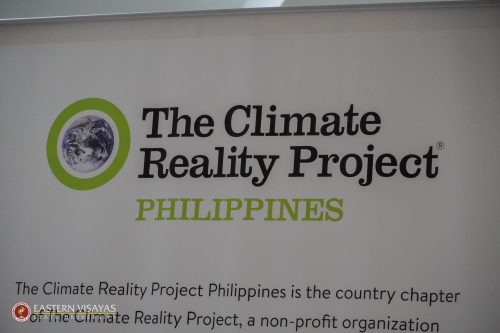
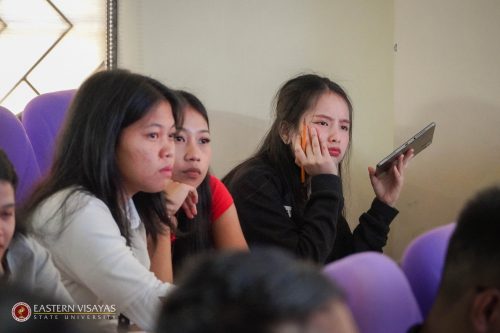
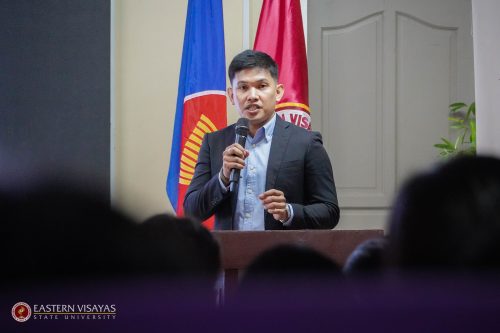
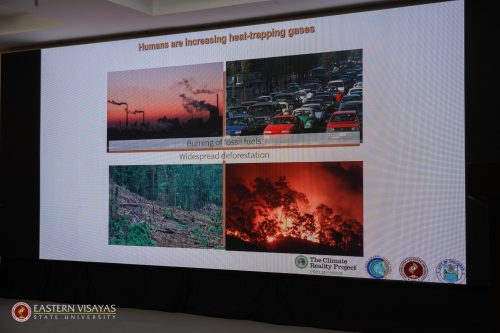
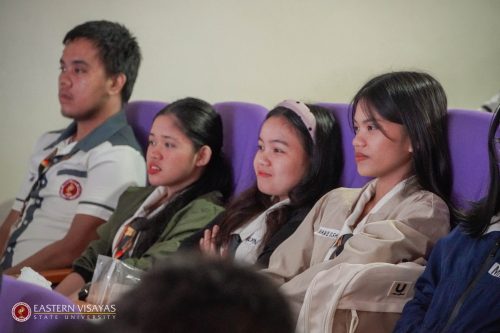
EVSU further strengthened its collaboration with climate-focused civil society organizations through Klima-Eskwela: Climate Science, Arts and Action, a two-day learning and engagement initiative held on November 27–28, 2025, at the University’s ORIES Studio Room.
The activity was conducted through collaboration among EVSU, Climate Reality Project Philippines, the Climate Change Commission, and the City Government of Tacloban. This partnership brought together academic, nonprofit, and government stakeholders to strengthen public understanding of climate change and encourage meaningful participation in environmental action.
The collaboration recognized that effective climate adaptation depends not only on physical interventions but also on the capacity of individuals and communities to understand climate risks, interpret environmental information, and make informed decisions. Climate literacy is therefore an important foundation for adaptive capacity, particularly in communities exposed to recurring extreme weather events and other climate-related hazards.
Through the program, participants engaged with three interconnected areas:
- Climate Science and Action: Discussions on climate science, climate impacts, and possible solutions helped strengthen participants’ understanding of the causes and consequences of climate change and the importance of informed climate action.
- Climate Change and the Plastic Crisis: The discussions highlighted the relationship between environmental degradation, plastic pollution, and broader sustainability challenges, encouraging participants to recognize the interconnected nature of environmental problems.
- Project Niche: The introduction of this youth-oriented project engagement initiative encouraged participants to conceptualize and develop plastic-free projects and policies that could be implemented in their respective campuses.
The involvement of Climate Reality Project Philippines was particularly important in bringing the perspective and advocacy experience of a specialized climate-focused nonprofit organization into the University’s educational and community engagement activities. Through this partnership, EVSU helped provide an institutional platform for communicating climate science, strengthening environmental awareness, and encouraging young people to become active contributors to climate solutions.
The initiative also demonstrated the University’s recognition of students and young people as important stakeholders in climate adaptation. By encouraging them to develop practical environmental projects and policies, EVSU supported the development of skills, environmental responsibility, and participatory approaches that can be sustained within educational institutions and their surrounding communities.
Moreover, the collaboration connected climate education with actionable environmental behavior. The emphasis on plastic-free initiatives, for example, encouraged participants to consider how institutional practices and individual decisions can contribute to environmental sustainability and reduce pressures on ecosystems. Although the program was primarily educational and advocacy-oriented, its contribution to climate adaptation lies in strengthening the knowledge, awareness, and capacity necessary for communities to understand and respond to climate-related challenges.
Through Klima-Eskwela, EVSU demonstrated how collaboration with an NGO can complement the University’s academic mandate by bringing climate advocacy, public education, and youth mobilization into a shared institutional initiative. It also illustrated the value of connecting nonprofit expertise with government participation and university-based learning to advance a more informed and climate-responsive society.
Collaborative Research on Community Vulnerability and Climate Adaptation: Lived Security Responses to Climate Change in the Philippines
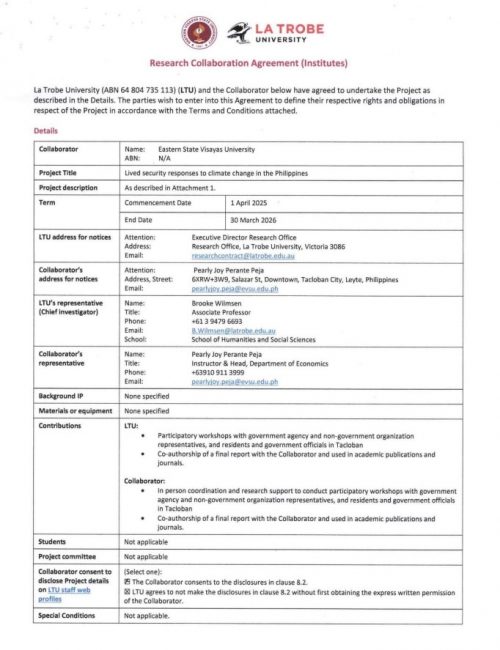
Beyond direct environmental interventions and climate education, EVSU also participated in collaborative research initiatives that contribute to understanding the social dimensions of climate change and the adaptive responses of vulnerable communities. One such initiative was Lived Security Responses to Climate Change in the Philippines, a research collaboration that commenced on April 1, 2025, and was scheduled to run until March 30, 2026.
The research initiative involved La Trobe University as the lead institution, together with Philippine academic and research partners, including EVSU, Ateneo de Manila University, Visayas State University, and Coastal Cities at Risk in the Philippines (CCARPH). The wider international collaboration also involved Lingnan University and the University of Melbourne.
The research recognizes that climate change creates interconnected environmental, economic, social, and human security challenges, particularly for communities exposed to recurring typhoons, flooding, landslides, coastal hazards, and sea-level rise. Rather than viewing climate adaptation exclusively as a technical or environmental concern, the initiative examines how climate-related changes affect people’s lived experiences, security, livelihoods, and capacity to respond to environmental threats.
For EVSU, participation in this collaborative research provides an opportunity to contribute regional and academic perspectives to broader discussions on climate vulnerability and adaptation. Its involvement supports the generation and exchange of knowledge concerning how communities experience climate-related risks, what strategies they employ to cope with these challenges, and how adaptation approaches can be made more responsive to local circumstances.
The initiative is particularly relevant to Eastern Visayas, where the geographical and socioeconomic conditions of many communities make them susceptible to climate-related hazards. Research on lived experiences and community responses can help identify gaps between formal adaptation policies and the actual needs of affected populations. It can also contribute to the development of more inclusive approaches that recognize local knowledge, community participation, and the social dimensions of resilience.
Furthermore, the project’s collaborative character strengthens the connection between research institutions and organizations working on climate risk, urban resilience, and community security. By participating in this research network, EVSU contributes to a broader knowledge partnership that can inform evidence-based climate adaptation planning and support the development of strategies responsive to the vulnerabilities of communities in the Philippines.
Although this initiative is primarily a research collaboration among universities and research organizations, it complements EVSU’s direct NGO partnerships by providing an evidence-generation dimension to its climate adaptation efforts. It demonstrates that the University’s engagement extends beyond the implementation of environmental activities to include collaborative inquiry into the underlying vulnerabilities and adaptive capacities of communities.
Engagement with Local Environmental Civil Society Organizations: Promoting Collective Environmental Stewardship
EVSU’s collaboration with NGOs and civil society organizations was also reflected in its engagement with local environmental groups during the Sibol Han Pagkaurusa initiative. The participation of Pintakasi for Landscape Restoration Inc., the Rotaract Club of San Juanico, and Tacloban Mountaineering Advocates illustrated the University’s recognition of grassroots organizations and volunteer networks as important partners in advancing environmental sustainability and climate resilience.
These organizations contributed to a collaborative environment in which academic knowledge, environmental advocacy, volunteerism, and community participation were brought together in support of ecosystem restoration.
The engagement is significant because climate adaptation interventions require sustained local involvement. Environmental organizations often provide community networks, volunteer mobilization, local environmental knowledge, and practical experience that complement the technical and academic capabilities of universities. Their participation can help strengthen the continuity of environmental initiatives and encourage broader community ownership of conservation and restoration activities.
For EVSU, working alongside these organizations provided opportunities to strengthen student engagement in environmental stewardship and reinforce the role of higher education in supporting community-based environmental action. It also demonstrated how partnerships with local civil society organizations can extend the reach of university initiatives and help translate environmental commitments into practical interventions.
Through these collaborative relationships, EVSU supported a participatory approach to environmental resilience in which universities, NGOs, civil society groups, and communities share responsibility for protecting and restoring local ecosystems.
Overall Institutional Contribution: Building Climate Resilience through NGO and Civil Society Partnerships
These initiatives demonstrate that EVSU views NGOs and civil society organizations not simply as external stakeholders but as important partners in advancing its climate action agenda. By combining the University’s academic expertise, research capabilities, student engagement, and extension-oriented functions with the advocacy experience, development expertise, and community networks of external organizations, EVSU helps create collaborative platforms for addressing climate-related challenges.
More importantly, these partnerships reflect an understanding that climate adaptation must be pursued through interconnected interventions. Ecosystem restoration helps maintain natural environmental functions; climate education strengthens the ability of individuals to understand and respond to climate risks; youth engagement cultivates future environmental leaders; and collaborative research generates knowledge that can inform more inclusive and context-responsive adaptation strategies.
As an institution serving a region highly exposed to climate-related hazards, EVSU recognizes the importance of working with organizations that can help translate climate knowledge and policy objectives into meaningful action at the community level. These collaborations reinforce its commitment to environmental stewardship, community resilience, and sustainable development, while advancing its institutional aspiration to become a National University for Resiliency and Climate Action by 2040.
Through these sustained and complementary engagements, EVSU contributes to a broader, partnership-driven approach to climate adaptation in Eastern Visayas, demonstrating how higher education institutions can work with NGOs and environmental civil society organizations to strengthen the adaptive capacity of communities and promote long-term ecological resilience.
EXPLORE OUR SDG 13 INITIATIVES & ACTIVITIES
EXPLORE OUR SDG 13 RESEARCH & PUBLICATIONS
SUSTAINABLE DEVELOPMENT GOALS



