Eastern Visayas State University (EVSU) continues to advance its vision as a transformative institution in 2025, steadfast in its commitment not only to excellence in instruction, research, and extension, but also to shaping a resilient, inclusive, and sustainable future. Anchored on its aspiration to become the National University for Resiliency and Climate Action, EVSU upholds sustainability as both a strategic priority and a shared responsibility across all sectors of the university.
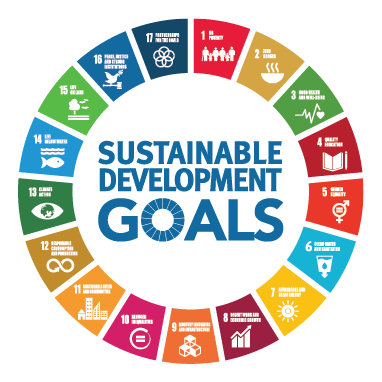
Guided by the principles of the United Nations’ 2030 Agenda for Sustainable Development, EVSU further strengthens the integration of the Sustainable Development Goals (SDGs) into its core functions. In 2025, the University deepens its SDG alignment by embedding sustainability-driven approaches in academic programs, expanding interdisciplinary research on climate and community resilience, and enhancing partnerships that address both local and global challenges. These efforts ensure that sustainability is not treated as a standalone agenda, but as a unifying framework that informs decision-making, innovation, and impact.
Building on the foundations established in previous years, EVSU continues to enhance its sustainability governance by promoting inclusive education, advancing health and well-being initiatives, strengthening environmental stewardship, supporting sustainable livelihoods, and fostering strong institutional collaborations. Through a whole-of-university approach, every initiative—whether in the classroom, in research laboratories, in communities, or within campus operations—contributes to the realization of the SDGs and the broader goal of sustainable development.
This 2025 report captures the collective efforts of the EVSU community—its students, faculty, staff, and partners—whose dedication drives meaningful and measurable change. It reflects the University’s enduring commitment to responsible leadership, ethical governance, and transformative action as it continues to serve as a catalyst for sustainable development in Eastern Visayas and beyond.
SDG 4: Quality Education – EVSU 2025 Initiatives
Eastern Visayas State University (EVSU) demonstrates its commitment to Sustainable Development Goal 4 (Quality Education) through institutional initiatives that advance inclusive, equitable, accessible, and lifelong learning opportunities. Recognizing education as a fundamental driver of social mobility, economic development, and community transformation, the University continuously strengthens its academic programs, teaching and learning strategies, faculty competencies, research capabilities, and extension services. Guided by its mandate as a public higher education institution, EVSU seeks to ensure that quality education is accessible not only to its enrolled students but also to underserved learners, educators, professionals, and communities across Eastern Visayas.
In 2025, EVSU reinforced its commitment to educational excellence by strengthening teacher education, expanding community-based learning opportunities, supporting foundational literacy and numeracy, promoting lifelong learning, and fostering local and international academic partnerships. These initiatives reflect the University’s recognition that achieving quality education requires sustained investments in competent educators, inclusive learning environments, innovative teaching approaches, and accessible educational resources.
One of EVSU’s notable contributions to inclusive education in 2025 was its participation in the Department of Social Welfare and Development (DSWD) Tara, Basa! Tutoring Program, which prepared university students to serve as tutors for underprivileged elementary school learners. Through a five-day capability-building activity, EVSU Bachelor of Arts in Education students acquired the knowledge and skills necessary to provide effective reading instruction and support children’s foundational literacy development. The program also incorporated parenting sessions facilitated by Youth Development Workers to promote responsible parenting, child protection, and the importance of early childhood education. By mobilizing its education students to provide learning assistance to disadvantaged children, EVSU extended its educational resources beyond the university and contributed to addressing literacy challenges among underserved communities.
The University further expanded access to basic education through its Alternative Learning System (ALS) Extension Initiatives implemented by EVSU–Carigara Campus. On January 17, 2025, the campus conducted an educational extension activity at Barugo I Central School in Barugo, Leyte, through Project SMILE and Project READY under Program EMPOWERED (Empowering Education in Collaboration with Empowering ALS Learners Through E-BE-Cs Program). These initiatives provided educational support and skills development opportunities for out-of-school youth and adult learners, recognizing the importance of alternative learning pathways for individuals who may have limited opportunities to participate in formal education. Through community-based instruction and collaboration with local education stakeholders, EVSU helped promote continuing education, personal development, and inclusive learning opportunities for underserved sectors.
Another significant initiative was Project L.I.G.H.T. (Literacy, Innovation, Growth, and Holistic Teaching), formalized on October 22, 2025, through a partnership between EVSU’s School of Education and New Hope Elementary School under the Department of Education’s Tacloban City Division. The project aims to strengthen foundational literacy and numeracy, promote innovative and inclusive teaching practices, and support the professional development of public school teachers. Among its planned interventions are the establishment of a school-based Reading Hub, continuing teacher development activities, and the participation of EVSU Elementary Education students as tutors in reading and numeracy activities. Through this partnership, the University extends its instructional expertise to the basic education sector while providing pre-service teachers with opportunities to apply their pedagogical competencies in actual school settings. Project L.I.G.H.T. reflects EVSU’s commitment to addressing foundational learning gaps through sustained collaboration between higher education and public elementary schools.
In line with its commitment to lifelong learning and skills development, EVSU also implemented community-based training initiatives that provided practical learning opportunities to individuals beyond its regular student population. Through the FORGE Extension Project, the University, in partnership with Side-by-Side Alliance Inc., provided welding training to community beneficiaries from Barangays Pitogo and Catoogan in Sta. Fe, Leyte. The initiative equipped participants with technical competencies relevant to employment and livelihood development, with five beneficiaries earning the Welding National Certificate II (NC II). Similarly, EVSU–Dulag Campus implemented the DIGITS Project, which delivered digital literacy training in collaboration with a local community cooperative. The initiative helped participants develop essential digital competencies and improve their capacity to access and utilize information and communication technologies. These programs demonstrate the University’s recognition that quality education extends beyond academic degrees and includes technical, vocational, and digital skills development that respond to the evolving needs of individuals and communities.
EVSU likewise strengthened public access to knowledge and continuing education through its Cloud Campus Lecture Series, which provided online learning opportunities covering emerging technologies, engineering applications, educational innovation, and professional development. The University also hosted the 8th International Science, Technology, Engineering, Agri-Fisheries, and Mathematics Plus (iSTEAM+) Research Congress on November 12–13, 2025, in collaboration with the Philippine-American Academy of Science and Engineering (PAASE) and the Eastern Visayas Consortium for Industry, Energy, and Emerging Technology Research and Development (EVCIEERD). Anchored on the theme Harnessing AI and Responsible Innovation for Transformative Futures, the congress brought together researchers, scientists, professors, innovators, and educators to exchange knowledge and discuss developments in artificial intelligence, scientific innovation, sustainable agriculture, environmental technologies, health sciences, and other fields. Through these academic and research-oriented activities, EVSU provided platforms for knowledge dissemination, professional development, and interdisciplinary learning that extended beyond its immediate academic community.
The University’s contribution to quality education was further reflected in its sustained commitment to developing competent and professionally qualified educators. Through its teacher education programs, including Elementary Education, Secondary Education, Technology and Livelihood Education, Technical-Vocational Teacher Education, Culture and Arts Education, and Physical Education, EVSU continued to prepare future teachers equipped with the pedagogical knowledge, subject-specific competencies, and practical teaching experience necessary to respond to the diverse learning needs of Filipino students. These programs integrate outcomes-based education, curriculum evaluation, supervised teaching internships, and partnerships with the Department of Education and other educational institutions. In School Year 2024–2025, EVSU recorded 1,429 graduates with relevant teaching qualifications out of 4,484 total graduates, representing 31.9% of the University’s graduating population. This was an increase of 192 teaching-qualified graduates compared with the previous academic year, demonstrating the University’s continuing contribution to strengthening the teaching workforce and improving the quality of basic education in the region and beyond.
Collectively, EVSU’s 2025 initiatives demonstrate its comprehensive approach to advancing quality education through academic excellence, inclusive learning opportunities, teacher preparation, community-based educational outreach, and lifelong skills development. By extending its educational services to disadvantaged children, out-of-school youth, adult learners, public school teachers, and community members, the University reinforces its responsibility to make learning accessible beyond traditional academic settings. Its investments in teacher education, literacy and numeracy interventions, alternative learning pathways, technical and digital skills training, and research dissemination reflect the University’s recognition that quality education must be inclusive, relevant, responsive, and continuous throughout an individual’s lifetime. Through its sustained commitment to instruction, research, extension, and strategic partnerships, EVSU strengthens its role as a catalyst for educational transformation and human capital development, contributing to a more knowledgeable, skilled, empowered, and inclusive society across Eastern Visayas.
SDG 4 in Action: EVSU’s 2025 Quality Education Initiatives
Through its holistic approach to sustainability, Eastern Visayas State University (EVSU) demonstrates that each initiative—whether in health, education, economic development, or collaborative partnerships—contributes to a larger, integrated vision of progress aligned with the United Nations’ 2030 Agenda. By embedding the principles of the Sustainable Development Goals across research, teaching, extension, and governance, EVSU not only addresses immediate regional and national challenges but also equips future leaders to innovate responsibly, act ethically, and advocate for inclusive growth.
As EVSU moves forward, the university remains committed to tracking measurable outcomes, strengthening stakeholder engagement, and fostering transformative partnerships that accelerate the attainment of all 17 SDGs. This report reflects EVSU’s unwavering dedication to building a resilient, equitable, and sustainable future—demonstrating that collective action, guided by knowledge and ethical stewardship, can truly make a lasting impact for generations to come.