



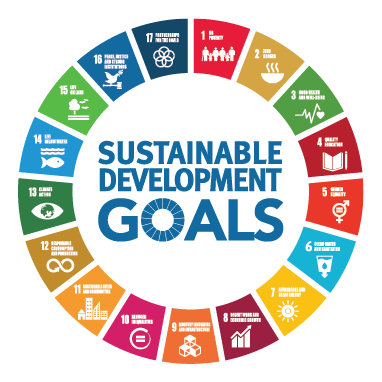
Eastern Visayas State University (EVSU) continues to advance its vision as a transformative institution in 2025, steadfast in its commitment not only to excellence in instruction, research, and extension, but also to shaping a resilient, inclusive, and sustainable future. Anchored on its aspiration to become the National University for Resiliency and Climate Action, EVSU upholds sustainability as both a strategic priority and a shared responsibility across all sectors of the university.
Guided by the principles of the United Nations’ 2030 Agenda for Sustainable Development, EVSU further strengthens the integration of the Sustainable Development Goals (SDGs) into its core functions. In 2025, the University deepens its SDG alignment by embedding sustainability-driven approaches in academic programs, expanding interdisciplinary research on climate and community resilience, and enhancing partnerships that address both local and global challenges. These efforts ensure that sustainability is not treated as a standalone agenda, but as a unifying framework that informs decision-making, innovation, and impact.
Building on the foundations established in previous years, EVSU continues to enhance its sustainability governance by promoting inclusive education, advancing health and well-being initiatives, strengthening environmental stewardship, supporting sustainable livelihoods, and fostering strong institutional collaborations. Through a whole-of-university approach, every initiative—whether in the classroom, in research laboratories, in communities, or within campus operations—contributes to the realization of the SDGs and the broader goal of sustainable development.
This 2025 report captures the collective efforts of the EVSU community—its students, faculty, staff, and partners—whose dedication drives meaningful and measurable change. It reflects the University’s enduring commitment to responsible leadership, ethical governance, and transformative action as it continues to serve as a catalyst for sustainable development in Eastern Visayas and beyond.
SDG 5: Gender Equality – EVSU 2025 Initiatives
Eastern Visayas State University (EVSU) demonstrates its commitment to Sustainable Development Goal 5 (Gender Equality) through institutional initiatives that promote women’s empowerment, equal opportunities, gender-responsive governance, inclusive participation, and the prevention of gender-based violence. Recognizing that gender equality is fundamental to achieving inclusive and sustainable development, the University integrates Gender and Development (GAD) principles into its core functions of instruction, research, extension, and administration. Guided by the Magna Carta of Women (Republic Act No. 9710), the Safe Spaces Act (Republic Act No. 11313), and other relevant national policies, EVSU works toward establishing an academic and working environment where women and men, regardless of gender identity or expression, can participate equally, exercise their rights, and access opportunities without discrimination. Through its GAD Office, GAD Focal Point System (GFPS), and partnerships with internal and external stakeholders, the University translates its commitment to gender equality into programs that empower individuals, strengthen institutional accountability, and promote safe and inclusive communities.
In 2025, EVSU intensified its efforts to advance women’s empowerment and gender equality through a series of activities conducted in celebration of National Women’s Month. Spearheaded by the University’s Gender and Development (GAD) Office, the celebration highlighted the significant contributions of women to society while advocating for equal rights, opportunities, and protection against discrimination. As part of these activities, the GAD Office, in collaboration with the Student Affairs and Services Office (SASO), conducted a Wellness and Self-Care Seminar on March 15, 2025, which particularly sought to reach marginalized women and provide a platform for discussions on mental health, emotional resilience, and personal well-being. The seminar also created a safe space for participants to share their experiences and discuss the challenges women encounter in accessing wellness resources. Furthermore, on March 28, 2025, the GAD Office organized the Sustainable and Innovative Approaches to the Traditional Economy Seminar, which focused on strengthening women’s entrepreneurial ventures through innovative approaches while preserving traditional economic practices. These initiatives underscored the University’s recognition that women’s empowerment encompasses not only the protection of their rights but also their well-being, economic participation, and opportunities for personal and professional development.
The University also strengthened its institutional capacity to mainstream gender perspectives across its academic and administrative operations. On April 28–30, 2025, the GAD Office conducted a three-day capacity-building seminar-workshop for GAD Coordinators from the Main and External Campuses. The activity focused on strengthening participants’ understanding of gender and development principles, gender-responsive planning and budgeting, performance evaluation, and the integration of GAD considerations into university programs and projects. Discussions covered the provisions of CHED Memorandum Order No. 1, Series of 2015, the preparation of Annual GAD Plans and Budgets, and the application of the Harmonized Gender and Development Guidelines (HGDG) in institutional planning and program design. By equipping GAD implementers with the necessary knowledge and competencies, EVSU reinforced its commitment to making gender mainstreaming an institution-wide responsibility rather than an initiative confined to a single office.
In promoting a safe, respectful, and inclusive academic environment, EVSU further intensified its advocacy against sexual harassment and gender-based discrimination. On November 18, 2025, the University conducted an Anti-Sexual Harassment Seminar at the Graduate School Function Hall, attended by faculty members and students from the Main Campus. The activity provided discussions on Republic Act No. 7877, or the Anti-Sexual Harassment Act of 1995, and Republic Act No. 11313, or the Safe Spaces Act. Through legal and practical discussions facilitated by resource speakers from the legal profession, participants gained a deeper understanding of prohibited acts, individual rights, institutional responsibilities, and the importance of accountability in preventing sexual harassment. Complementing this initiative, EVSU conducted a Seminar on Gender-Fair and Inclusive Language on November 21, 2025, which emphasized the importance of using inclusive language and integrating gender-responsive perspectives into academic curricula and institutional governance. These activities promoted greater awareness of gender sensitivity and encouraged the university community to foster an environment founded on dignity, mutual respect, and equal treatment.
EVSU also strengthened its advocacy against violence toward women and children through its participation in the 18-Day Campaign to End Violence Against Women (VAW), observed from November 24 to December 12, 2025. The University formally opened the campaign during its flag-raising ceremony on November 24 through the GAD Office, emphasizing the importance of collective action in preventing violence, raising public awareness, and protecting the rights of women and children. A significant development in this advocacy was the establishment of the Men Opposed to Violence Against Women and Children Everywhere (MOVE)–EVSU Chapter on November 17, 2025. Through this initiative, the University institutionalized the participation of male faculty members and personnel as active advocates and partners in promoting gender equality and preventing violence against women and children. The designated members are expected to support awareness campaigns, promote positive masculinity, advocate for women’s rights, and encourage shared responsibility in building a safe and gender-responsive university community. This initiative reinforces the principle that achieving gender equality requires the active participation of all genders in challenging discriminatory practices and harmful social norms.
Furthermore, EVSU sustained its institutional mechanisms for protecting individuals against gender-based misconduct and promoting equal opportunities within the University. Through its GAD Office and GAD Focal Point System, the University coordinates the integration of gender perspectives into institutional policies, academic programs, research, extension activities, and administrative processes. Its Committee on Decorum and Investigation (CODI) serves as a mechanism for receiving and addressing complaints involving sexual harassment and related misconduct, while the GAD Youth Council (GADYC) provides opportunities for student participation in gender equality advocacy and awareness campaigns. These mechanisms are complemented by the University’s Safe Spaces Manual, which establishes guidelines and protective measures to promote respectful and harassment-free environments across campus activities, academic engagements, internships, and university-related functions. Collectively, these institutional measures demonstrate EVSU’s commitment to ensuring that gender equality is supported not only through advocacy and awareness activities but also through policies, accountability mechanisms, and accessible institutional support systems.
Collectively, EVSU’s 2025 initiatives demonstrate a comprehensive approach to advancing gender equality through women’s empowerment, institutional gender mainstreaming, economic participation, inclusive education, and the prevention of gender-based violence. By providing platforms for women’s leadership and development, strengthening the competencies of GAD implementers, educating the academic community on gender-sensitive practices, and mobilizing men as partners in ending violence against women and children, the University promotes a culture of equality, respect, and shared responsibility. These initiatives reflect EVSU’s recognition that achieving gender equality requires sustained institutional commitment, meaningful participation, and the removal of social and structural barriers that limit the rights and opportunities of individuals. Through its continuing efforts to integrate GAD principles into instruction, research, extension, and governance, EVSU reinforces its role as a gender-responsive institution that empowers women, protects human rights, and fosters inclusive and equitable development across Eastern Visayas and beyond.
SDG 5 in Action: EVSU’s 2025 Gender Equality Initiatives
Through its holistic approach to sustainability, Eastern Visayas State University (EVSU) demonstrates that each initiative—whether in health, education, economic development, or collaborative partnerships—contributes to a larger, integrated vision of progress aligned with the United Nations’ 2030 Agenda. By embedding the principles of the Sustainable Development Goals across research, teaching, extension, and governance, EVSU not only addresses immediate regional and national challenges but also equips future leaders to innovate responsibly, act ethically, and advocate for inclusive growth.
As EVSU moves forward, the university remains committed to tracking measurable outcomes, strengthening stakeholder engagement, and fostering transformative partnerships that accelerate the attainment of all 17 SDGs. This report reflects EVSU’s unwavering dedication to building a resilient, equitable, and sustainable future—demonstrating that collective action, guided by knowledge and ethical stewardship, can truly make a lasting impact for generations to come.


















