SDG 7 | AFFORDABLE AND CLEAN ENERGY

EVSU’s Community Education on Energy Efficiency and Clean Energy

Eastern Visayas State University (EVSU) recognizes that promoting affordable, reliable, sustainable, and modern energy requires not only the adoption of energy-efficient technologies within the University but also the active involvement and education of surrounding communities. As a public higher education institution with a mandate to provide instruction, research, extension, and community service, EVSU considers the dissemination of knowledge on energy conservation, renewable energy, and sustainable energy utilization an important component of its contribution to local development. Through its extension programmes, engineering innovations, environmental initiatives, and community-based technology demonstrations, the University extends its expertise and sustainability advocacy beyond the campus, helping local communities understand the importance of responsible energy consumption and the practical benefits of transitioning toward cleaner and more sustainable energy sources.

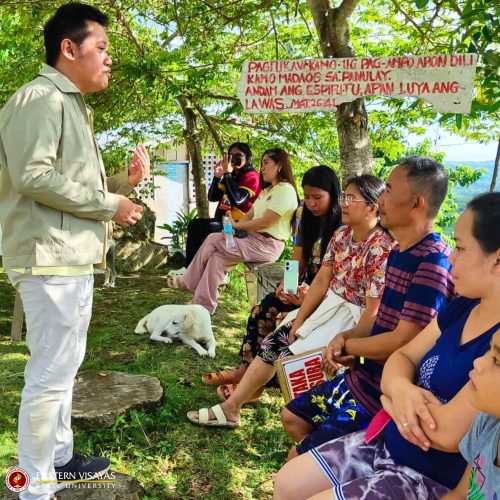
EVSU’s approach to community energy awareness emphasizes the application of scientific and technological knowledge to address actual community needs. Rather than limiting its initiatives to classroom instruction and academic research, the University encourages the translation of engineering concepts and renewable energy technologies into practical solutions that can be experienced and appreciated by community beneficiaries. Through these initiatives, residents are provided with opportunities to become familiar with alternative energy sources, understand their potential applications, and recognize how renewable energy can contribute to improved public services, environmental protection, and community resilience. These efforts are particularly significant in geographically dispersed communities where access to reliable electricity and sustainable energy infrastructure remains an important development concern.

Promoting Community Awareness of Renewable Energy through the Hybrid Solar-Hydro Sustainable Street Lighting Project in Barangay Socsocon, Pastrana, Leyte

A notable example of this commitment in 2025 was the implementation of the Hybrid System Using Solar-Hydro for Sustainable Street Lighting in Barangay Socsocon, Pastrana, Leyte. Developed by graduating Electrical Engineering students under EVSU’s School of Engineering, the initiative demonstrated how locally available renewable energy resources could be integrated to provide a practical and sustainable source of electricity for community infrastructure. The system combined solar photovoltaic technology and hydropower generated from the current of an existing irrigation canal to operate streetlights along a farm-to-market road. With an approximate capacity of 235 watts, the system supplied five streetlights, with solar energy accounting for approximately 70% of its power generation and hydropower contributing the remaining 30%. The installation was designed to provide illumination for up to 10 hours, demonstrating the potential of combining different renewable energy sources to address community lighting requirements.

Beyond its technological and infrastructure benefits, the project served as a practical demonstration of the possibilities offered by clean energy. By introducing a hybrid renewable energy system within an actual community setting, EVSU helped make the concepts of solar power, hydropower, and alternative electricity generation more accessible and understandable to local stakeholders. The project also illustrated that renewable energy does not necessarily require large-scale power facilities to produce meaningful community benefits. Even relatively small systems, when appropriately designed and matched with locally available resources, can provide useful electricity services while reducing dependence on conventional energy sources.

Significantly, the barangay chairman expressed appreciation for learning that the movement of water could also be harnessed to generate electricity. This response highlights the project’s educational value, as it demonstrated how a community-based technology intervention could stimulate interest and increase awareness of alternative energy applications. The initiative therefore represents EVSU’s contribution to both technological innovation and community learning on clean energy.

Advancing Solar Energy Utilization and Environmental Sustainability through the BESOLD Extension Program in Jubilee Cross Hill, Matalom, Leyte

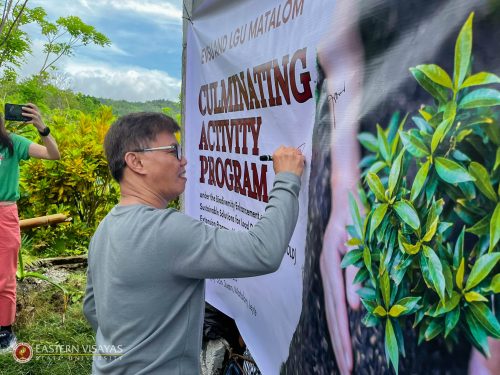
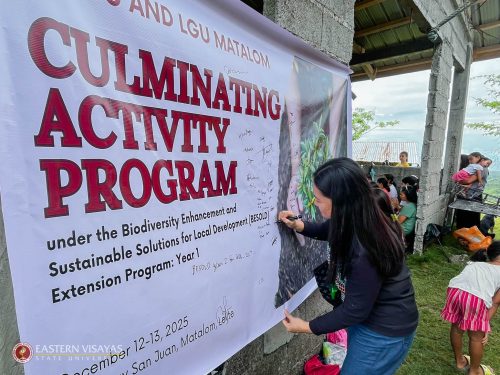
The University’s commitment to bringing sustainable technologies closer to communities was further demonstrated through the Biodiversity Enhancement and Sustainable Solutions for Local Development (BESOLD) Extension Program in Jubilee Cross Hill, Barangay San Juan, Matalom, Leyte. On August 8, 2025, EVSU installed nine solar-powered lights at the community extension site as part of its continuing efforts to promote environmental sustainability and improve community facilities. The installation provided a practical example of how solar energy can be utilized to support public spaces and community-based development initiatives. By introducing solar-powered lighting into the area, the University demonstrated the usefulness of renewable energy technologies in improving accessibility, enhancing safety, and supporting community activities while promoting a more environmentally responsible approach to infrastructure development.

The BESOLD initiative is particularly relevant to community energy awareness because it integrates environmental sustainability with practical interventions that local residents can directly observe and appreciate. Solar-powered lighting provides a visible and accessible example of renewable energy utilization, allowing community members to become more familiar with the role of solar technology in meeting everyday electricity needs. It also creates opportunities for discussions on the advantages of renewable energy, including the utilization of naturally replenished energy resources, reduced dependence on conventional electricity, and the potential contribution of clean energy technologies to sustainable community development.

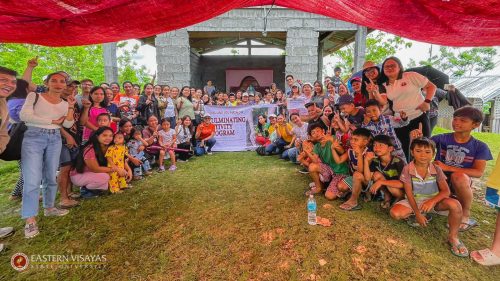
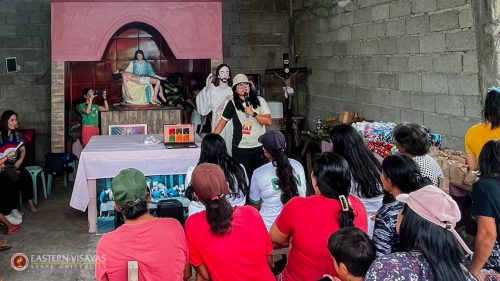
In addition to the lighting installation, BESOLD identified community education workshops on climate change and sustainable practices as planned activities for the latter part of 2025. These planned educational interventions further reflect the University’s intention to strengthen community understanding of environmental responsibility and sustainable resource utilization. Documentation of their actual implementation would further establish their contribution to the indicator.

Promoting Solar Energy and Sustainable Transportation through the Solar-Powered Electric Pump Boat Project in Sohoton, Basey, Samar

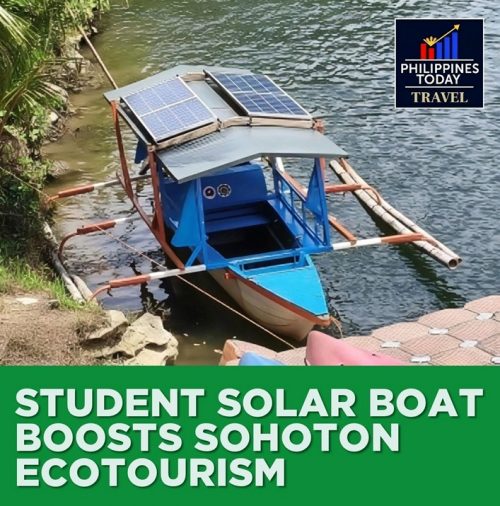
Eastern Visayas State University (EVSU) extends its commitment to promoting clean energy awareness and sustainable technologies to local communities through the development of the Solar-Powered Electric Pump Boat for Tourist Transportation in Sohoton, Basey, Samar. Developed by four graduating Electrical Engineering students, namely Antonio Adorza Jr., Mac Jandy Guintadcan, Brian Jeffrey Reyno, and Richard Reynada, the project demonstrates how renewable energy can be utilized as a practical and environmentally sustainable alternative to conventional fuel-powered transportation.

The project, entitled Design and Implementation of a Solar Electric Pump Boat for Tourist Transportation in Sohoton, Basey, Samar, was developed to support tourism activities along the Golden River by introducing a solar-powered vessel that reduces reliance on gasoline- or diesel-operated boats. The prototype is equipped with four 100-watt solar panels connected to a 48-volt battery system that powers a 1,500-watt electric motor. Through this configuration, the boat harnesses solar energy to provide quieter and cleaner transportation, eliminating direct exhaust emissions associated with conventional fuel-powered vessels during operation.

Beyond its technological innovation, the initiative serves as a practical learning opportunity for local community stakeholders, particularly tourism operators who depend on water transportation for their livelihood. By introducing a functioning solar-powered vessel into an actual ecotourism setting, EVSU demonstrates how renewable energy can be applied beyond conventional household and institutional electricity requirements. Community members are given an opportunity to observe and appreciate how sunlight can be converted into usable electrical power to operate transportation equipment, illustrating the versatility and practical benefits of clean energy technologies.

An important aspect of the project is its turnover to a community-based organization operating at the Wespal Sohoton Visitor Center & Eco-Lounge. This arrangement brings the University’s engineering innovation directly into the community, allowing local tourism stakeholders to experience the application of solar-powered transportation in their operations. Through the actual utilization of the prototype, community operators can become more familiar with renewable energy-powered mobility, its operational advantages, and its potential contribution to more sustainable tourism services.

The project also provides an avenue for raising awareness about the environmental and economic implications of conventional fuel consumption. By demonstrating an alternative that utilizes renewable solar energy, EVSU helps communicate the importance of reducing dependence on fossil fuels, minimizing transportation-related air pollution and noise, and exploring energy-efficient technologies that support environmentally responsible livelihoods. In a tourism destination such as Sohoton, where the natural environment is a major attraction and source of livelihood, the adoption of cleaner transportation technologies is particularly relevant to sustaining ecological resources while supporting local economic activities.

Furthermore, the initiative highlights the University’s role in translating engineering education, research, and technological innovation into solutions that address community needs. The involvement of graduating Electrical Engineering students demonstrates how academic knowledge can be transformed into practical technologies that benefit local stakeholders. It also provides an example of how higher education institutions can facilitate community learning through technology demonstrations, knowledge transfer, and partnerships with local organizations.

Through this initiative, EVSU contributes to expanding community understanding of renewable energy applications, particularly solar energy in sustainable transportation. The project illustrates that clean energy technologies can provide viable alternatives not only for lighting and electricity generation but also for livelihood-related activities and community mobility. By bringing this innovation into an operational tourism setting, the University helps make renewable energy more visible, accessible, and relevant to local communities.

Ultimately, the Solar-Powered Electric Pump Boat Project demonstrates EVSU’s continuing commitment to promoting clean energy awareness through applied engineering innovation and community engagement. It reinforces the importance of introducing practical renewable energy solutions that local stakeholders can experience and potentially adopt, while encouraging greater appreciation of energy sustainability, environmental protection, and responsible resource utilization. The initiative supports the University’s broader efforts to empower communities with knowledge of clean energy technologies and encourage the transition toward more sustainable and environmentally responsible practices.


EVSU’s Institutional Commitment to Community Education on Energy Efficiency and Clean Energy

Eastern Visayas State University (EVSU) commits to promoting community awareness, knowledge, and participation in energy efficiency and clean energy adoption through its instruction, research, innovation, and extension programmes. The University shall provide accessible learning opportunities through community seminars, technical training, renewable energy demonstrations, and technology-transfer activities that highlight the benefits and practical applications of sustainable energy technologies.

EVSU shall strengthen partnerships with local government units, barangays, and community organizations to promote energy literacy, encourage responsible energy consumption, and facilitate the adoption of appropriate renewable energy solutions. Building on its solar-powered and hybrid renewable energy projects, the University shall continue translating engineering innovations into practical community applications that support sustainable livelihoods, environmental protection, and local development.

Through these sustained efforts, EVSU aims to empower energy-conscious communities capable of understanding, adopting, and promoting energy-efficient practices and clean energy technologies.

EXPLORE OUR SDG 7 INITIATIVES & ACTIVITIESS

2026202520242023
SDG 7: Initiatives for 2026
SDG 7: Initiatives for 2025
SDG 7: Initiatives for 2024
SDG 7: Initiatives for 2023

EXPLORE OUR SDG 7 RESEARCH & PUBLICATIONS

202520242023
SDG 7: Publications for 2025
SDG 7: Publications for 2024
SDG 7: Publications for 2023

SUSTAINABLE DEVELOPMENT GOALS

20252024
2025: Sustainable Development Goals
2024: Sustainable Development Goals