
SDG 7 | AFFORDABLE AND CLEAN ENERGY
Low Carbon Energy Use
Eastern Visayas State University (EVSU) recognizes the importance of reducing carbon emissions associated with institutional energy consumption as part of its commitment to environmental sustainability and climate change mitigation. Through the integration of renewable energy technologies and the monitoring of electricity consumption across its campuses, the University continues to undertake initiatives that support the transition toward more sustainable and low-carbon campus operations.
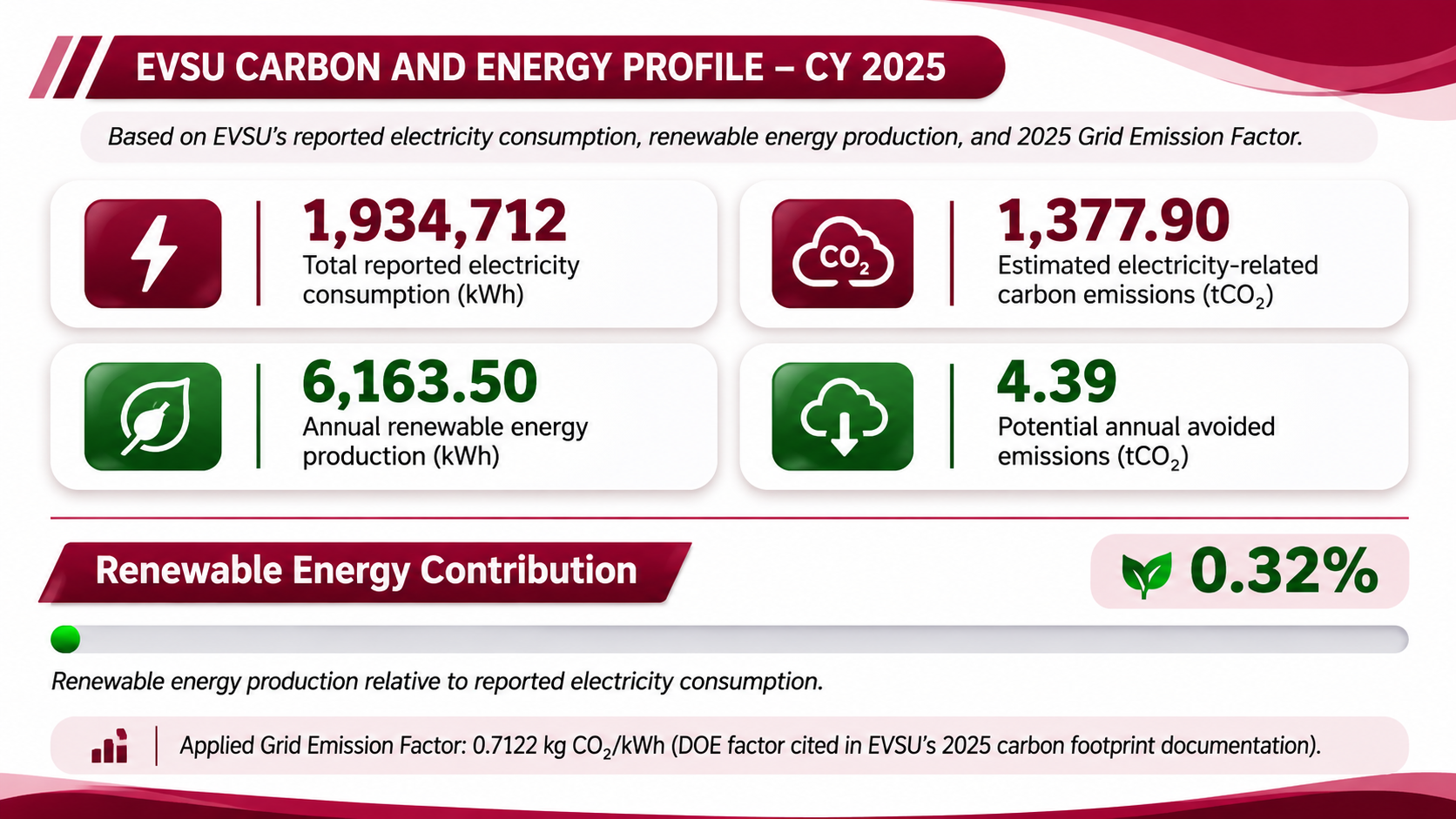
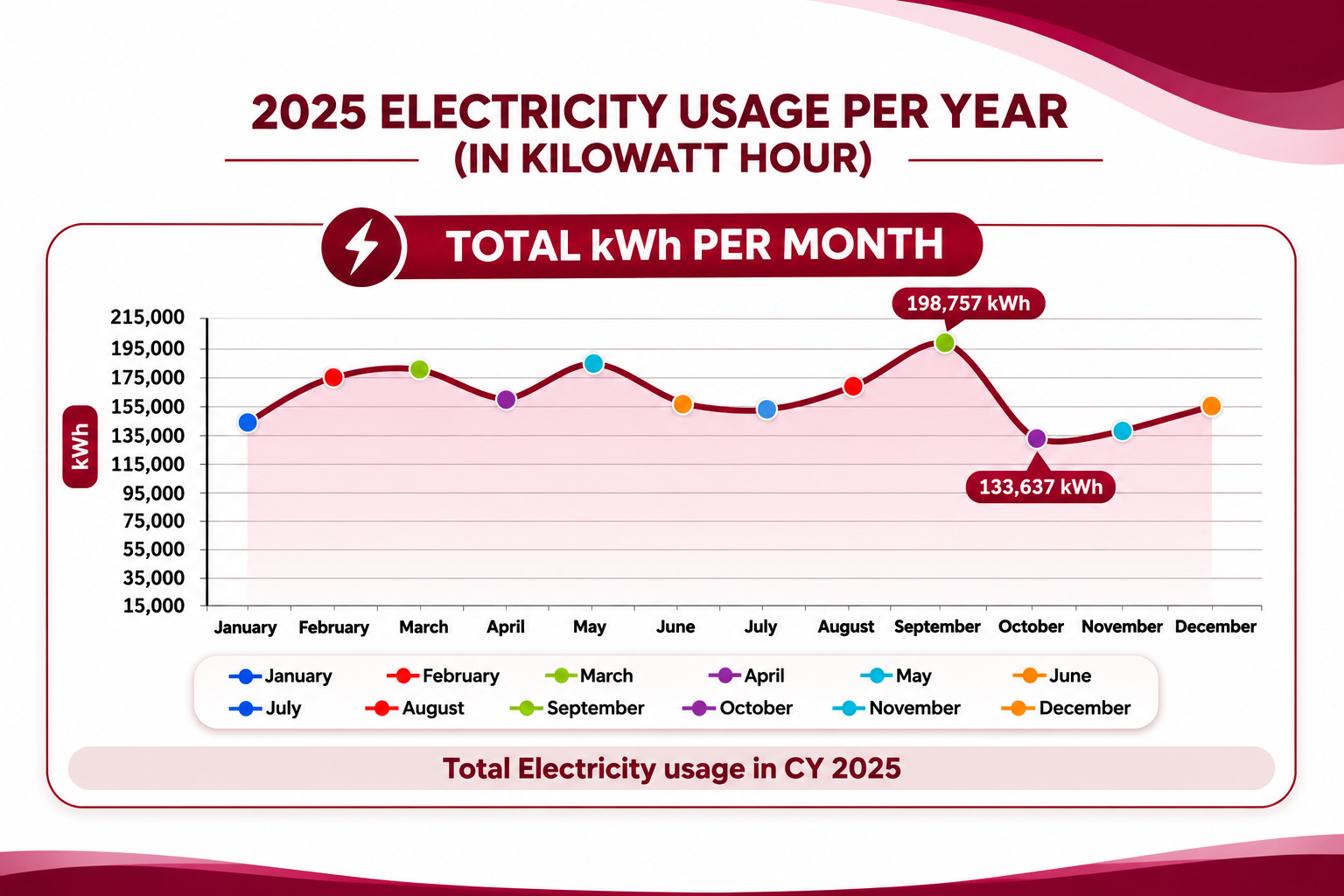
Based on the University’s electricity consumption records for Calendar Year 2025, EVSU registered a reported total electricity consumption of 1,934,712 kilowatt-hours (kWh) across its campuses. Electricity is primarily utilized for lighting, cooling, heating, laboratory operations, and other essential academic and administrative activities. Using the Department of Energy’s 2022–2024 Luzon-Visayas Grid Operating Margin emission factor of 0.7310 metric tons of carbon dioxide per megawatt-hour (tCO₂/MWh), the University’s reported electricity consumption corresponds to an estimated 1,414.27 metric tons of carbon dioxide (tCO₂). This provides an initial estimate of the University’s electricity-related carbon emissions and establishes a basis for evaluating the environmental implications of its energy consumption.
To mitigate the environmental impact of conventional electricity use, EVSU has invested in renewable energy technologies, particularly solar and wind energy systems, across selected campus facilities and institutional operations. These include solar-powered LED streetlights in the Carigara, Tanauan, and Ormoc campuses; 500-watt rooftop solar photovoltaic installations at the Main and Dulag campuses; and the integration of solar and wind energy technologies into the University’s Mobile Command and Control Vehicle (MoCCoV). These installations provide alternative sources of electricity for campus lighting, supplementary power requirements, digital connectivity, and emergency response operations.