

SDG 7 | AFFORDABLE AND CLEAN ENERGY
University Carbon Management and Emissions Reduction Measures
Eastern Visayas State University (EVSU) recognizes the importance of managing its institutional carbon footprint and reducing greenhouse gas emissions as integral components of its commitment to environmental sustainability and climate change mitigation. Guided by its vision of becoming the National University for Resiliency and Climate Action by 2040, the University advances a range of policies, infrastructure interventions, operational measures, and environmental initiatives designed to minimize emissions associated with its energy consumption, transportation, buildings, resource utilization, and other institutional activities.
EVSU approaches carbon management through an integrated framework that combines energy conservation, renewable energy adoption, energy-efficient infrastructure, sustainable campus operations, environmental protection, and institutional sustainability monitoring. These complementary strategies address both the direct and indirect sources of emissions generated by university operations while promoting a culture of environmental responsibility among administrators, faculty members, non-teaching personnel, students, and external stakeholders.
Energy Management and Reduction of Electricity-Related Emissions
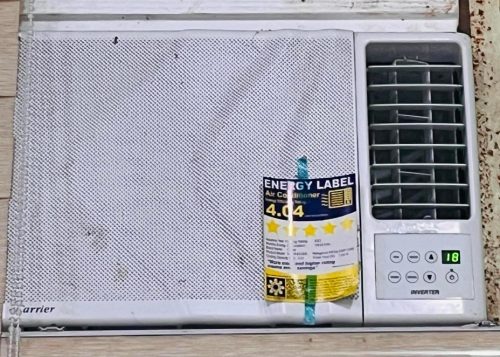
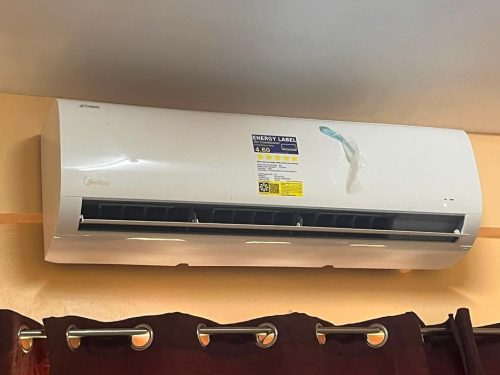

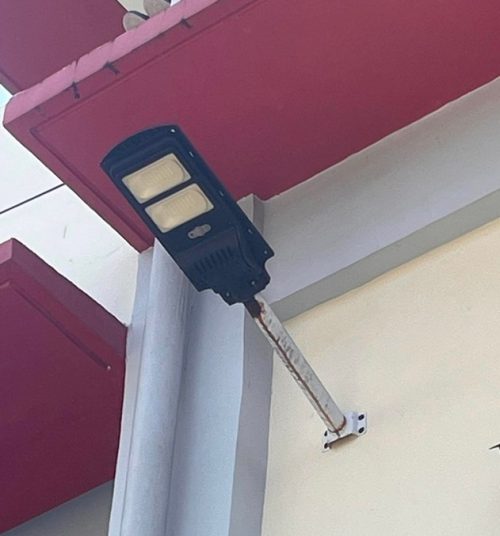
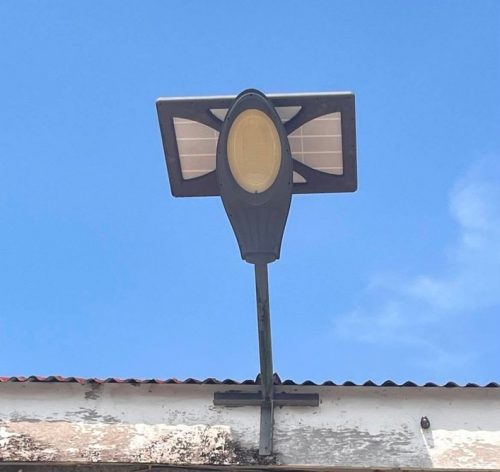
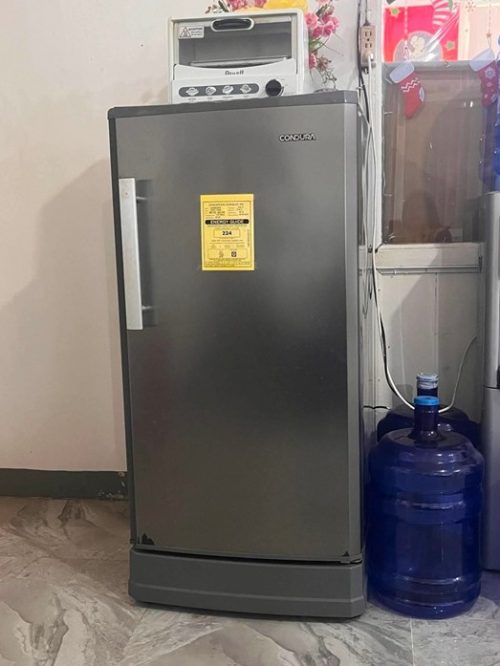
A major component of EVSU’s carbon management approach is the reduction of electricity consumption across its campuses. Recognizing that electricity use in classrooms, laboratories, offices, libraries, and other university facilities contributes to indirect greenhouse gas emissions, the University promotes energy conservation through institutional policies, efficient technologies, and responsible energy-use practices.
EVSU’s institutional sustainability commitments emphasize the adoption of energy-efficient appliances and equipment, improved building energy performance, responsible electricity consumption, and awareness campaigns encouraging members of the university community to avoid unnecessary energy use. These measures include the promotion of efficient lighting systems, responsible utilization of air-conditioning units and other electrical equipment, and the integration of energy-saving practices into everyday campus operations.
The University’s energy conservation initiatives are also supported by its existing administrative policies on energy management, including the provisions of Article 79 of the 2017 EVSU Administrative Services Manual, approved through Board of Regents Resolution No. 31, series of 2018. This institutional policy provides a basis for promoting responsible energy utilization and strengthening energy conservation practices within the University.
In addition, EVSU continues to promote the adoption of renewable energy technologies, particularly solar and wind energy, as part of its broader transition toward cleaner and more sustainable energy sources. Its sustainability commitments encourage investments in renewable energy systems, the development of demonstration facilities, and the integration of clean energy technologies into university operations, instruction, research, and extension activities.
Through these measures, EVSU seeks to reduce electricity-related emissions while progressively improving the energy efficiency and environmental performance of its campuses.
Integration of Energy Efficiency and Low-Carbon Features in Infrastructure Development
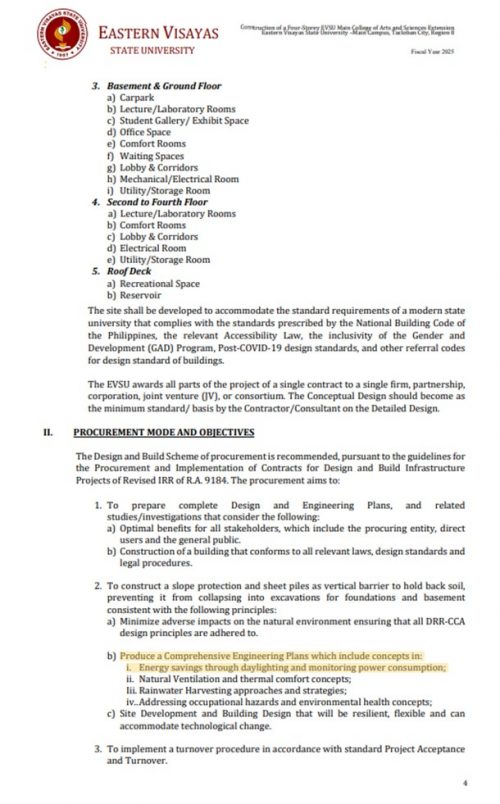
EVSU incorporates energy efficiency and environmental sustainability considerations into its infrastructure development and improvement initiatives. Recognizing that buildings account for a significant portion of institutional energy consumption, the University promotes building designs and facilities that optimize natural resources, reduce energy requirements, and improve operational efficiency.
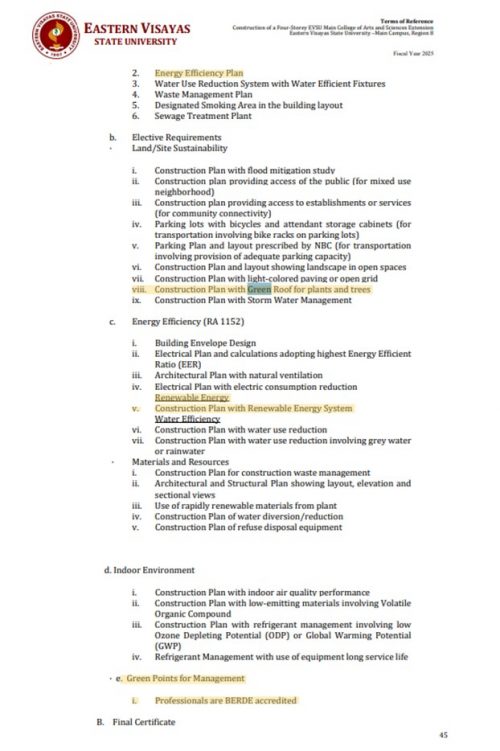
A notable example in 2025 was the incorporation of energy-efficiency and green-building requirements into the Terms of Reference for the construction of the Four-Storey College of Arts and Sciences Extension Building at the Main Campus. The project specifications included natural ventilation, daylight utilization, energy-efficient electrical systems, LED lighting, occupancy and daylight sensors, and provisions for renewable energy systems.
The building requirements also incorporated measures intended to improve thermal comfort and minimize dependence on mechanical cooling systems. These include energy-conscious building envelope considerations, efficient air-conditioning equipment, and specifications addressing refrigerant management and the use of refrigerants with lower Global Warming Potential (GWP).
The inclusion of these requirements demonstrates the University’s effort to integrate energy conservation and emissions reduction considerations at the infrastructure planning and procurement stages rather than addressing energy efficiency only after buildings become operational.
Through these provisions, EVSU seeks to minimize the long-term energy requirements of its facilities, reduce emissions associated with purchased electricity, and promote more sustainable building development across its campuses.
Sustainable Transportation and Campus Vehicle Management for Reduced Emissions

EVSU recognizes transportation as an important consideration in managing its institutional carbon footprint. The movement of university personnel, students, visitors, service providers, and institutional vehicles contributes to fuel consumption and associated greenhouse gas emissions. To address transportation-related environmental impacts, the University implements sustainable mobility measures that regulate vehicle access, manage parking spaces, improve traffic circulation, and encourage a more pedestrian-friendly campus environment.
A significant initiative in this area is the Campus Vehicle Management and Parking Regulation Program, implemented across EVSU campuses. The program aims to improve traffic circulation, optimize the use of limited campus spaces, and promote sustainable mobility by regulating vehicle entry and parking activities within university premises.
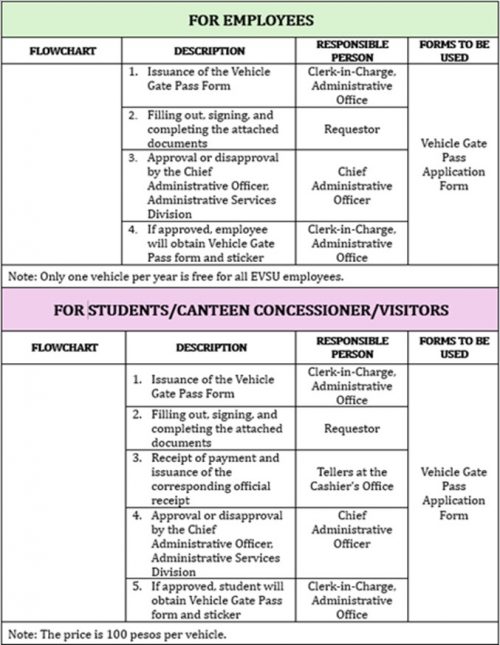
Under this program, all vehicles owned or operated by employees, students, canteen concessionaires, service providers, and visitors are required to secure a Gatepass before entering the campus. The University also issues color-coded Vehicle Pass Stickers for authorized cars and motorcycles to facilitate vehicle identification, regulate parking privileges, and manage vehicle movements associated with deliveries, official transactions, and other campus activities.



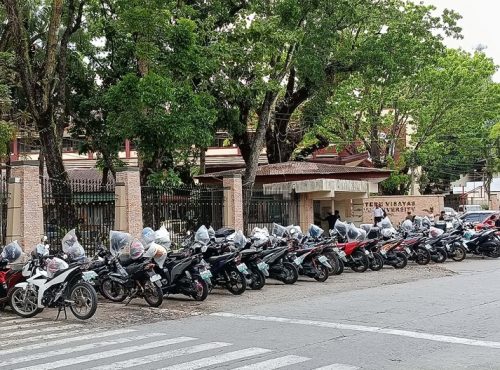
Recognizing the limited availability of parking spaces, EVSU regulates vehicle entry and parking allocation and encourages the use of designated parking areas outside or along the perimeter of campus premises whenever feasible. This arrangement helps reduce the number of vehicles circulating within university grounds, minimizes unnecessary internal vehicle movements, and improves traffic circulation. By limiting the availability of internal parking spaces and encouraging alternative parking arrangements, the University also promotes walking as a practical means of moving between campus facilities.
The implementation of the program has improved traffic organization, enhanced pedestrian accessibility, and preserved open spaces previously occupied by vehicles for student activities, recreational spaces, physical education programs, and other academic and community functions. These measures contribute to a safer, more accessible, and more walkable campus environment.
From a carbon management perspective, the program serves as a complementary transportation demand management strategy. By regulating vehicle access, minimizing unnecessary vehicle movements within campus premises, and encouraging walking for short-distance trips, EVSU supports the reduction of fuel consumption associated with avoidable vehicle circulation and idling. Together with the University’s energy conservation, renewable energy, and environmental protection initiatives, the program demonstrates the integration of sustainable mobility considerations into institutional efforts to minimize its overall environmental and carbon footprint.
The University further supports this direction through its broader sustainability commitments to environmentally responsible transportation and resource-efficient campus operations. The progressive monitoring of vehicle entries, parking utilization, and institutional vehicle fuel consumption can further strengthen the University’s ability to evaluate and manage transportation-related emissions.
Nature-Based Carbon Sequestration through Tree Planting and Ecosystem Restoration
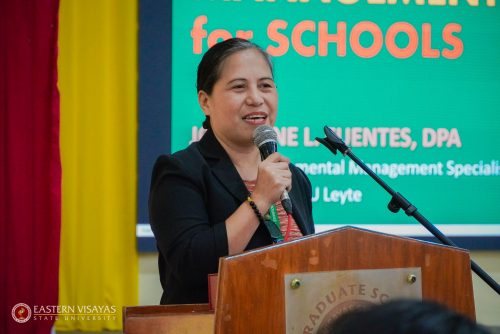
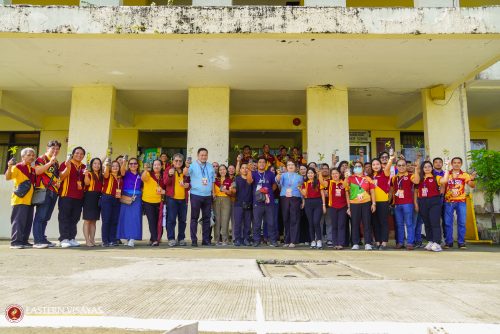
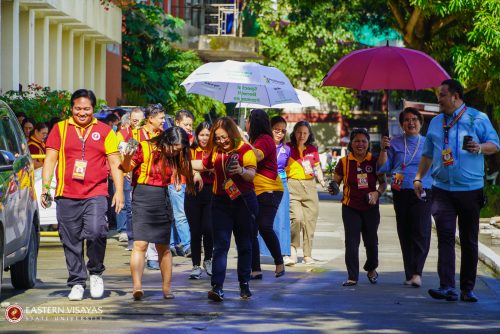
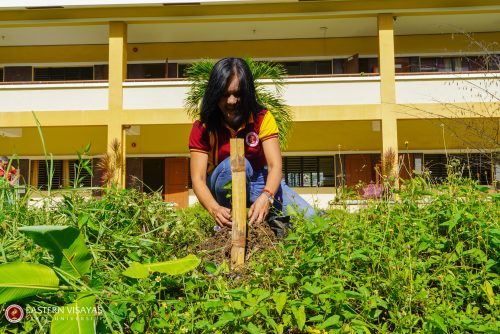
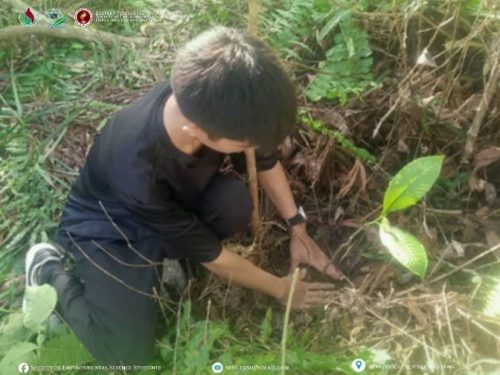
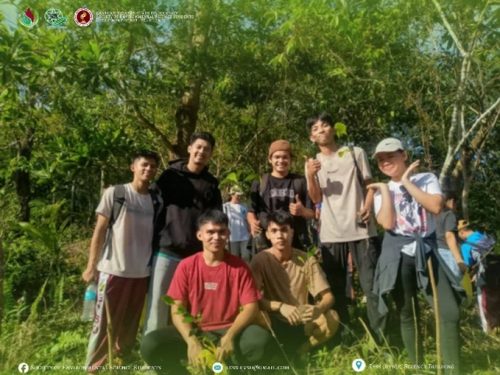
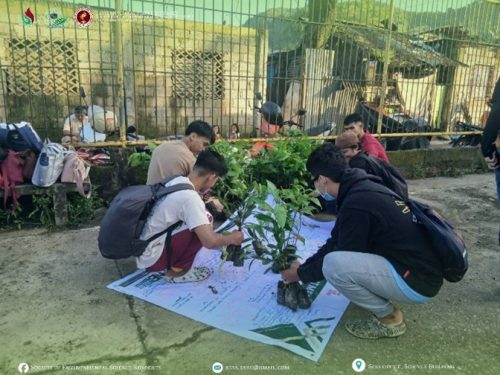
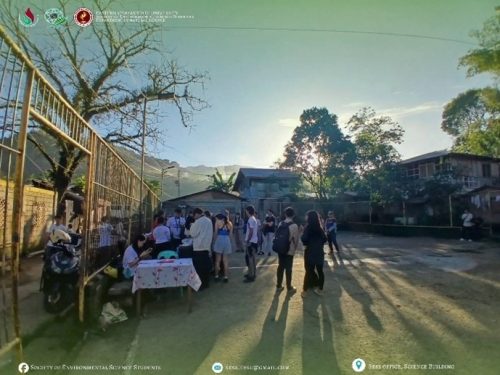
Beyond reducing emissions at their sources, EVSU complements its carbon management efforts through nature-based initiatives that enhance the capacity of terrestrial ecosystems to absorb atmospheric carbon dioxide. Tree planting, native vegetation restoration, campus greening, and biodiversity conservation are recognized as important complementary strategies for climate change mitigation.
In 2025, the University implemented and participated in several environmental initiatives that support these objectives.
Among these was the tree-planting activity conducted in partnership with the Department of Environment and Natural Resources (DENR) on December 17, 2025, involving university officials, faculty members, and personnel. The initiative reinforced the University’s commitment to environmental restoration and the promotion of collective responsibility for protecting natural resources.
Similarly, fourth-year BS Environmental Science students and members of the Society of Environmental Science Students participated in Sibol Han Pagkaurusa, a native tree-planting initiative held on November 29, 2025, in Barangay 104, Salvacion, Tacloban City. Organized by Plan International Pilipinas under the Eco Project: Ugnayan sa Klima for Resilient Communities, the activity provided an opportunity for students to contribute to community-based climate action and ecological restoration.
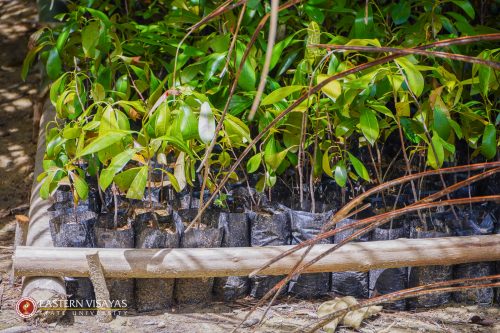
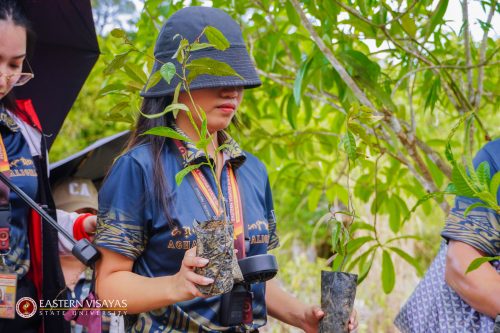
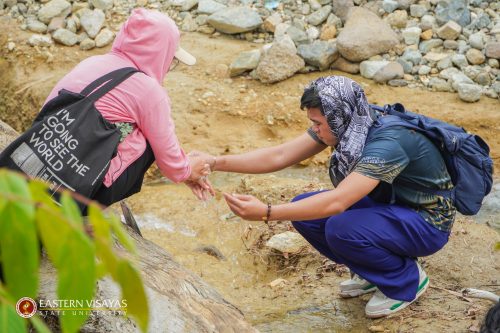
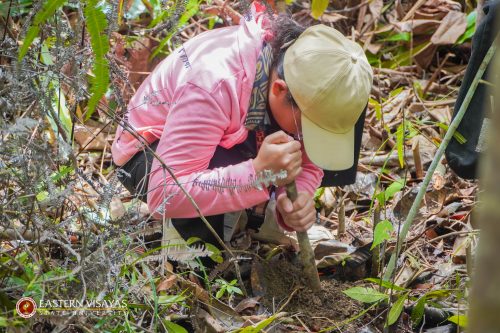
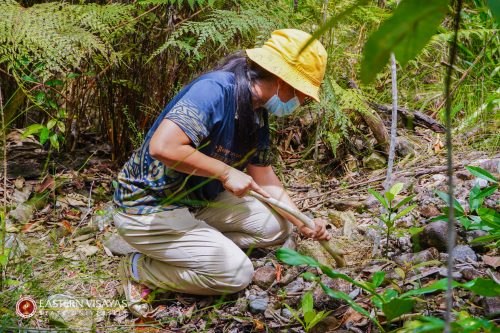
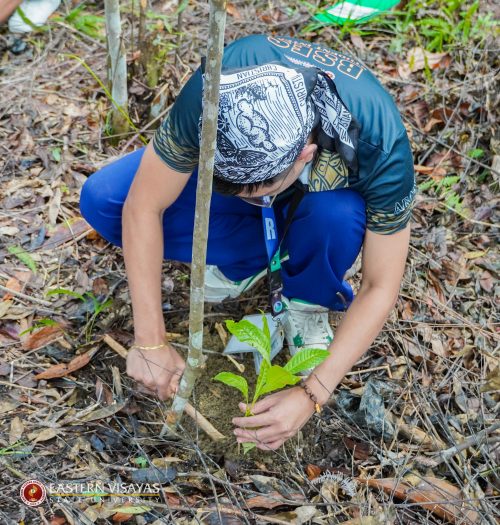
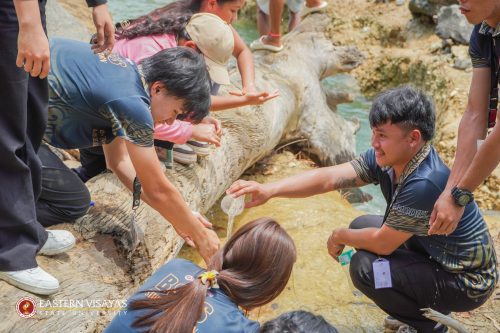

The Department of Natural Sciences also conducted a tree-planting activity on May 27, 2025, in Barangay Bacong, Babatngon, Leyte, involving faculty members and fourth-year students. This initiative further demonstrated the University’s efforts to translate environmental education into practical conservation activities.
These initiatives contribute to vegetation restoration, biodiversity protection, and the natural absorption of atmospheric carbon dioxide. They also strengthen the University’s role in promoting environmental stewardship beyond the boundaries of its campuses through partnerships with government agencies, local communities, and development organizations.
Research, Innovation, and Development of Renewable Energy Technologies

Beyond infrastructure planning, EVSU advances the clean energy transition through research and innovation that explore the practical application of renewable energy and alternative energy technologies. The University’s research initiatives provide opportunities for faculty members and students to investigate locally relevant solutions to energy, environmental, and sustainability challenges.
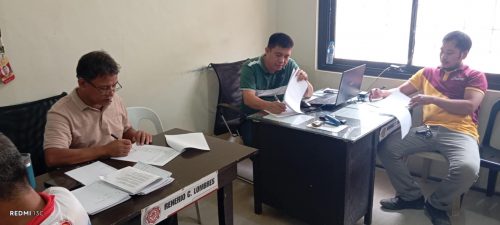
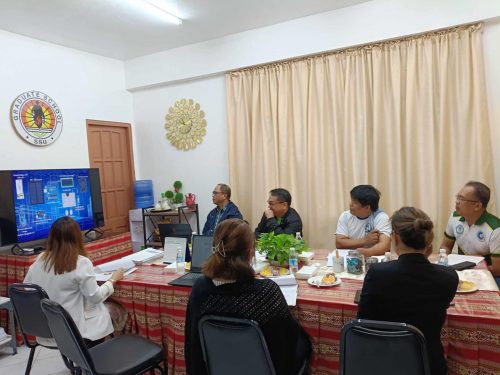
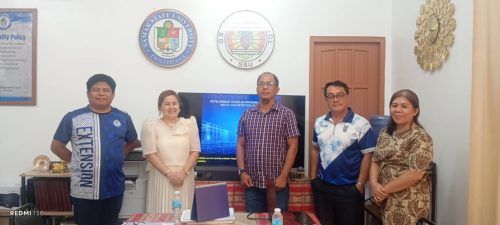
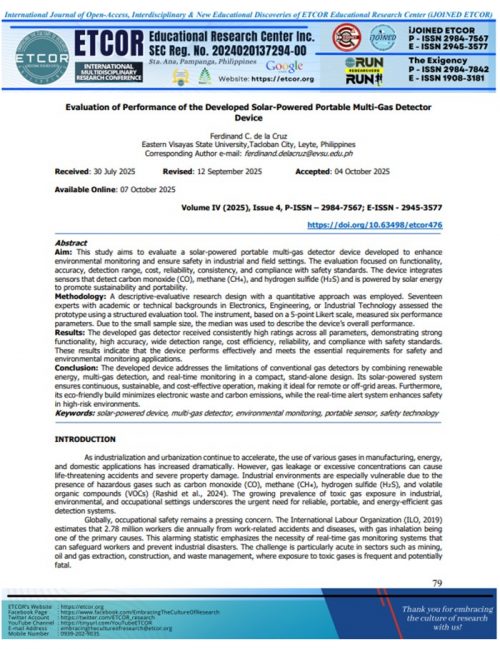
Among the documented research and technology development initiatives in 2025 are the development of a solar-powered portable multi-gas detector and research on biodiesel derived from mahogany (Swietenia macrophylla) seeds. The solar-powered multi-gas detector demonstrates the application of solar energy to support portable environmental monitoring and safety technology, while the biodiesel research explores the potential of locally available biological resources as feedstock for alternative fuel development. These initiatives illustrate EVSU’s contribution to the exploration of renewable energy applications and alternative energy sources through research, experimentation, and technological innovation.
Such research activities also create opportunities to integrate clean energy concepts into academic instruction, student research, and technology development. Through these efforts, the University helps develop technical knowledge and competencies that can support the adoption and wider application of sustainable energy solutions in communities and other sectors.
Technology Demonstration and Community-Based Renewable Energy Applications
EVSU also extends its renewable energy advocacy beyond the campus through technology development, demonstration, and collaboration with local communities and development partners. In May 2025, a solar-hydro street lighting initiative was turned over to Barangay Socsocon, demonstrating the potential application of renewable energy technologies in providing community lighting solutions. This initiative illustrates how university-developed or supported technologies can contribute to local energy access, environmental sustainability, and the practical application of clean energy solutions outside the institutional setting.
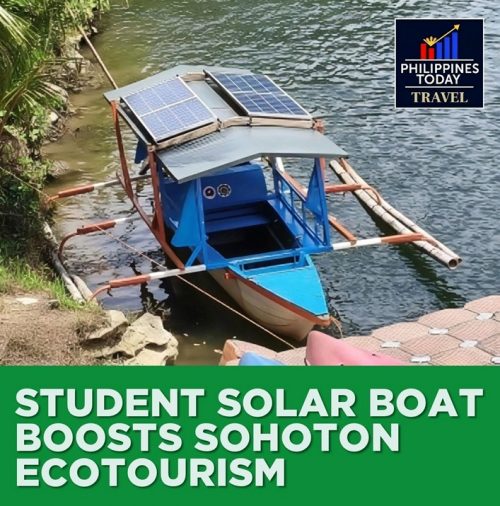
Another significant innovation was the development of a Solar Electric Pump Boat for Tourist Transportation in Sohoton, Basey, Samar, undertaken by four graduating EVSU Electrical Engineering students: Antonio Adorza Jr., Mac Jandy Guintadcan, Brian Jeffrey Reyno, and Richard Reynada. Designed as an alternative to conventional fuel-powered boats, the prototype utilizes four 100-watt solar panels connected to a 48-volt battery system to operate a 1,500-watt electric motor. Developed over approximately six months, the project provides a practical demonstration of how solar energy can be harnessed for low-emission water transportation. The prototype was subsequently turned over to a community-based group operating the Wespal Sohoton Visitor Center and Eco-Lounge to support local tourism services. By introducing a solar-powered alternative to fuel-dependent tourist boats, the initiative demonstrates the potential of renewable energy technologies to reduce reliance on conventional fuels, minimize transport-related emissions during operation, and promote environmentally responsible ecotourism.
These initiatives demonstrate EVSU’s commitment to translating engineering research and academic innovation into practical technologies that respond to community needs. They also highlight the University’s capacity to explore different renewable energy applications, including solar-powered transportation, hybrid solar-hydro electricity generation, and community-based energy solutions. Through the deployment and turnover of these technologies, EVSU facilitates knowledge transfer, strengthens community engagement, and provides opportunities for local stakeholders to benefit from university-developed innovations.
Collectively, these projects reinforce EVSU’s role in advancing renewable energy adoption beyond its institutional boundaries. They demonstrate how clean energy technologies can support community infrastructure, sustainable mobility, local economic activities, and environmental stewardship. These efforts complement the University’s broader carbon management and climate action agenda by promoting practical alternatives to conventional energy use and contributing to the wider transition toward more sustainable and lower-carbon communities.
Waste Management and Resource Efficiency as Complementary Emissions Reduction Measures
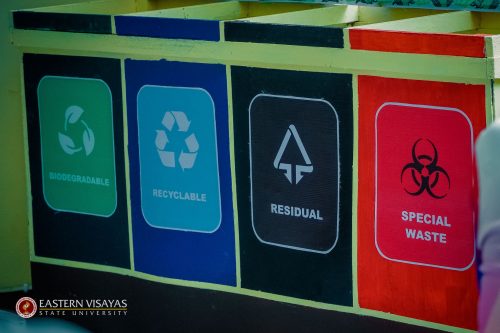

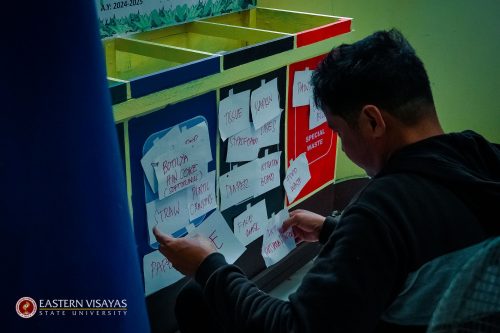
EVSU recognizes that responsible waste management and resource efficiency are important components of an institutional carbon management approach. Improper waste disposal, particularly the uncontrolled decomposition of biodegradable materials in disposal facilities, can contribute to greenhouse gas emissions, including methane.
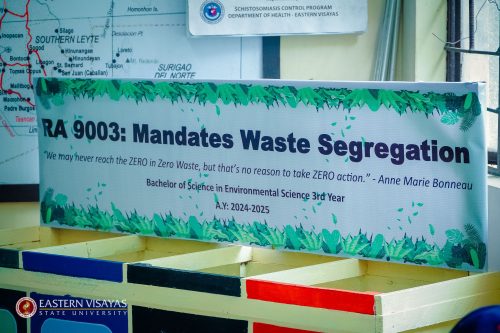
To address these concerns, the University promotes waste segregation, waste minimization, recycling, and responsible disposal practices through its environmental management initiatives and campus-wide awareness activities.
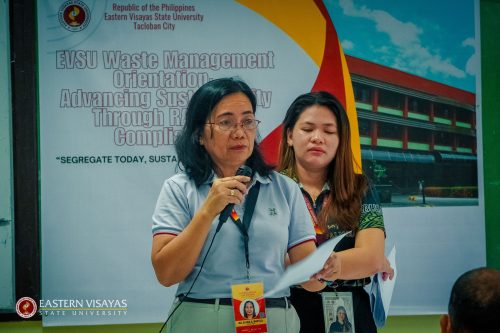
In 2025, EVSU conducted a Waste Management Orientation on March 3, 2025, for utility personnel to strengthen their knowledge and practices in solid waste management. This initiative supported the implementation of proper waste segregation, waste reduction, and environmentally responsible waste handling across university facilities.
The University also promotes resource conservation and responsible consumption as part of its broader sustainability agenda. By encouraging the efficient utilization of materials, minimizing unnecessary waste generation, and strengthening waste management practices, EVSU helps reduce the environmental impacts and potential emissions associated with its institutional activities.
These interventions complement the University’s energy-related measures by addressing additional sources of emissions throughout its operational activities.
Institutional Sustainability Governance, Climate Action, and Stakeholder Engagement
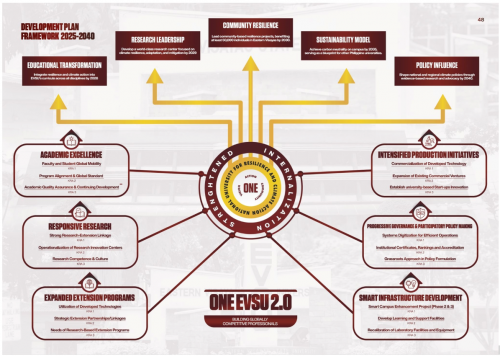
The implementation of carbon management and emissions reduction measures requires institutional leadership, coordinated action, and the participation of the entire university community. EVSU therefore integrates environmental sustainability and climate action into its institutional development direction, administrative initiatives, academic programs, research activities, and community partnerships.
In 2025, the University reinforced its commitment to climate-responsive development through its participation in the Future Earth Philippines Strategic Planning held on March 4–5, 2025. Through its Research and Development Office, EVSU engaged in collaborative discussions and initiatives supporting sustainable development and climate action as an SDG Action Network Pilot Hub.
The University’s institutional leadership also emphasized its sustainability and climate resilience agenda through the President’s State University Address on September 1, 2025, and the continuing implementation of the One EVSU 2.0 initiative. These institutional directions reinforce the University’s commitment to integrating environmental sustainability into its operations and long-term development priorities.
Through partnerships with government agencies, local government units, development organizations, and other stakeholders, EVSU also expands the reach of its climate-related initiatives. Such collaboration enables the University to contribute to environmental restoration, climate awareness, sustainable resource management, and community-based mitigation activities.
These institutional mechanisms provide a foundation for coordinating and sustaining carbon reduction initiatives across university units and campuses.
Overall Institutional Commitment
Through the integration of energy conservation, renewable energy promotion, energy-efficient infrastructure, sustainable transportation and vehicle management, waste minimization, tree planting, ecosystem restoration, and institutional sustainability governance, Eastern Visayas State University demonstrates its continuing commitment to managing its environmental impact and reducing greenhouse gas emissions.
These complementary measures reflect the University’s recognition that carbon management must be addressed through coordinated institutional policies, infrastructure investments, operational practices, environmental conservation, and evidence-based decision-making.
Consistent with its vision of becoming the National University for Resiliency and Climate Action by 2040, EVSU continues to strengthen its institutional capacity to pursue low-carbon development, promote responsible resource utilization, and contribute to climate change mitigation. By progressively improving the monitoring and assessment of its emissions-related activities, the University seeks to establish a more systematic, measurable, and sustainable approach to institutional carbon management.
EXPLORE OUR SDG 7 INITIATIVES & ACTIVITIESS
EXPLORE OUR SDG 7 RESEARCH & PUBLICATIONS
SUSTAINABLE DEVELOPMENT GOALS