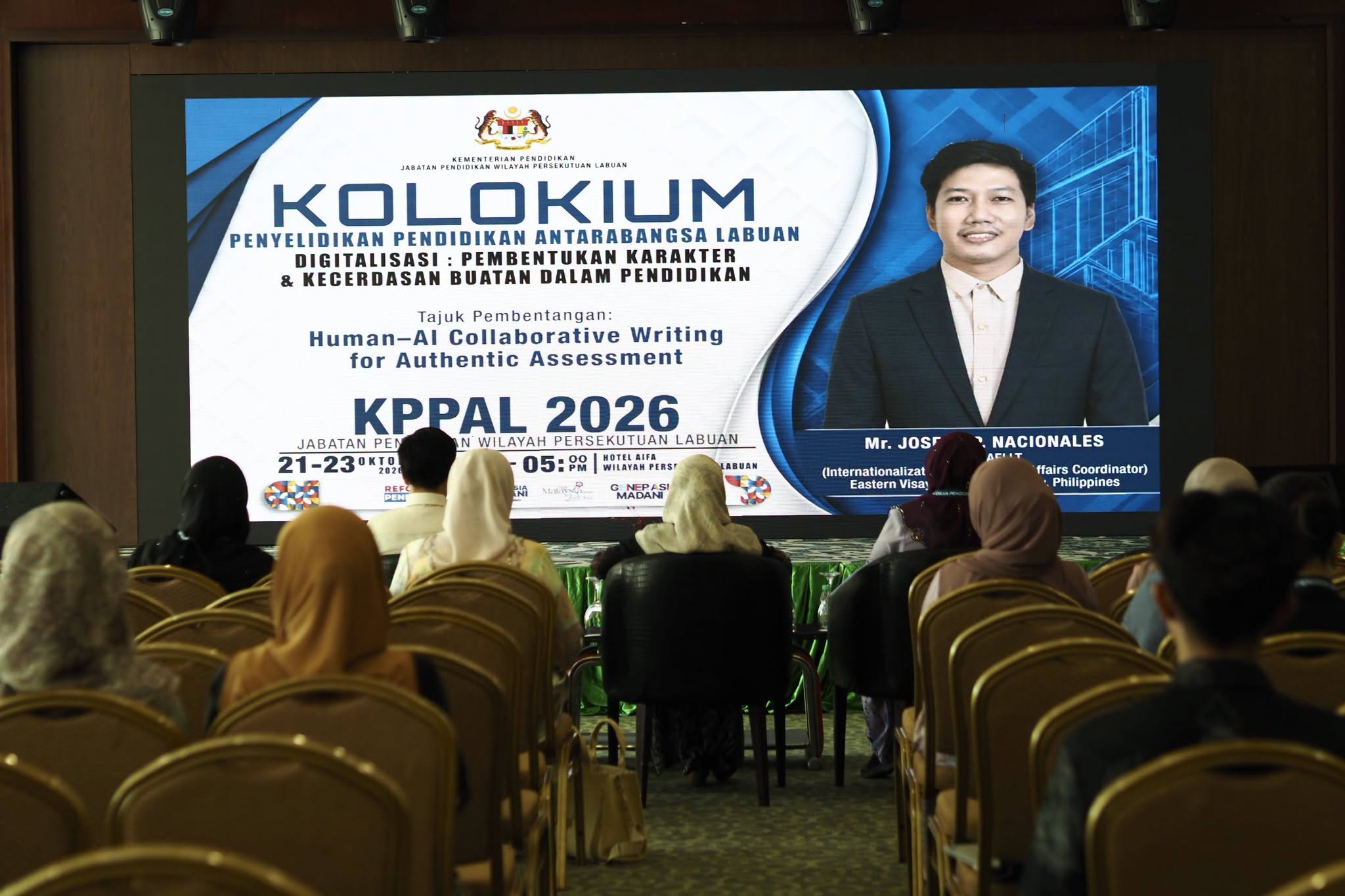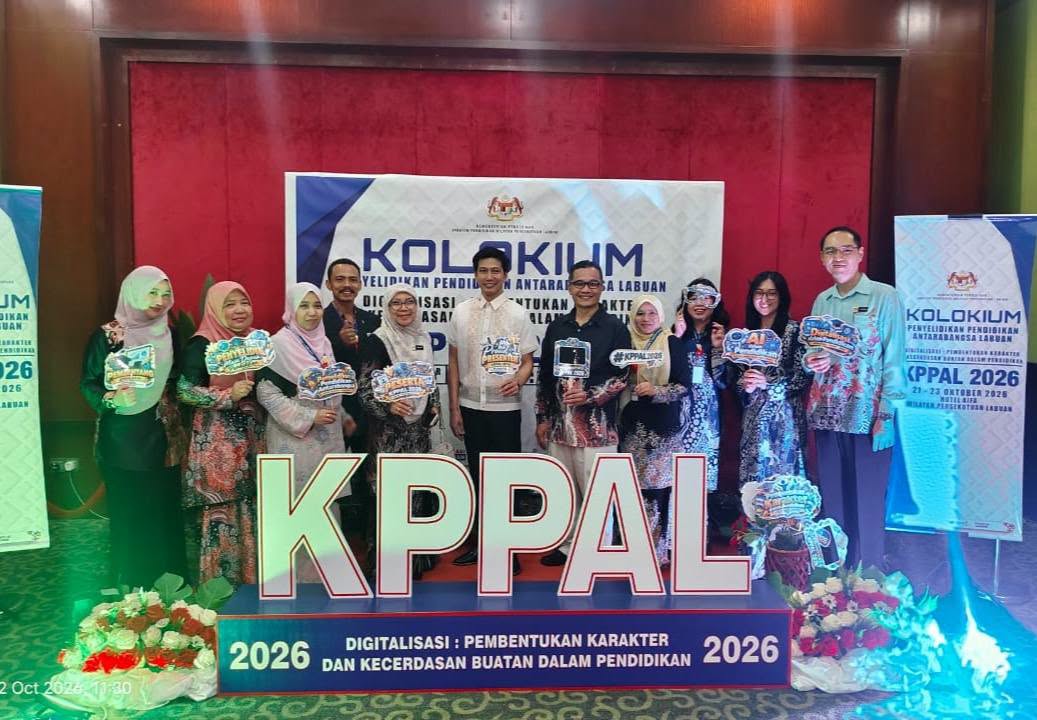

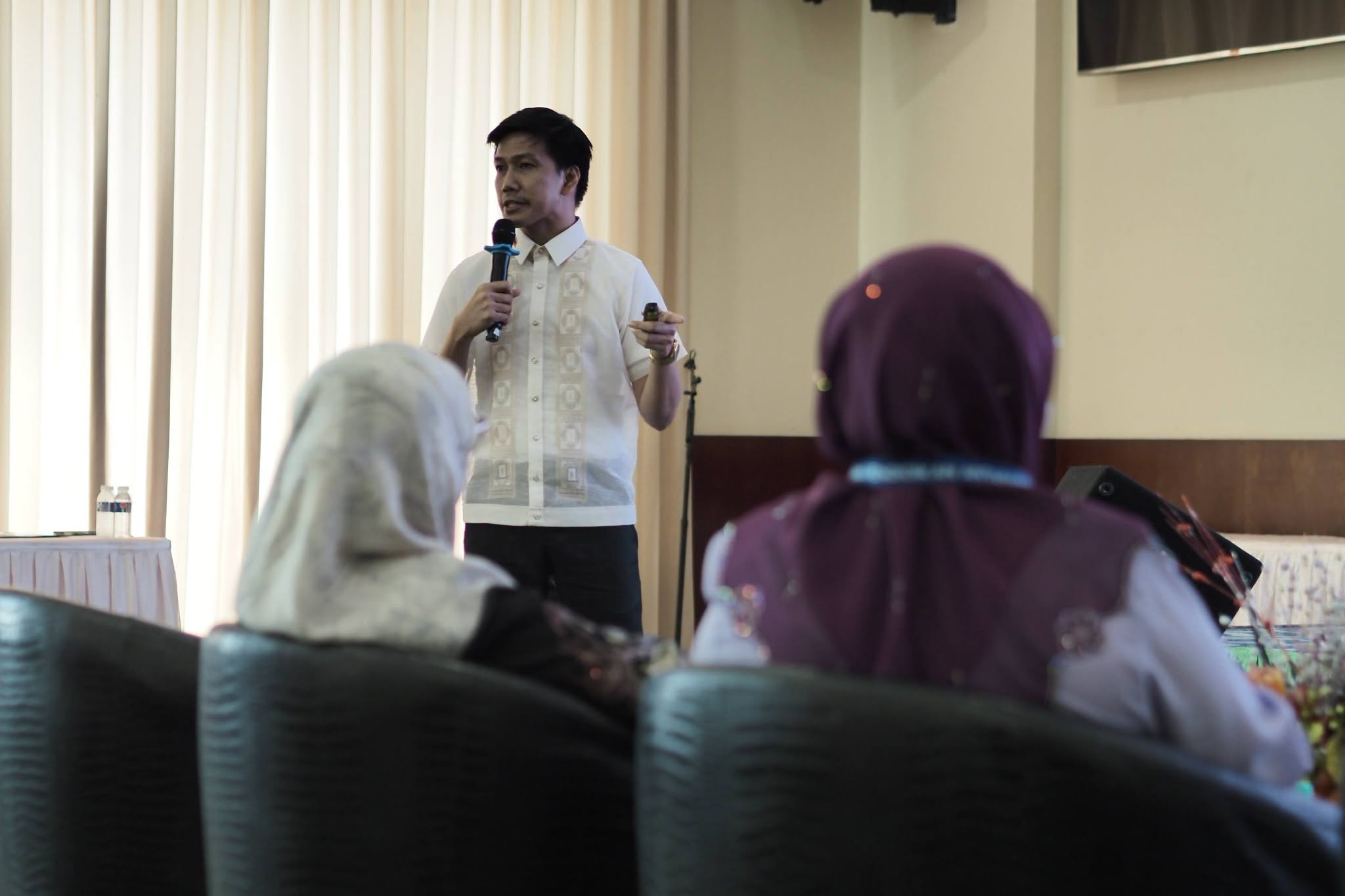
Department of Languages and Literature faculty member Prof. Joseph P. Nacionales served as a plenary speaker at the Kolokium Penyelidikan Pendidikan Antarabangsa Labuan (KPPAL) 2026, held on October 21–23, 2026, in the Federal Territory of Labuan, Malaysia.
As educational institutions worldwide grapple with the rapid rise of generative artificial intelligence in the classroom, Prof. Nacionales brought the university’s academic voice to the global stage, advocating for human-centered technology integration in higher education.
Funded by the Ministry of Education Malaysia, the international colloquium gathered over 500 research presentations across 11 key subthemes, including AI-driven teaching and learning, technology-based assessment, inclusive education, digital language learning, and the ethical use of technology.
Delivering a plenary presentation titled “Human-AI Collaborative Writing for Authentic Assessment,” Prof. Nacionales addressed the critical balance between technological capability and pedagogical integrity. He emphasized that the focus of educators must shift away from administrative surveillance toward meaningful instructional design.
“We should redesign assessments that make student thinking, decision-making, reflection, and learning processes visible,” Prof. Nacionales highlighted during his talk. “The challenge is no longer simply detecting AI use, but ensuring that learning remains authentic when AI becomes part of the writing process.”
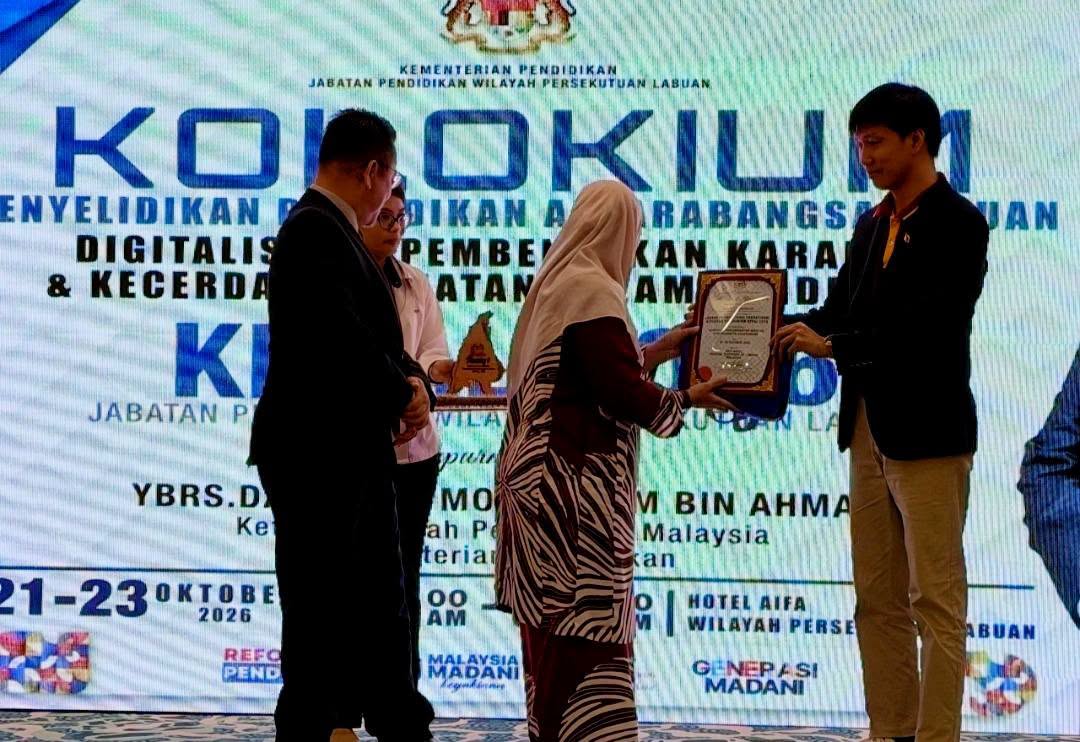
Guided by the event’s overarching vision of balancing technological advancement with core human values, the colloquium featured prominent figures in Southeast Asian education. YBhg. Datuk Hj. Raisin bin Saidin, former Director of the Sabah State Education Department, delivered the keynote address, while Mr. Yahya bin Ahmad Puteh, Director of Education of JPWP Labuan, served as event adviser. The three-day conference culminated in a closing ceremony officiated by YBhg. Datuk Dr. Mohd Azam bin Ahmad, Director-General of Education Malaysia.
Throughout his session, Prof. Nacionales emphasized that resisting artificial intelligence misses the broader opportunity to rethink how student competence is evaluated in a modern learning environment.
“Rather than asking whether AI should be used, we need to ask how AI can be used in ways that preserve human agency, critical thinking, and genuine learning,” he noted, reframing the core challenge facing contemporary language and literature educators. “The question is not anymore ‘Did the student use AI?’ but rather ‘How can we assess what the student learned while using AI?'”
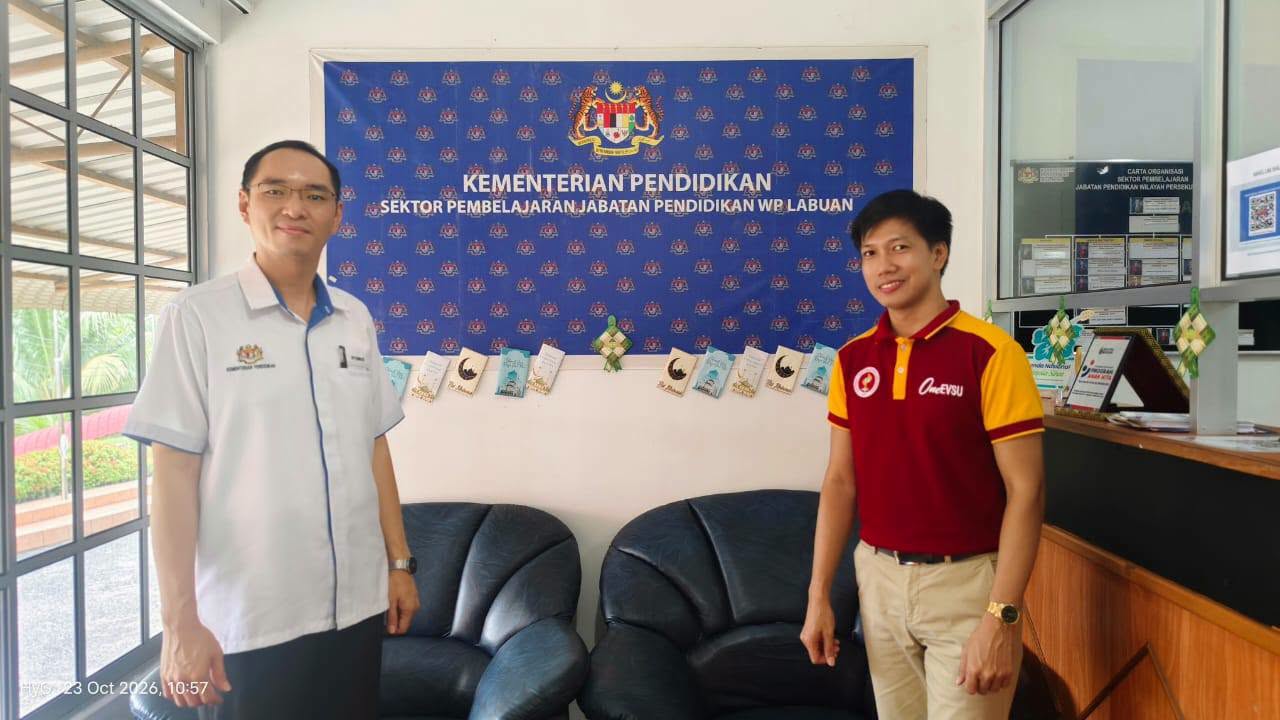
Beyond his presentation at the colloquium, Prof. Nacionales leveraged his stay in Malaysia to advance EVSU’s internationalization agenda and foster cross-border academic engagement. He visited the Sektor Pembelajaran of Jabatan Pendidikan Wilayah Persekutuan Labuan, meeting with the Office of the Deputy Director to explore potential academic exchanges and institutional ties.
Additionally, Prof. Nacionales met with Dr. Hyginus Lester, President and Founder of the Labuan Research, Innovation, and Creativity Society (LaRIS), alongside its board members, to discuss strategic joint ventures in research, educational innovation, and scholarly collaboration.
Prof. Nacionales’ participation and collaborative engagements reinforces EVSU’s strategic trajectory as a global academic player. By driving international conversations around ethical AI integration, the university demonstrates how institutions in the Philippines can lead, rather than merely follow, in the evolving landscape of global education and research.
This article is aligned with Sustainable Development Goals (SDG) 04: Quality Education; SDG 09: Industry, Innovation, and Infrastructure, and SDG 17: Partnerships for the Goals
via JS Beleña
Photo Courtesy: EVSU – Department of Languages and Literature