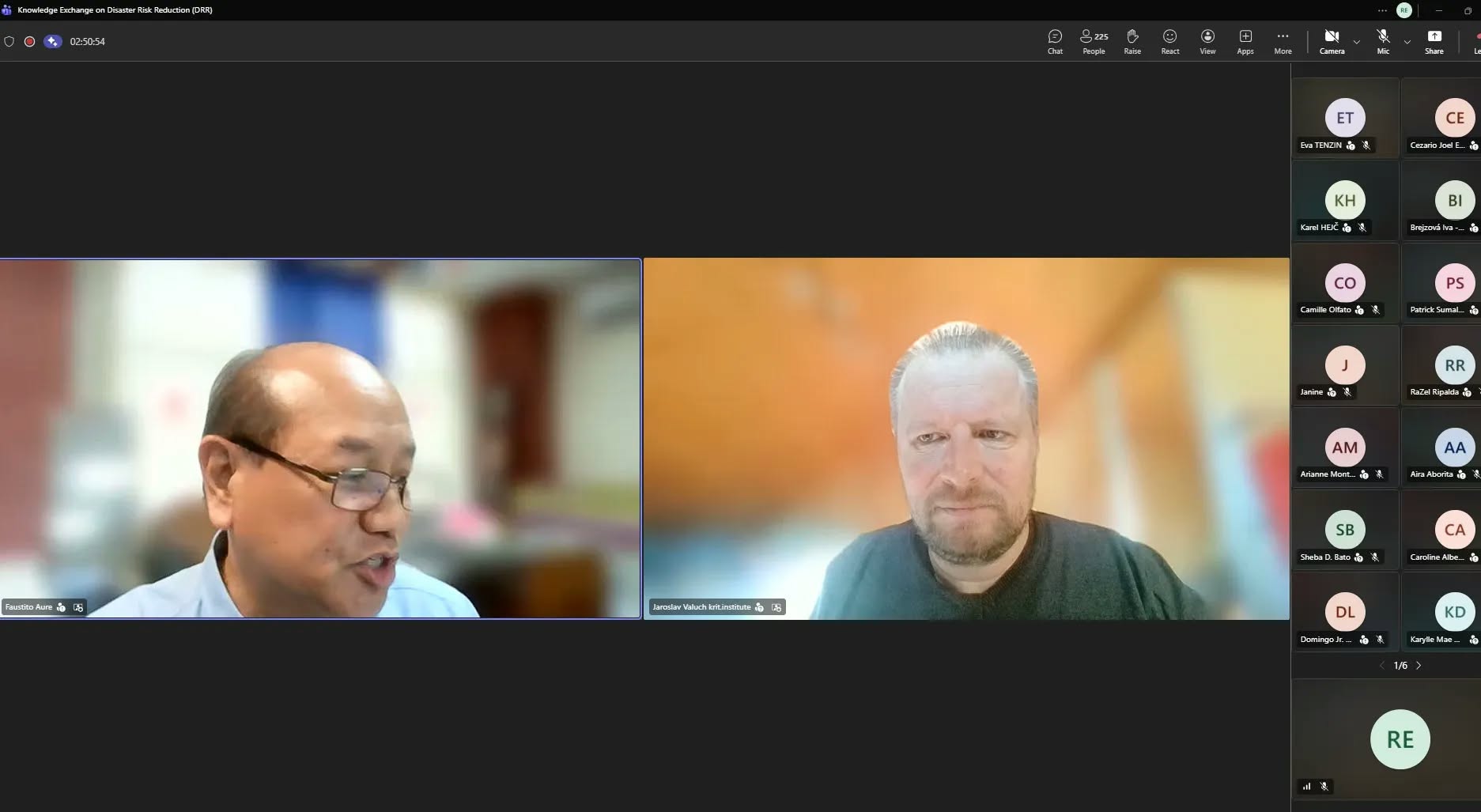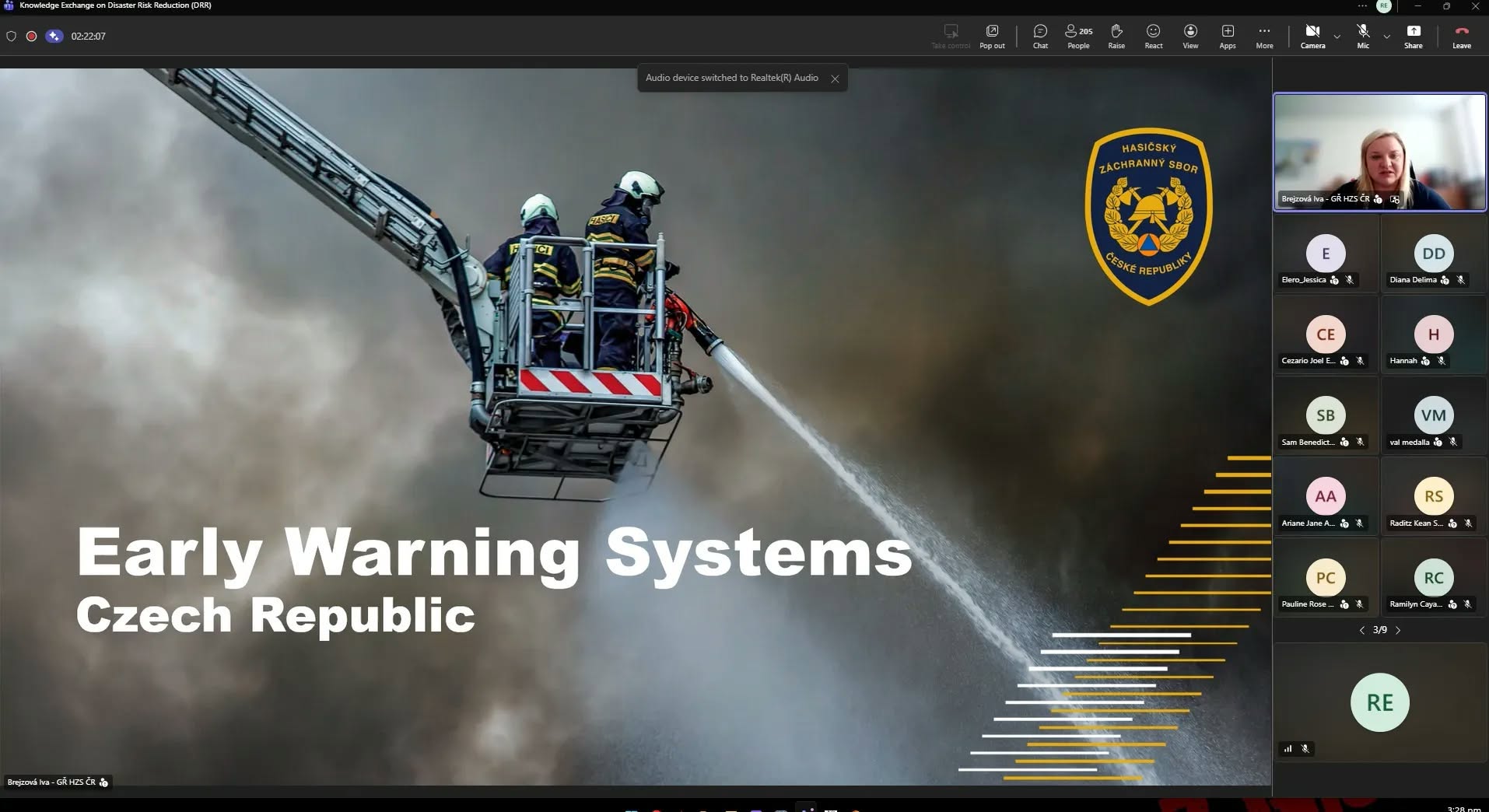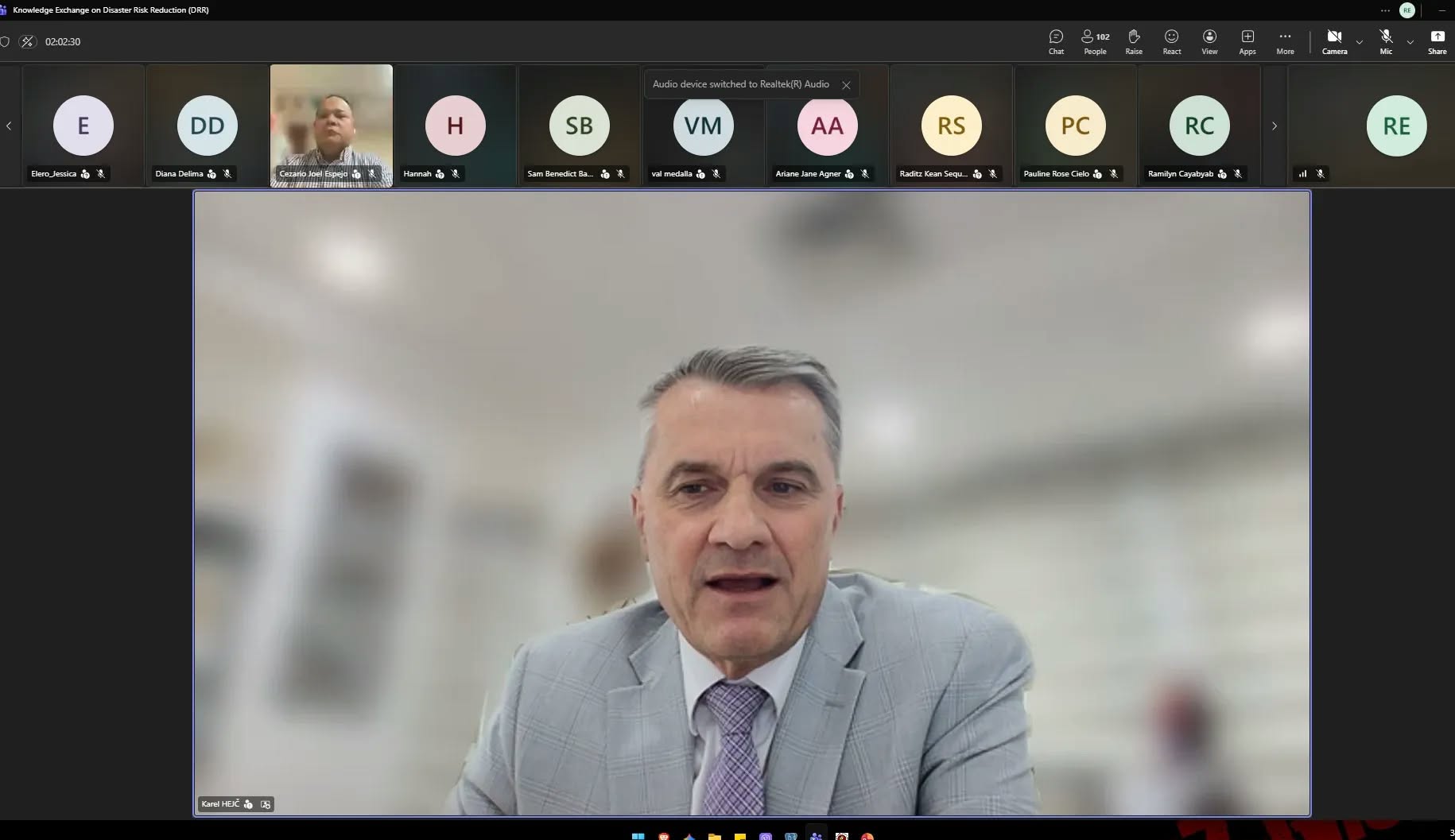
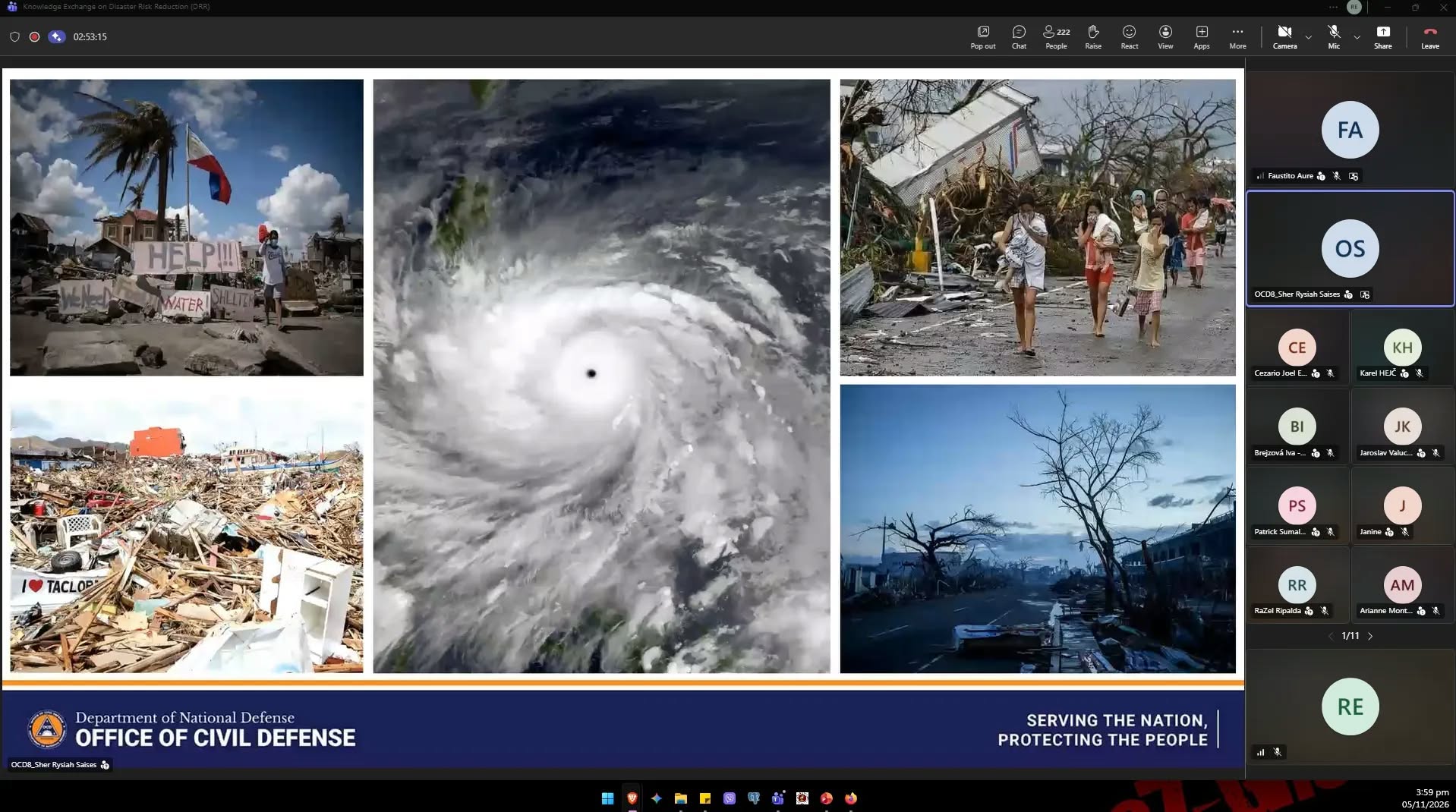
TACLOBAN CITY, Philippines – In commemoration of the 13th anniversary of Super Typhoon Yolanda (Haiyan), which devastated Eastern Visayas on November 8, 2013. Eastern Visayas State University (EVSU), in partnership with the Embassy of the Czech Republic in the Philippines, conducted an international online knowledge exchange on Disaster Risk Reduction (DRR) on November 5, 2026, via Microsoft Teams.
Carrying the theme “Czech Republic–Philippines Knowledge Exchange on Disaster Risk Reduction (DRR): Lessons, Innovation, and Community Resilience,” the three-hour webinar brought together experts, academics, researchers, and students from both countries to share experiences, insights, and innovative approaches to strengthening disaster preparedness and building resilient communities.
The activity marked another significant milestone in the growing partnership between EVSU and the Embassy of the Czech Republic, demonstrating how international cooperation can translate into meaningful academic engagement and knowledge sharing, particularly in addressing shared global challenges such as climate change and disaster risks.
The discussions highlighted the importance of proactive disaster risk reduction strategies, including prevention, preparedness, early warning systems, effective public communication, and coordinated emergency response. Particular attention was also given to the emerging applications of Geographic Information Systems (GIS), Artificial Intelligence (AI), satellite monitoring, and other innovative technologies in strengthening disaster management and community preparedness.
Beyond the exchange of technical knowledge, the webinar underscored the vital role of higher education institutions in generating research-based solutions, developing local capacities, promoting public awareness, and empowering communities to become active partners in disaster preparedness and climate adaptation.
For EVSU, the initiative is also part of its continuing efforts to become a National University for Resiliency and Climate Action (NURCA). It envisions to advance research, education, innovation, and community engagement in building disaster-resilient and climate-adaptive communities. Through NURCA, the University further seeks to strengthen its institutional role as a center for knowledge generation and action-oriented solutions, drawing from the lessons of past disasters locally and abroad and translating these into practical initiatives for a safer and more sustainable future.
The timing of the webinar carries profound significance for Eastern Visayas, particularly Tacloban City and the surrounding communities that experienced the devastating impact of Super Typhoon Yolanda/Haiyan thirteen years ago. The tragedy remains a defining moment in the region’s history, leaving enduring lessons on the importance of preparedness, solidarity, institutional coordination, and collective resilience.
More than a remembrance of the devastation, the activity served as an affirmation that the lessons of Yolanda must continue to inspire meaningful action. It reinforced the belief that disaster resilience is not achieved through emergency response alone, but through sustained investments in science, technology, education, research, international cooperation, and empowered communities.
Through this collaboration with the Czech Embassy, under the leadership of His Excellency, Ambassador karel Hejc EVSU further expands opportunities for international knowledge exchange and academic cooperation while reinforcing its commitment to making international partnerships more responsive to local and global development challenges.
The entire EVSU Community shares with Dr. Dennis C. De Paz’s solidarity message during the Webinar, “From the lessons of Haiyan to the innovations of today, EVSU continues to move forward with a clear commitment: transforming knowledge into action, partnerships into solutions, and remembrance into resilience”.
This article is aligned with Sustainable Development Goals (SDG) 04: Quality Education; SDG 09: Industry, Innovation, and Infrastructure; SDG 11: Sustainable Cities and Communities; SDG 13: Climate Action; and SDG 17: Partnerships for the Goals
via Prof. Faustito Aure | IZN