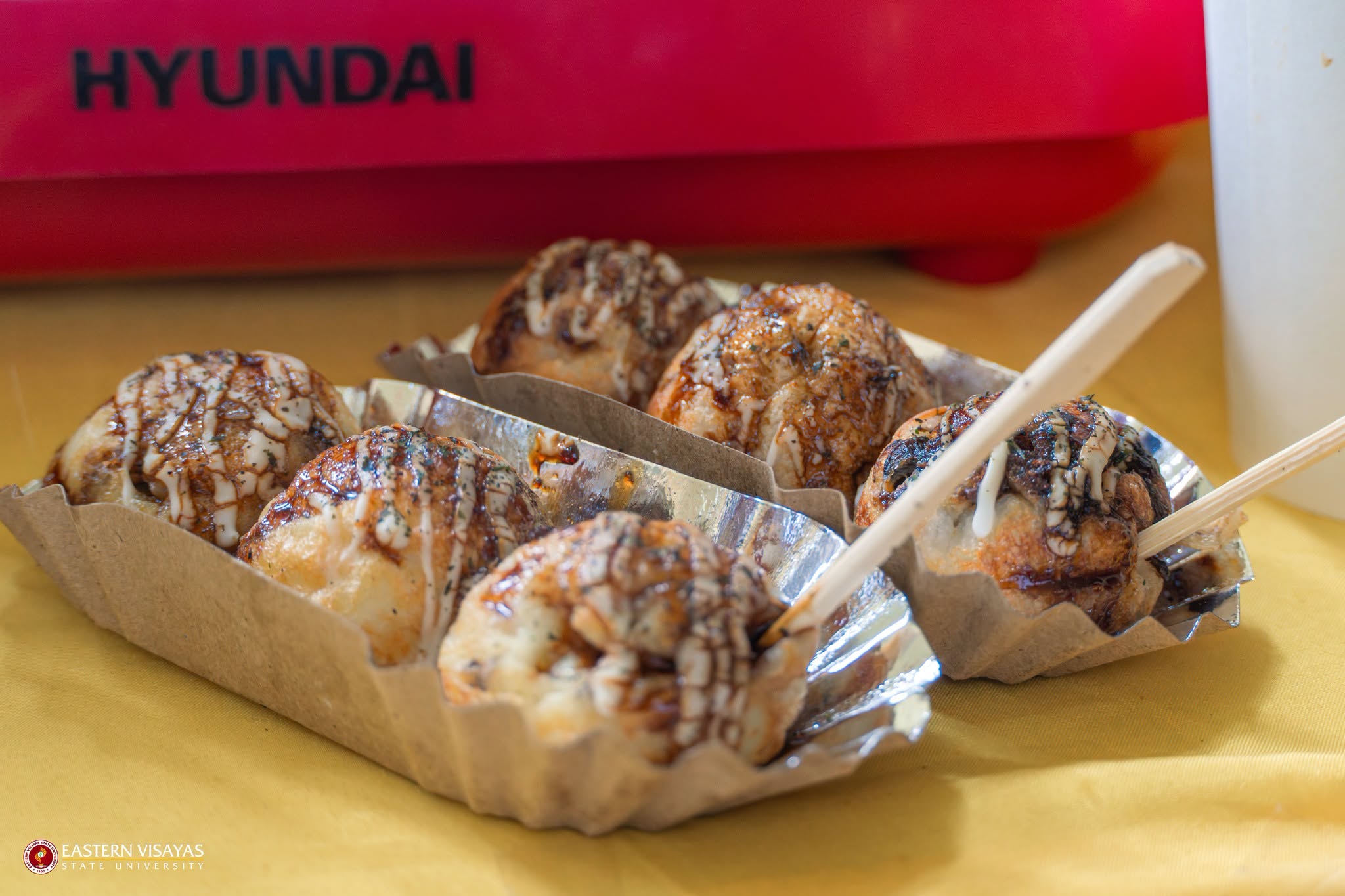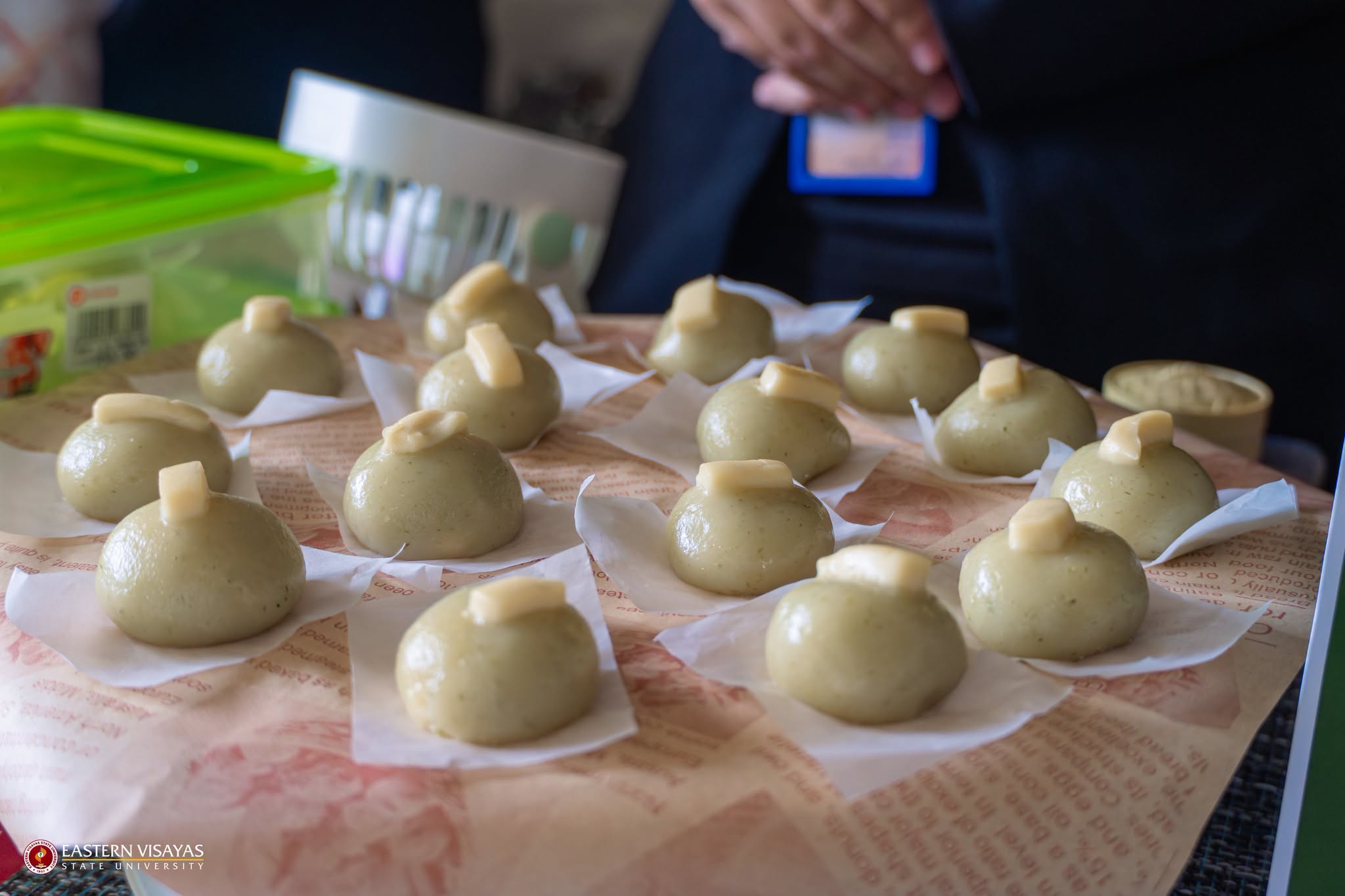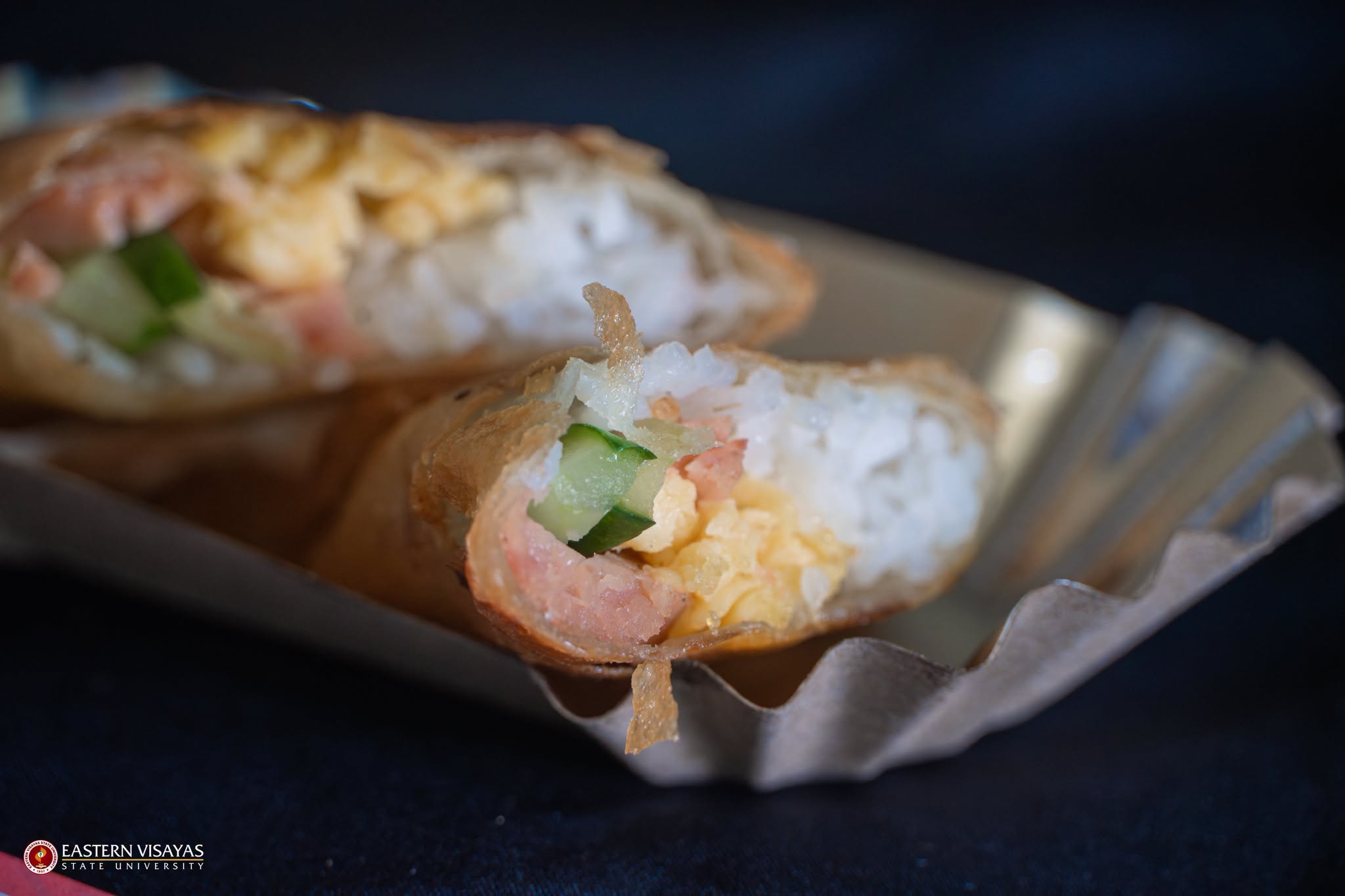

Twenty pesos buys a lot of hustle at Eastern Visayas State University (EVSU). On October 29 inside NCB Function Hall 1, twenty pesos could get a hungry student a freshly baked sweet potato bread roll from Kimra, a cup of zesty kalamansi juice squeezed for the mid-morning rush by KLVR by TOARKZ, or a serving of Japanese-style street food crafted from banana blossoms by BashoYaki.
For the fourth-year Bachelor of Science in Entrepreneurship cohort at the School of Accountancy, Management, and Entrepreneurship (SAME), the Business Month 2026 Culminating Activity was not a classroom simulation. It was launch day.
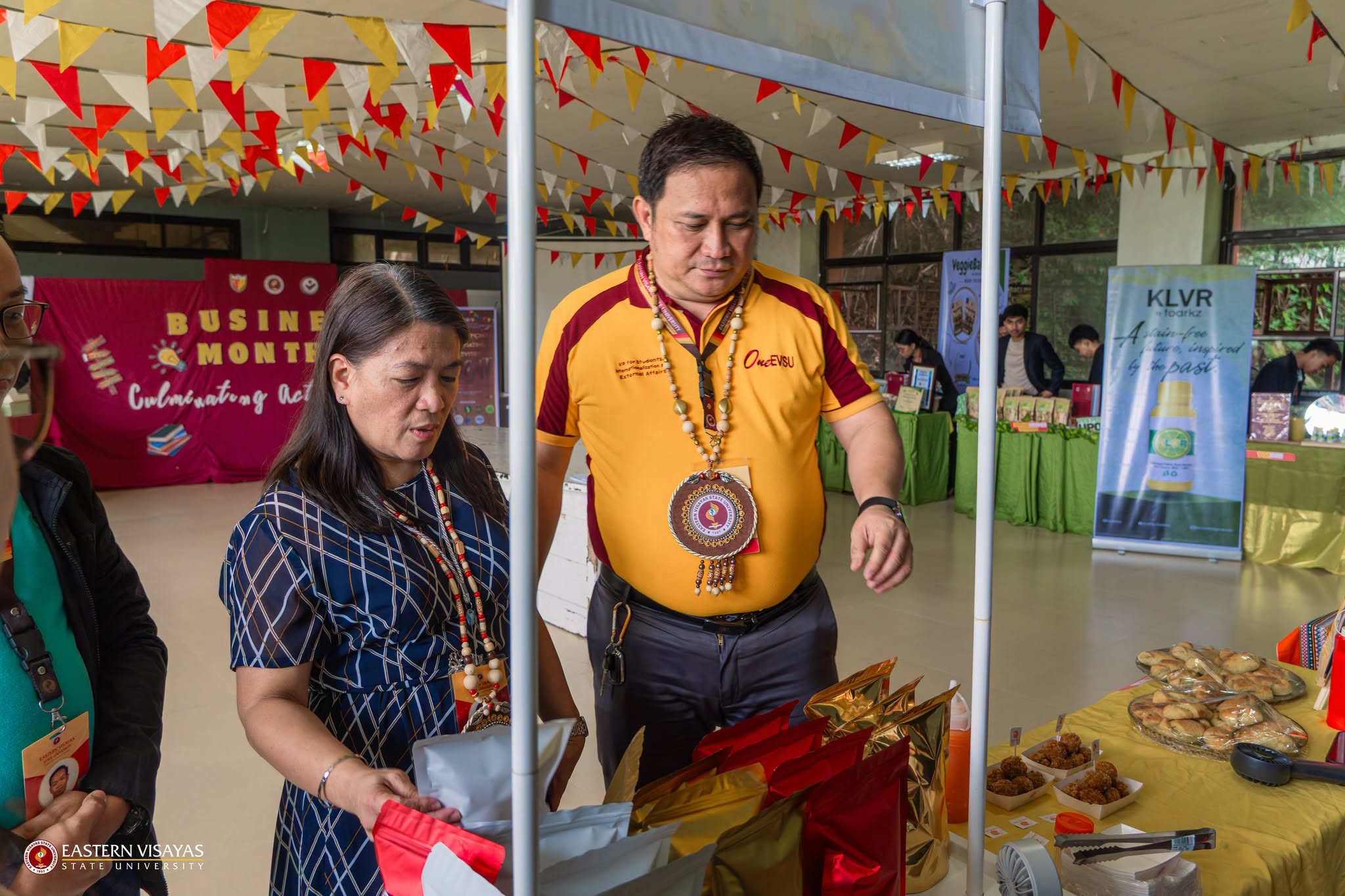
Sixteen student-owned brands set up shop across the venue, turning third-year feasibility binders into working commercial stalls. Throughout the day, fourth-year EVSUnistas managed live inventory, pitched proprietary food and non-food lines, calculated margins on the fly, and closed real sales with faculty, guests, and fellow students.
Every venture on the floor started a year ago as a third-year business plan. Over twelve months of product testing, costing revisions, and packaging prototypes, the graduating class narrowed their concepts into sixteen operational enterprises ready for public scrutiny.
Rather than relying on generic resale goods, the exhibitors built original brands rooted in Eastern Visayas agriculture, campus dining habits, and everyday household needs.
Reimagining Local Crops and Delicacies
Several student teams looked straight at underutilized local produce and engineered new snacks for budget-conscious buyers. BashoYaki by The Blaze League operated as a manufacturing venture that transformed puso ng saging (banana heart)—an ingredient usually reserved for traditional home-cooked stews—into a nutritious, Japanese-inspired street food skewered and served hot to campus buyers.
Right alongside them, DailyGreen pitched its “Healthy Made Easy” line of ready-to-cook VeggieBalls. Sourced directly from local vegetable farmers, the product gave students a quick, plant-based alternative to processed street snacks while keeping raw material spending within local farming communities.
Affordability drove the crowd at Kimra. Knowing that college students need filling meals between long lecture blocks, the team marketed its Kamvege Bread Roll—a hearty bread snack made from mashed kamote (sweet potato)—at a flat price of ₱20 per roll.
Other culinary exhibitors put fresh twists on familiar Philippine flavors and root crops:
ChamPinoy drew steady foot traffic with the Champanada, an inventive pastry that reimagined traditional Filipino delicacies inside a portable crust.
Cheesy Ampalaya tackled one of the most polarizing vegetables on the Filipino table, balancing the natural bitterness of ampalaya (bitter gourd) with melted cheese.
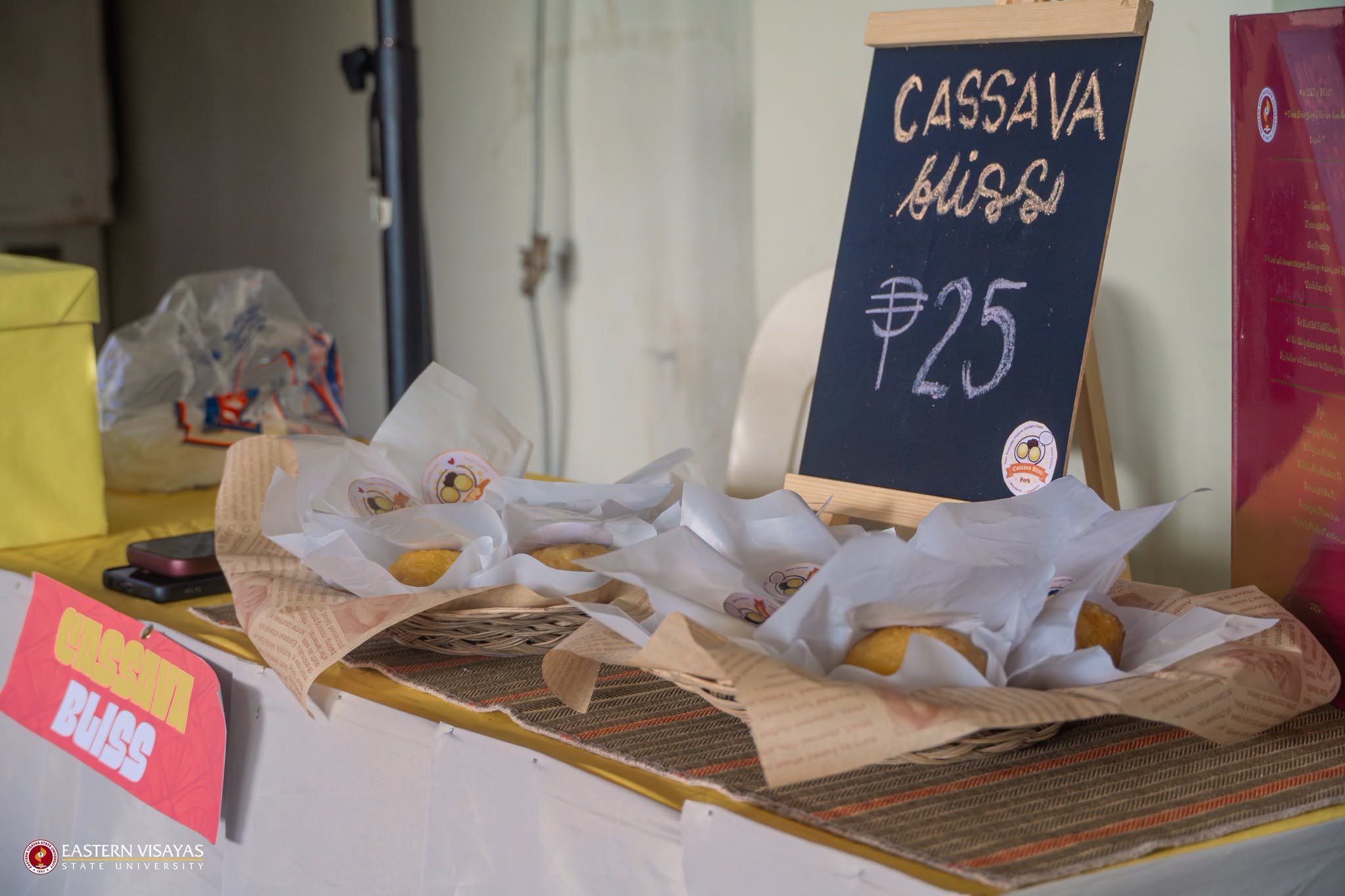
Cassava Bliss showcased sweet and savory preparations built around locally harvested cassava.
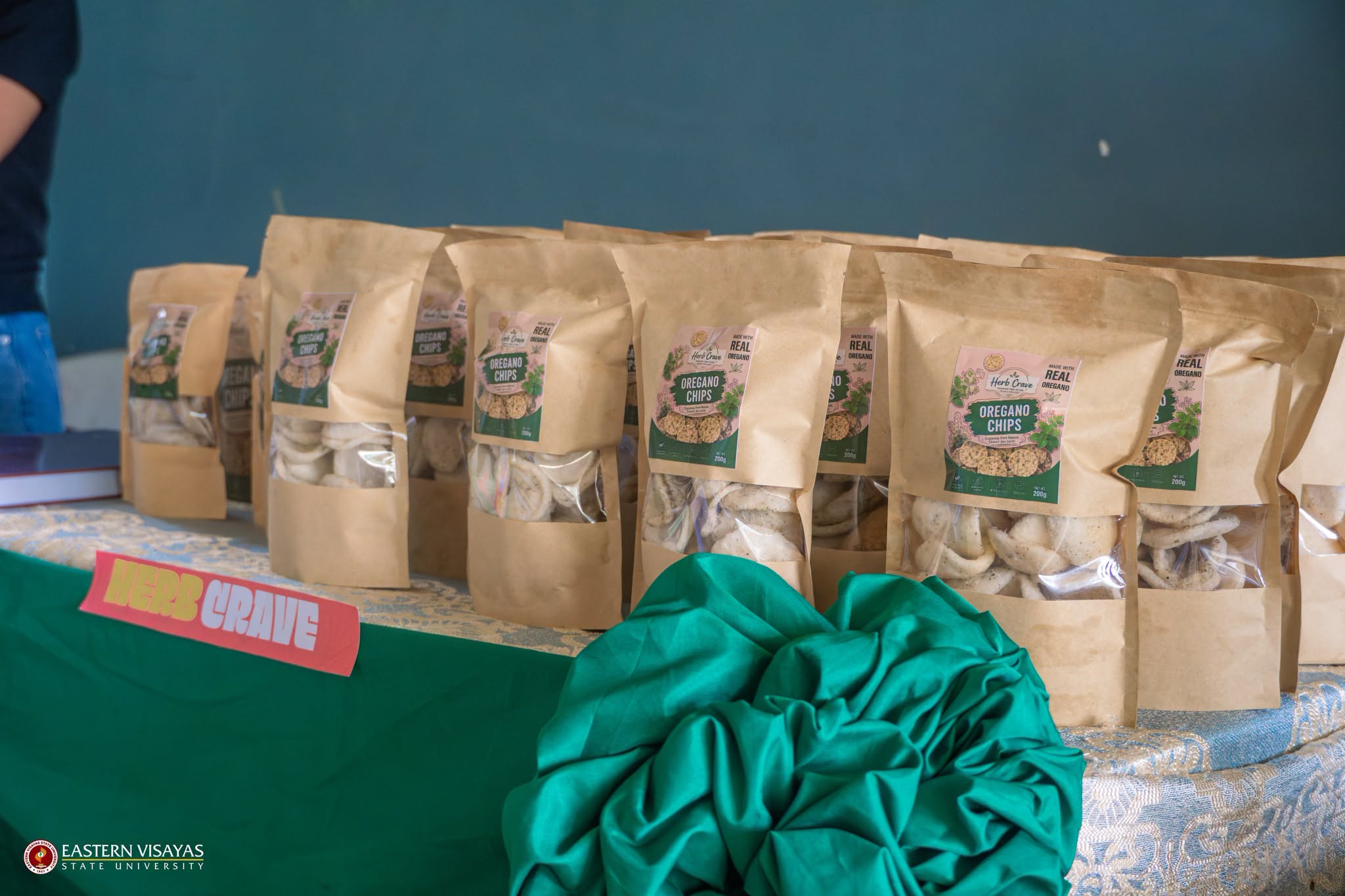
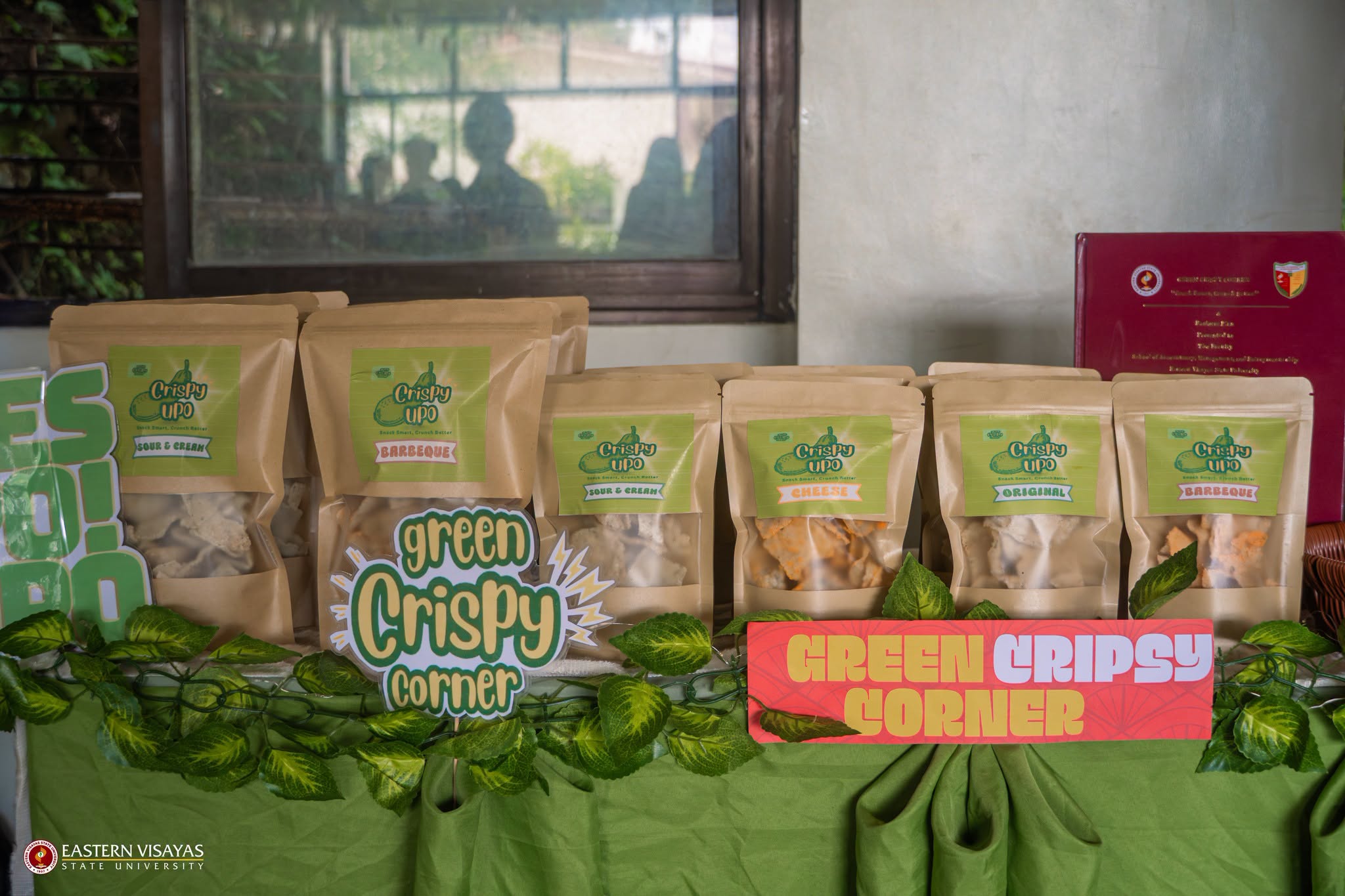
Green Crispy Corner and Herb Crave rounded out the agricultural food stalls, turning leafy greens and aromatic herbs into crisp, grab-and-go campus snacks.
Campus Refreshments, Savory Bites, and Non-Food Manufacturing
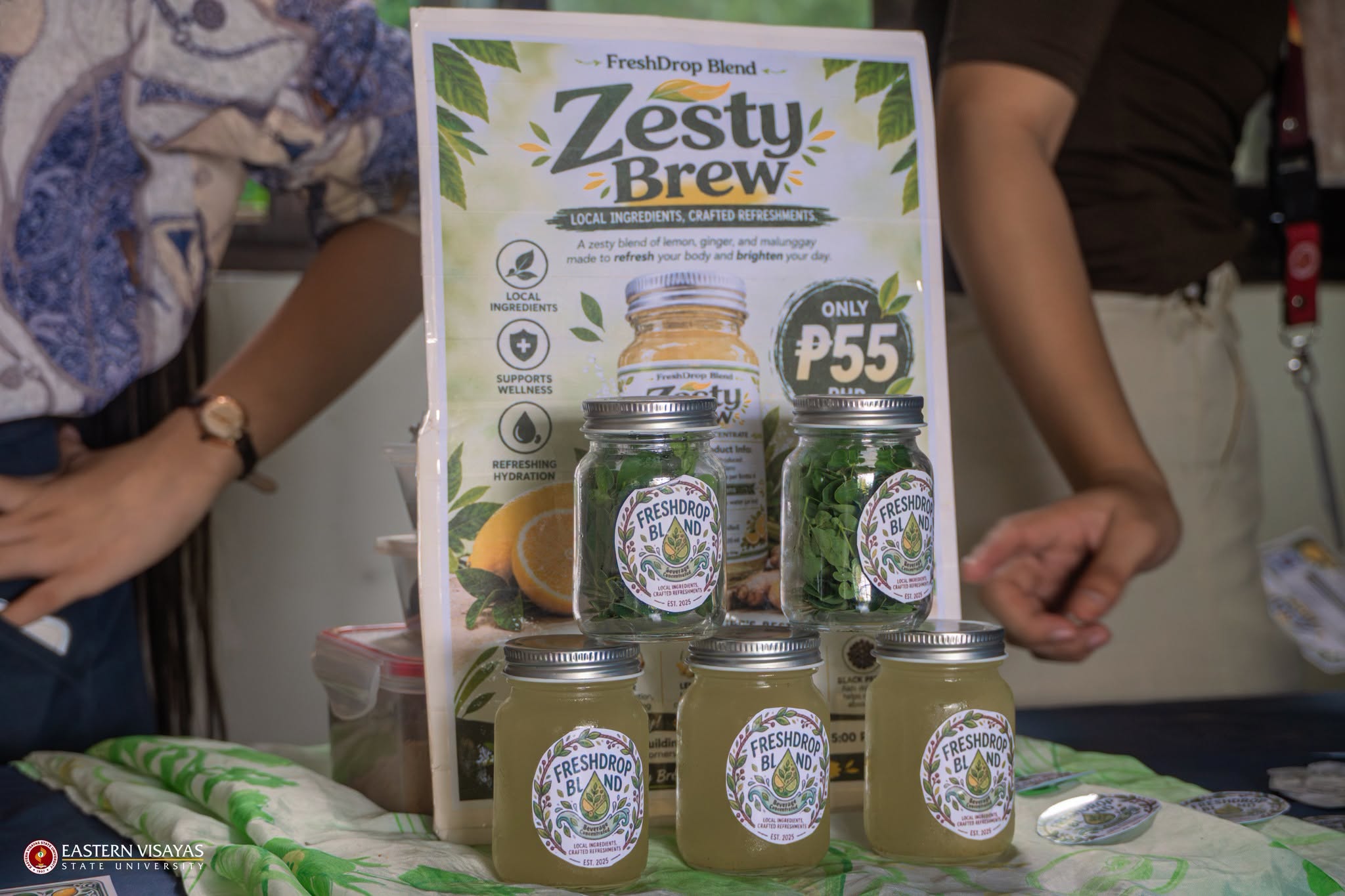
With hundreds of EVSUnistas moving between NCB Function Hall 1 and adjacent academic buildings, beverage and savory snack brands competed hard for lunchtime traffic. KLVR by TOARKZ positioned its signature KLVR Juice as an everyday campus refresher, serving chilled cups of fresh, zesty kalamansi juice to students stopping by between classes. Freshdrop Blend also joined the beverage lineup, offering blended drinks mixed to order.
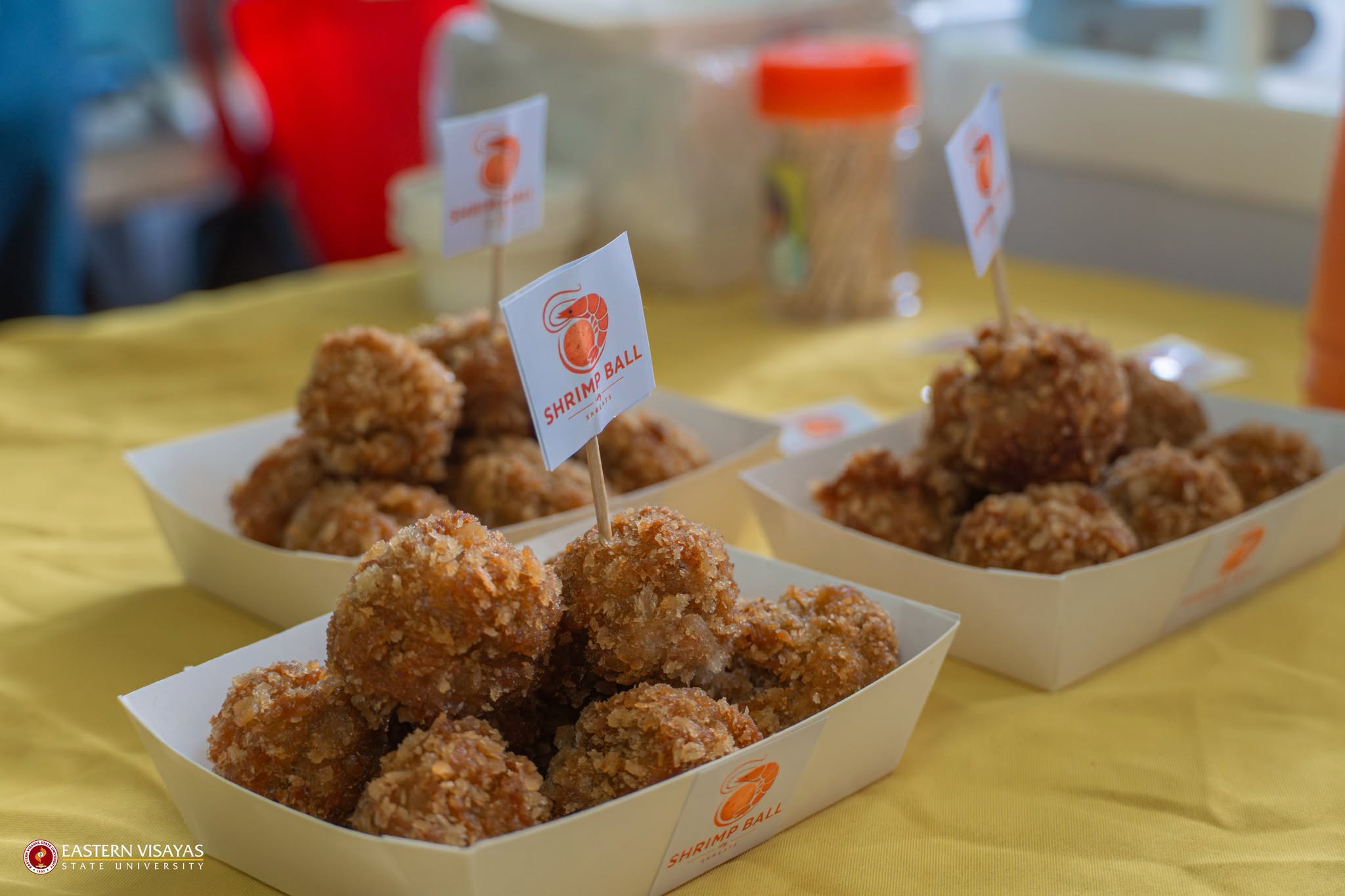
Savory street food remained a crowd favorite. shreats.shrimpball rolled out specialty shrimp balls paired with dipping sauces, while So Sawrap—a playful nod to the Tagalog word masarap—and FORBBS pitched their own proprietary snacks and wraps to passing buyers.
Not every team stayed in the kitchen. Three fourth-year enterprises stepped into non-food manufacturing, personal care, and material craft:
Botanica Bloom formulated and packaged its own Moisturizing Body Soap, bringing small-batch skincare production to the expo floor.
SurClean by Scenti developed a dedicated line of scented cleaning and household care solutions.
Ginitware showcased non-food utility and craft wares, proving that BS Entrepreneurship majors could manage supply chains and fabrication outside the food and beverage sector.
From Classroom Proposals to Commercial Reality
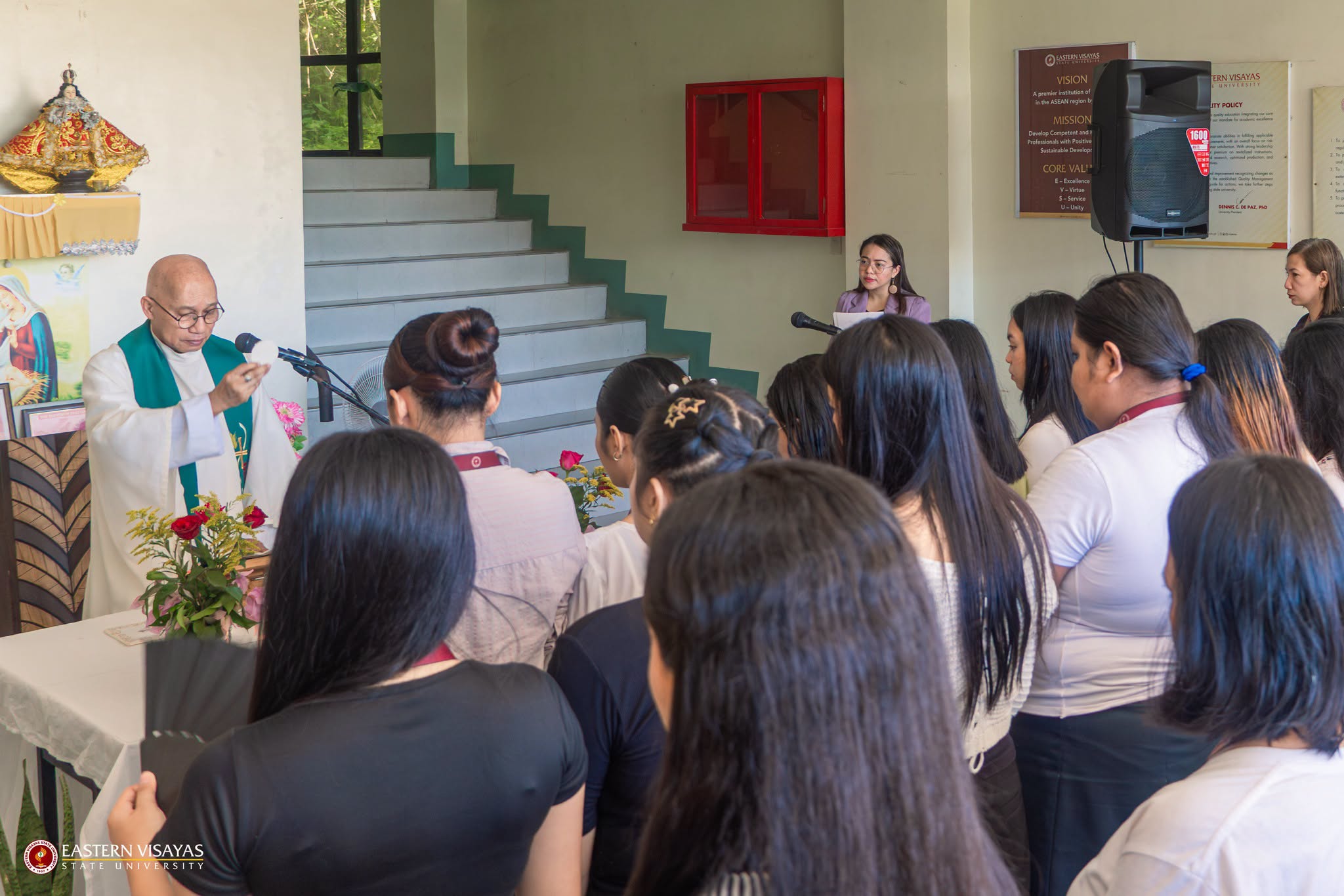
Before the ribbons were cut downstairs, students, faculty, and university officials packed the function hall for the morning opening program titled “SAME BIDA: Business Month Culminating Activity”. Hosted by Laarni Joyce Lumanta and Hannah Grace Loyola, the gathering united the five academic units of the School of Accountancy, Management, and Entrepreneurship (SAME) under a single operational banner—BIDA, an acronym for Building Ideas, Developing Businesses, and Achieving Success.
From Third-Year Blueprints to Market Execution at EVSU SAME
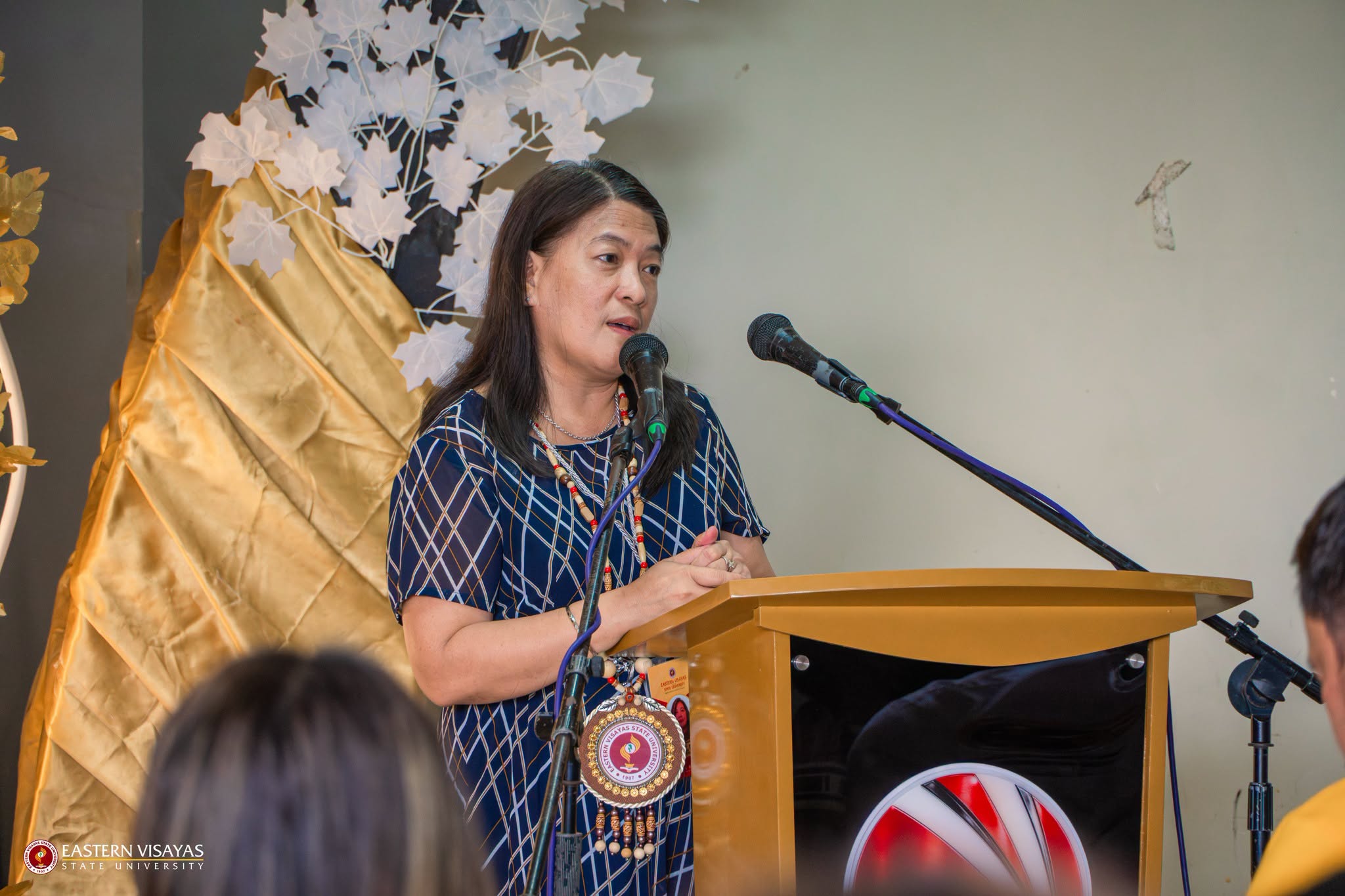
Soft acoustic guitar chords played over the sound system as Dr. Marichu S. Armada, Dean of the School of Accountancy, Management, and Entrepreneurship, walked to the lectern to open the celebration. Now in her second month as dean of the school, Dr. Armada has overseen a rapid succession of departmental activities backed by SAME’s program heads and working committees.
Addressing the exhibitors and awardees seated inside the hall, she acknowledged the support of University President Dr. Dennis C. de Paz, Vice President for Academic Affairs (VPAA) Dr. Analyn C. Españo, Vice President for Students, Internationalization, and External Affairs (VPSIEA) Dr. Benedicto T. Militante Jr., the academic unit heads, and the panel of evaluators. She pointed straight to the student booths waiting below as proof of what happens when classroom concepts meet disciplined execution.
“Our theme, Building Ideas, Developing Businesses, Achieving Success, reminds us that every achievement starts with a simple idea. Through our product exhibit, we got to see the creativity and effort our very competent students have put into their products. And through our awarding ceremony, which will be happening later, we recognize those who have shown dedication, hard work, and excellence.”
Building a viable venture takes more than a clever concept. Dr. Armada reminded the graduating cohorts that market realities test every young founder’s resolve long before profits appear on a balance sheet.
“I hope that you will continue to believe in yourselves and in your ideas. Don’t be afraid to try new things, learn from your experiences, and take every opportunity to improve. Remember, success doesn’t happen overnight. It always takes patience, determination, and of course, a willingness to keep going even when things get difficult.”
She closed her welcome by thanking the SAME faculty and working committees who organized the month-long series of events, urging EVSUnistas to grow more creative, confident, and courageous in turning their proposals into working businesses.
Leadership, Ethics, and Sustainable Enterprise
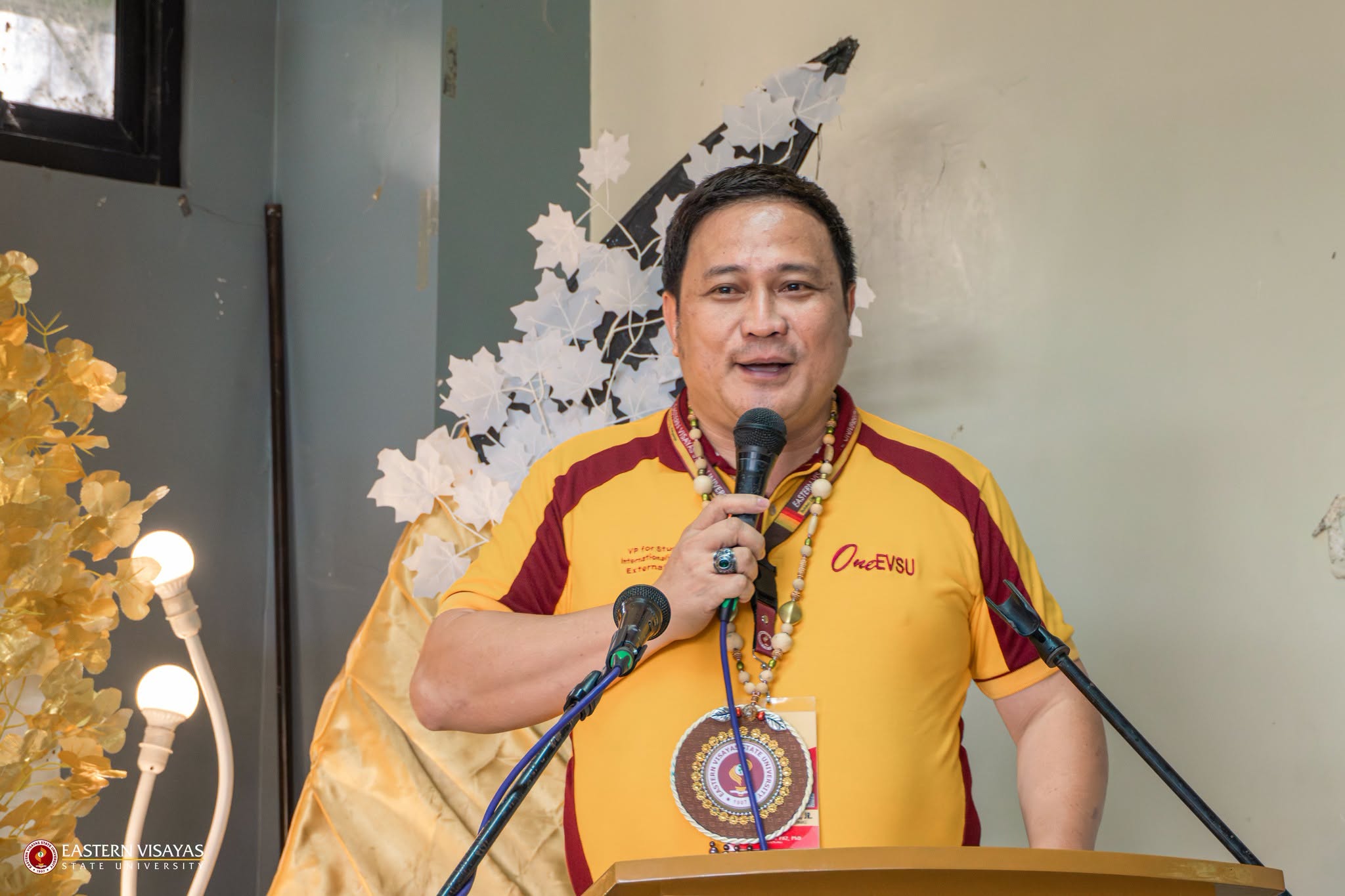
When Dr. Benedicto T. Militante Jr. stepped up to deliver his inspirational message, he immediately turned the spotlight onto the mentors sitting in the front rows. Greeting the hall in Waray and Tagalog—“Maupay nga aga, mapagpalang umaga sa ating lahat”—the Vice President for Students, Internationalization, and External Affairs called out SAME’s academic leaders one by one as students cheered for their respective departments.
He recognized Prof. Mark Reynan Sabayan of the Hospitality Management Department, Dr. Jeremy Ragot of the Accountancy Department, Dr. Melane Aguilar of the Office Administration Department, Dr. Darwin Navarrosa of the Entrepreneurship Department, and Prof. Ronna Michelle Edrozo of the Marketing Department. He also welcomed former External Affairs Director Dr. Felix Dexter Barrion, faculty members from other colleges who came to witness the showcase, and the board of adjudicators.
Noting that this was the first time the school had adopted the “BIDA” acronym as its rallying cry, Dr. Militante tested the tagline with the crowd. “Sa SAME, kayo ang—” he called out, pausing as the hall shouted back, “BIDA!” He laughed and joked that if they adopted “Sa EVSU, SAME ang BIDA” as an official university design, the other schools on campus might get jealous—before settling on a call that included every student in the room: “Sa EVSU, kayo ang BIDA!”
Why Honest Processes Matter in Business
Beneath the humor, Dr. Militante delivered a direct message on business ethics. Speaking to rooms full of future certified public accountants, operations managers, marketers, and founders, he warned that revenue figures alone never justify cutting ethical corners.
“Remember that success is not measured by the profit or recognition alone that you have incurred for your agencies. True success is also about honesty—baka naman malaki nga ‘yung income, but with dishonest processes. It entails honesty, responsibility, innovation, and the positive difference we make in the lives of our co-employees in the sector.”
He urged EVSUnistas to spot opportunities where others only see roadblocks, and he paused mid-speech to ask the students for a loud round of applause for the deans, unit heads, and faculty mentors who guided their enterprise projects from initial drafts to launch day. He also linked the student enterprises to the broader institutional mission of Eastern Visayas State University, noting that his office closely tracks student-led initiatives that contribute to the United Nations Sustainable Development Goals (SDGs) while preparing graduates for a digital economy.
“Always remember: you do not have to be a successful entrepreneur today to begin building your future. You only need the courage to start, the willingness to learn, and the determination to keep moving forward.”
VPAA Dr. Analyn Españo Redefines BIDA for EVSUnistas
The morning’s most interactive lecture came when Vice President for Academic Affairs Dr. Analyn C. Españo took the stage. She shared with the crowd that after receiving a text message from Dean Armada inviting her to the event, she checked the printed program that morning and saw her segment listed as “Words of Wisdom”.
Dr. Españo turned the hall into a lively literature class. She asked the students to name the classical goddess of wisdom.
“Athena!” several students called out from the floor.
Smiling, she noted that while Venus or Aphrodite claimed the title of goddess of beauty, Athena stood for wisdom—adding with a laugh that since both “Athena” and “Analyn” begin with the letter A, she hoped to live up to the billing. She then addressed a question many students silently ask themselves whenever mandatory campus events appear on the calendar: why show up at all instead of staying home to sleep?
While student attendance, participation, and competition wins carry weight in statutory compliance, program accreditations, and institutional assessments, Dr. Españo stressed that the real value belongs to the students who walk through the doors.
“Apart from that compliance to statutory and regulatory requirements, I also would like to say that your presence today is a manifestation that you are in a university that provides platforms for learning and discovery.”
She also placed EVSU’s celebration within the wider regional calendar established by the Philippine Chamber of Commerce and Industry (PCCI). Citing a discussion with Entrepreneurship Department Head Dr. Darwin Navarrosa, she pointed out that while business chambers in Cebu mark the ease of doing business in May and other provinces hold events in August or September, Tacloban City and Eastern Visayas (Region VIII) observe Business Month every October.
Beauty, Ideation, Development, and Action: A Campus Mnemonic
Drawing on a study habit from her own college days—using mnemonics to retain core concepts—Dr. Españo offered the SAME community her own four-part definition of BIDA:
B for Beauty: Beyond physical appearance, she defined beauty as maintaining clean thoughts, a clean heart, and a sense of care for the immediate environment. She gave a concrete example: when walking down the stairs of the building and spotting scattered slips of paper or candy wrappers on the steps, an EVSUnista translates inner beauty into civic habit by picking up the litter and dropping it into the proper campus trash bins.
I for Ideation: She praised SAME students for generating fresh concepts and incubating those ideas by converging and collaborating with peers.
D for Development: True enterprise development, she argued, goes far past cosmetic repackaging. “Development is something that’s not just about changing its color, changing its surface,” she told the exhibitors, insisting that student ventures must be built “with depth, with breadth, and that there is sustainability in that.”
A for Action: Addressing the fourth-year exhibitors, she asked what the final letter stood for once ideas are incubated and developed. “What’s the use of all these things that you have in mind… if you will not put it into reality?” she asked, prompting the crowd to shout back, “Action!”
Young Professionals and the Power of Self-Talk
Overseeing academic standards across all EVSU colleges and external campuses, Dr. Españo emphasized that the university views its students not as passive followers, but as young professionals capable of discovering, learning, relearning, and unlearning outdated practices. She noted that higher education has discarded the rigid “one-size-fits-all” approach to instruction. What works inside SAME may differ from other disciplines, and business students must foreground their distinct entrepreneurial training—a skill set now introduced as early as senior high school.
Before leaving the stage, she posed one final question to the hall: what is the most fundamental entrepreneurial element that begins with the letter C?
Students shouted out “Creativity!” and “Compassion!”
Both matter, Dr. Españo agreed, but she pointed to Communication as the bedrock of every enterprise—splitting it into two distinct disciplines:
“The basic of all of this is communication—communication within yourself, so that’s intracommunication; your ability to deal with other people, you call it intercommunication. You call it intrapersonal and interpersonal skills. You cannot become a successful entrepreneur without these entrepreneurial interpersonal and intrapersonal skills. You should sometimes know how to talk to yourself, right? That’s intrapersonal. You should learn how to combat what yourself is asking from you, because sometimes you are overwhelmed and you are overcome by what yourself is doing. But if you know what is right and you know what is wrong, you will choose the right path.”
She thanked Dean Armada and the faculty for the invitation, telling the students that standing before them felt like a mother ready to care for her children.
Cross-Disciplinary Evaluation and the Ribbon-Cutting Showcase
To evaluate the commercial viability and production quality of the fourth-year BS Entrepreneurship ventures, SAME invited a three-member panel of specialists from the university’s technology and production units. Co-host Hannah Grace Loyola introduced the judges to loud applause from the student exhibitors:
Mr. Lucio G. Joseco, Jr., Technical Staff at the Shared Service Facilities (SSF)
Dr. Issa May O. Ocasla, Head of the Industrial Technology Department
Ms. Alona L. Parado, Faculty Member of the Industrial Technology Department
Bringing in evaluators from the Industrial Technology Department and the Shared Service Facilities ensured that student enterprises were graded not only on ledger sheets and booth aesthetics, but also on product fabrication, operational workflow, and commercial readiness.
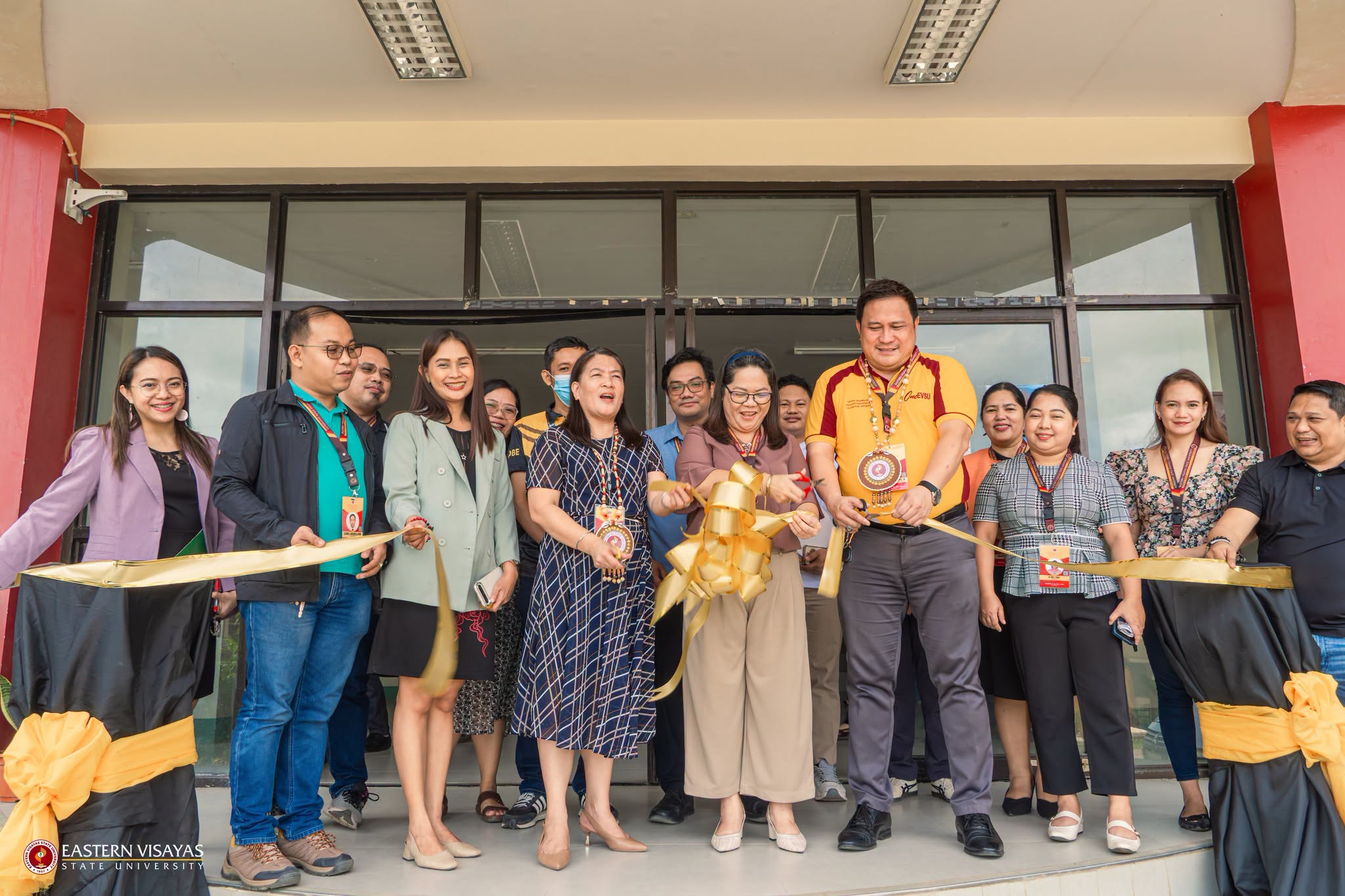
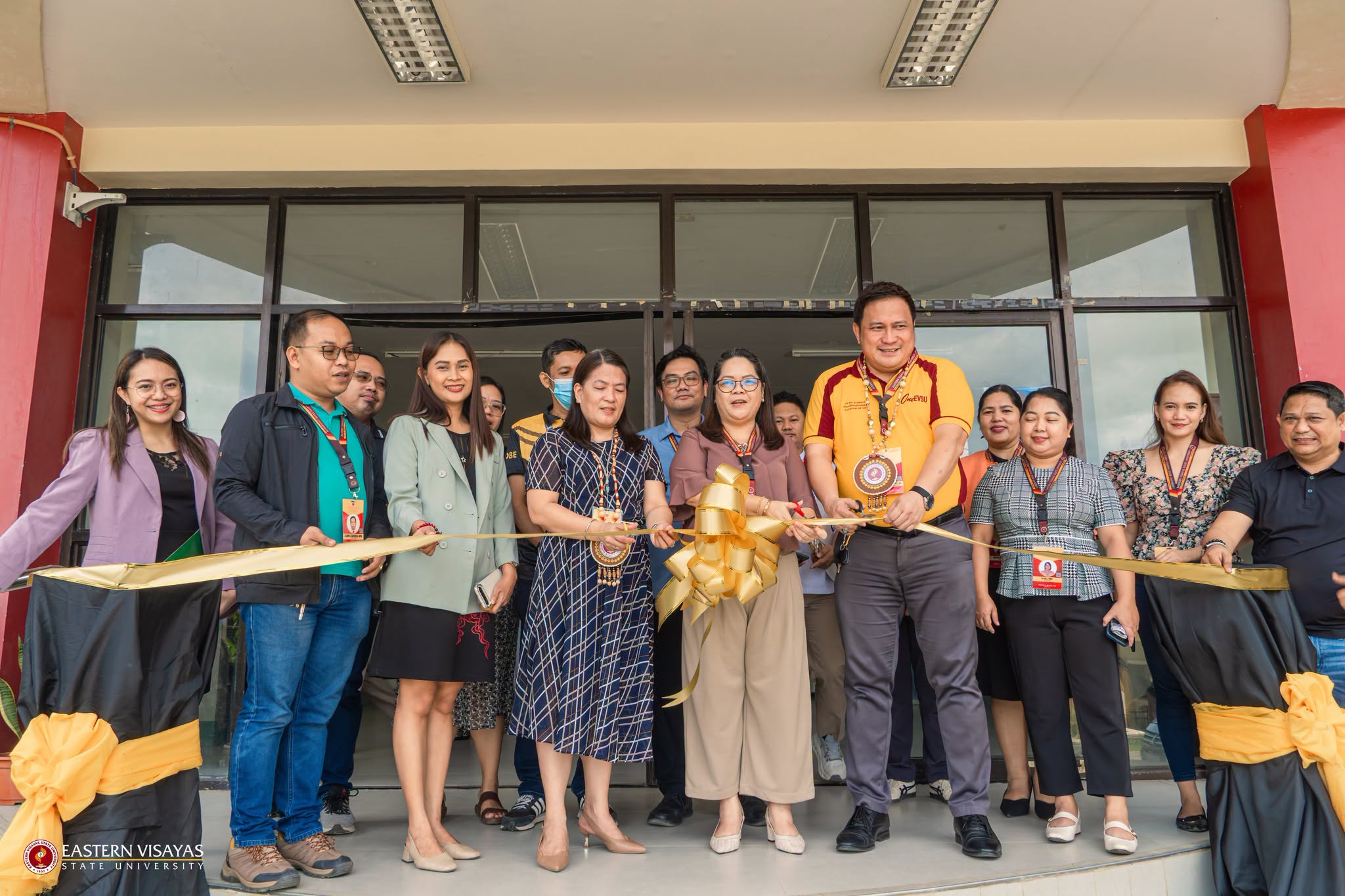
Following the introduction of the judges, co-host Laarni Joyce Lumanta called Dean Dr. Marichu S. Armada, VPAA Dr. Analyn C. Españo, and VPSIEA Dr. Benedicto T. Militante Jr. to the center of the stage for an official photo opportunity with the SAME community. Moments later, the administrators, judges, department heads, and students filed downstairs from the hall to cut the ceremonial ribbon—opening the expo floor where a year of third-year business planning met its first real customers.
via|KBSantos UMDC
This article is aligned with Sustainable Development Goals (SDG) 01: No Poverty; SDG 04: Quality Education; SDG 08: Decent Work and Economic Growth; SDG 12: Responsible Consumption and Production; and SDG 17: Partnerships for the Goals